Watering a half plot, and what does not need it
Most of a half plot does not need watering in most British summers. Working out which bit does is worth about an hour a visit.
Water anything planted in the last three weeks, anything in a pot, and squash, sweetcorn and runner beans in a dry spell. Everything else has roots deep enough to cope. Water heavily once a week rather than lightly every visit, and always at the base rather than over the leaves.
What needs water, and what does not?
The single biggest time saving on a half plot in summer is realising that most of it can look after itself.
| Needs watering | Why | Does not usually need it | Why not |
|---|---|---|---|
| Anything planted in the last 3 weeks | Roots have not reached beyond the planting hole | Established potatoes | Deep roots, and the foliage shades the soil |
| Anything in a pot or module | No soil to draw from | Onions and garlic | Shallow but undemanding. Overwatering hurts storage |
| Courgettes, squash and cucumbers | Very large leaf area, high water loss | Broad beans and peas | Deep rooted and cropping before the dry spell |
| Runner beans in flower | They drop flowers if the roots dry out | Established brassicas | Deep tap roots. They wilt in the afternoon and recover overnight |
| Sweetcorn from tasselling | Needs water to fill the cobs | Carrots and parsnips | Watering encourages splitting. They chase water downward |
| Salad and anything leafy | Shallow rooted, bolts if checked | Established herbs | They actively prefer to be dry |
A brassica wilting at four on a hot afternoon and standing up again by nine in the evening is not short of water. It is regulating itself.
Deeply and rarely, not lightly and often
A light watering every visit is the most common mistake and it actively makes plants worse. It wets the top two or three centimetres, which is exactly where the plant then puts its roots, and it evaporates within hours. You end up with a shallow rooted plant that is now dependent on you.
One thorough soak a week trains roots downward instead. As the surface dries the plant follows the moisture down, and within a few weeks it is drawing from soil you are not watering at all.
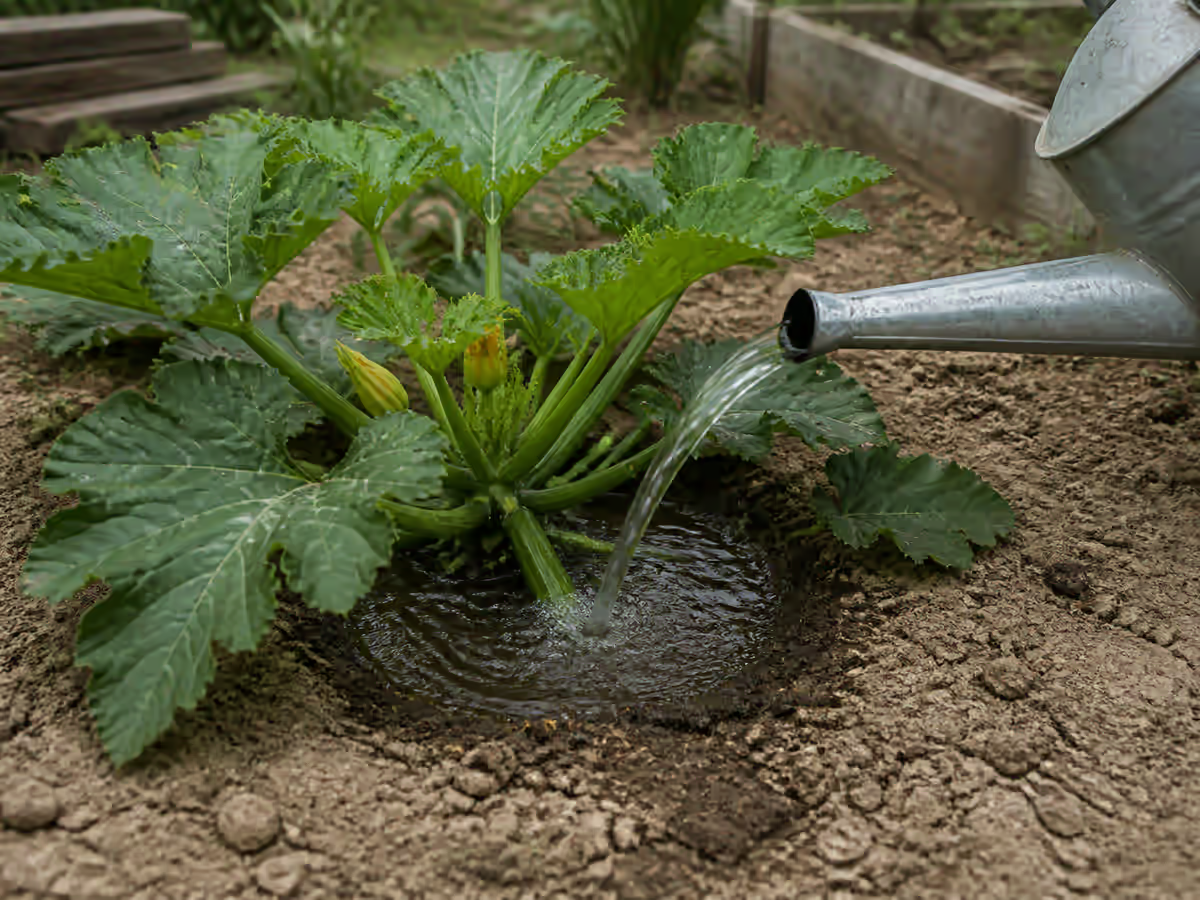
Thorough means a full watering can, around 10 litres, to about a square metre. On a bed of courgettes that is roughly one can per plant. It should still be damp 10cm down the next morning, which is worth checking once with your finger so you calibrate what enough looks like.
Water at the base, never over the leaves. Water on foliage evaporates without reaching the roots, and on courgettes, squash and tomatoes it is how the fungal problems get going. Sinking a plant pot or a cut down bottle beside a squash plant and filling that puts the water where it is wanted.
Watering less by needing it less
Every one of these reduces how much watering the plot needs at all, which beats getting better at watering.
- Mulch. Five centimetres of compost on the surface roughly halves evaporation from a bed
- Sink a pot or a cut bottle beside thirsty plants and water into that
- Water in the evening, so it soaks in overnight rather than evaporating
- Plant into a shallow dish shaped depression so water sits over the roots instead of running off
- Keep beds weed free. Weeds drink first, and they are better at it than your crops
- Link two or three water butts with a short length of hose near the top so they fill in sequence
A mulched, weeded, established bed on a half plot will get through most British summers on rainfall alone.
Water butts, and getting through a dry August
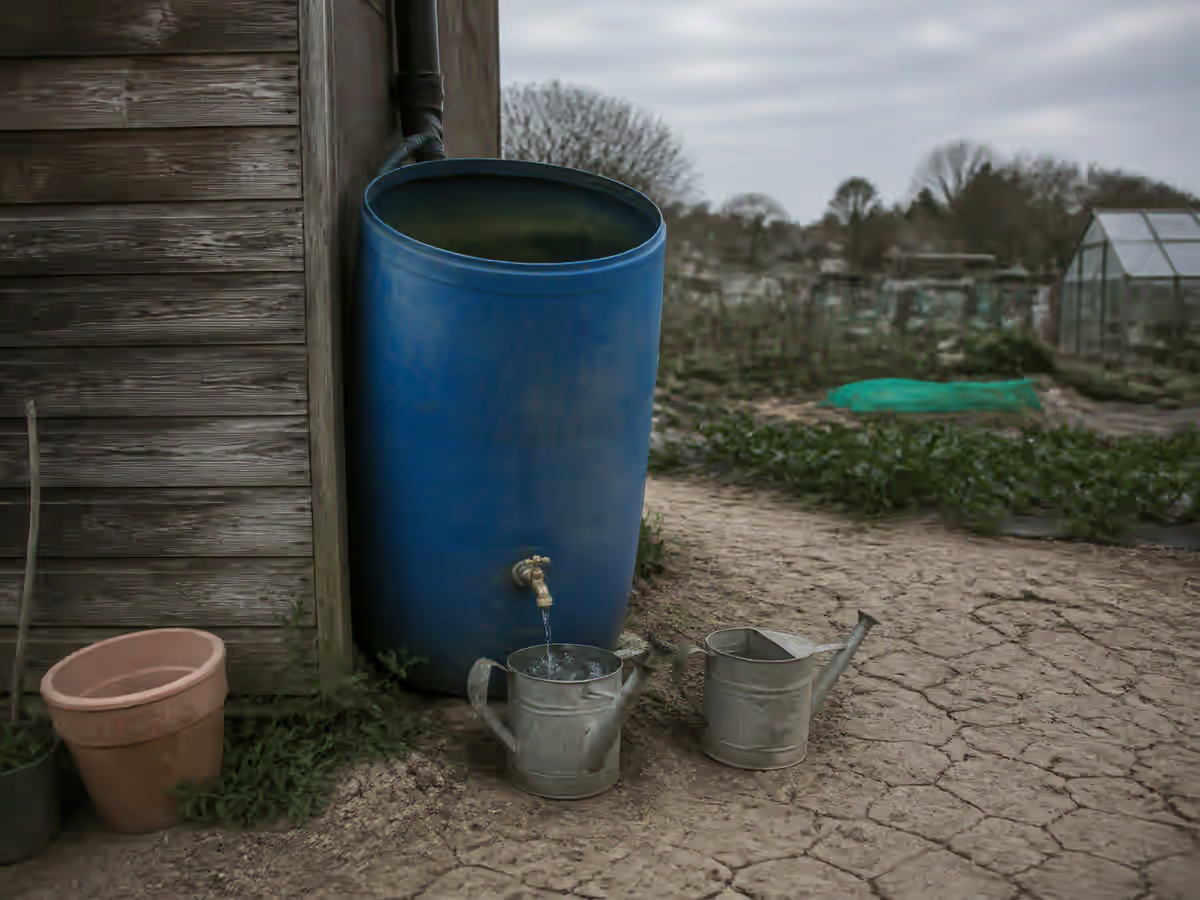
A shed roof of about 6 square metres collects roughly 6 litres for every millimetre of rain that falls on it, so a single wet week in Britain fills a 200 litre butt comfortably. The constraint is almost never rainfall, it is storage.
Two or three butts linked with a short length of hose near the top will fill in sequence and give you 400 to 600 litres, which is what actually carries a half plot through a dry fortnight. One butt runs dry in about four days of real drought.
Stand them high enough to get a can under the tap, on a solid base, because a full 200 litre butt weighs 200kg and a collapsing stand is genuinely dangerous. Keep the lids on: an open butt breeds mosquitoes, grows algae and is a serious drowning risk if there are children on the site.
If your site has mains taps, remember that many allotment associations restrict hosepipes to filling cans only. It is worth reading your tenancy agreement rather than finding out in July.
Questions that come up
The five asked most about watering.
How often should I water in a hot spell?
Once a week, thoroughly, for anything on the needs it list. Twice a week for pots and anything planted in the last fortnight. Daily light watering is worse than weekly heavy watering.
Is it bad to water in the middle of the day?
It is wasteful rather than harmful. More evaporates before it soaks in. The story that water droplets scorch leaves in sunshine is not really true outdoors in Britain. Evening is best, early morning is fine.
My brassicas wilt every afternoon. Are they dying?
Almost certainly not. Large leaved plants wilt to reduce water loss in the afternoon heat and recover overnight. Check the soil 10cm down before reaching for the can. If it is damp, leave them alone.
Can I use grey water or washing up water?
Small amounts of cooled washing up water are generally fine on established plants, avoiding anything you are about to eat raw. Do not use it on seedlings, and do not store it, because it goes bad quickly.
Does watering potatoes increase the crop?
At one point, yes: just as the tubers start forming, shortly after flowering. Before that it makes little difference and after the foliage closes over it mostly increases blight risk in a humid August.
Where this comes from
How often and how much to water is judgement, and it changes with your soil. Two things on this page are not judgement.
- RHS, Watering, on watering less often and more deeply, and on when it actually matters in a crop life
- RHS, Potato blight, on the warm humid conditions that bring it, which is why the August watering advice here is what it is
Last reviewed 17 August 2026.
Written by Sam
Eight years on a half plot in Nottinghamshire. Four beds, two water butts, about two hours a week, and most of what is on this site tried twice before it worked. Dates here suit most of England and Wales, because that is where the plot is. Where a page makes a claim you could check for yourself, it links to the source.
Two hours a week, spent on the right things.
One email a month on doing less on the plot and getting more out of it.
One email a month. Unsubscribe any time. How we look after your details.