The month you are actually in

What to do on the plot this month

The allotment year has a rhythm, and most of the stress of a half plot comes from working against it rather than with it.

This is the month you are in, the twelve months in order, and the two points in the year that catch out almost everybody.

This month in detail

Right now, it is August

The allotment in August

What to do on a UK half plot allotment in August: the ten day spring cabbage window that decides next March, handling the peak of the glut, and what to sow into beds as they empty.

Sow

Spring cabbage, mid month. Winter salad, land cress, corn salad.

Pick

Everything. Courgettes and beans every other day

The one job

Sow spring cabbage between 10 and 20 August. The window is about ten days.

Everything to do in August

The twelve months, in order

What the month is really for, and the one job that matters most in it. Each month has its own page with the full sowing and harvesting list.

Planning

Order seeds before the varieties you want sell out. Almost nothing to do outside, and that is correct.

Waking up

Chit potatoes on a cool windowsill. Sow broad beans if you did not in November.

The plot starts

First early potatoes go in. Onion sets, parsnips, early carrots. The work begins in earnest.

Busiest, and hungriest

Most of the year is sown this month, while there is least to eat. Both things at once.

May

Planting out

Everything tender goes out, but only after the last frost. Wait a week longer than you want to.

Everything grows

Including the weeds. First broad beans, first new potatoes, first proper meal off the plot.

The glut starts

Water, pick, and keep sowing. What you sow now is what you eat in October.

Peak harvest

Lift and dry the onions. Sow for winter. The month that decides February.

Storing

Maincrop potatoes and squash come in. Plant out spring cabbage. The second busiest month.

Putting the plot to bed

Garlic goes in. Beds get covered or sown with green manure before the winter rain.

Repairs

Compost, mend the shed, mulch. Sow broad beans for the earliest possible crop.

Rest

Pull leeks and parsnips as you need them. Otherwise stay indoors with the seed catalogue.

The allotment year is not four equal seasons

It is four very unequal phases, and knowing which one you are in tells you how hard to push.

November to February

The planning phase

Roughly a tenth of the year of work, and nearly all of the decisions. You are ordering seed, working out what goes where, and mending things. Growers who find the plot overwhelming in May are usually growers who skipped this phase, because every decision then has to be made standing in a bed with a trowel in your hand.

March to May

The sowing rush

Something close to two thirds of the year of work lands in twelve weeks. This is the phase that burns people out, and the only real defence is to have decided in January what you are not doing. There is no version of these weeks that feels calm, but there is a version that ends with everything sown.

June to August

Keeping up

No new decisions, just water, weed, pick, repeat. The work is light but it does not wait, which is why two short visits a week beat one long one. The trap here is coasting: keep sowing through July and August or autumn is empty.

September to October

Clearing and storing

The phase everyone underestimates. Lifting, drying, storing, clearing spent crops, and covering bare ground before the winter rain washes the goodness out of it. Do this properly and March is half done before it starts. Skip it and you begin next year behind.

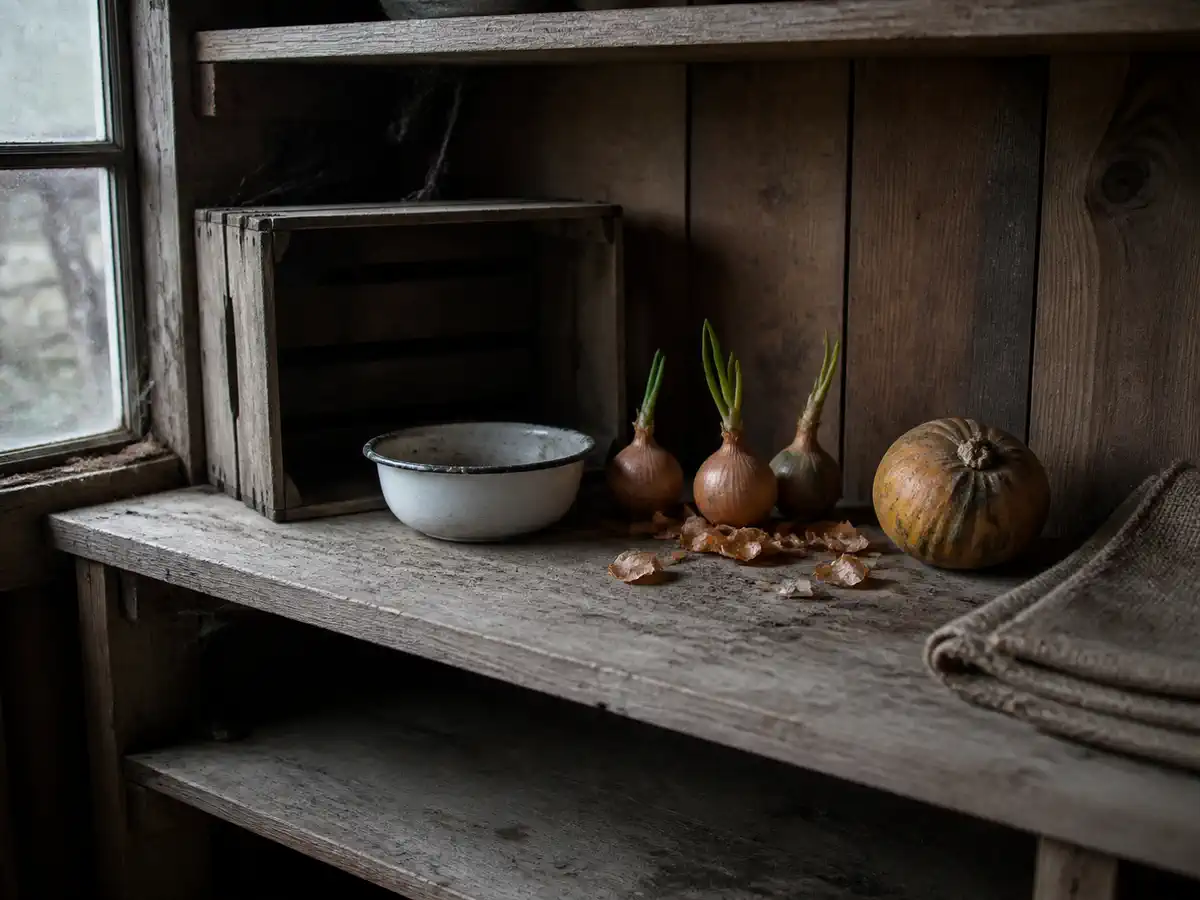
An almost empty wooden storage shelf in an allotment shed, holding three sprouting onions, one shrivelled squash and a scattering of papery skins beside an empty enamel bowl and upturned crate.

The two points in the year that catch out everybody

Almost every problem a second year grower brings up is really one of these two. Both are timing problems, and both are solved months before they happen.

The hungry gap, April and May

Last year is eaten or gone over, and this year is sown but nowhere near ready. It arrives at exactly the moment the plot looks busiest and the work is heaviest, which is what makes it so demoralising.

The fix is not in April. It is the leeks, purple sprouting broccoli, spring cabbage and overwintered salad you sowed the previous summer.
The glut, July and August

Everything ripens at once because it was all sown at once, and by the second week you are giving beans away and quietly resenting the courgettes.

The fix is sowing little and often instead of everything in one April afternoon, plus a plan for the surplus before it is standing on your kitchen table.

The month ahead, in your inbox.

What to sow, what to pick, and what I got wrong. One email at the start of each month, so the sowing window does not go past while you are busy.

One email a month. Unsubscribe any time.

Where to go next

Whichever one matches the year you are having.

You are in year one

The first month on a new plot, week by week.

You want to fix the gaps

Succession, rotation, and eating from the plot all year.

You have a crop in front of you

The full library of crop and task guides.