The tools a half plot actually needs
Seven things, about a hundred and fifty pounds if you buy well, and most of them will outlive you. Everything else is optional.
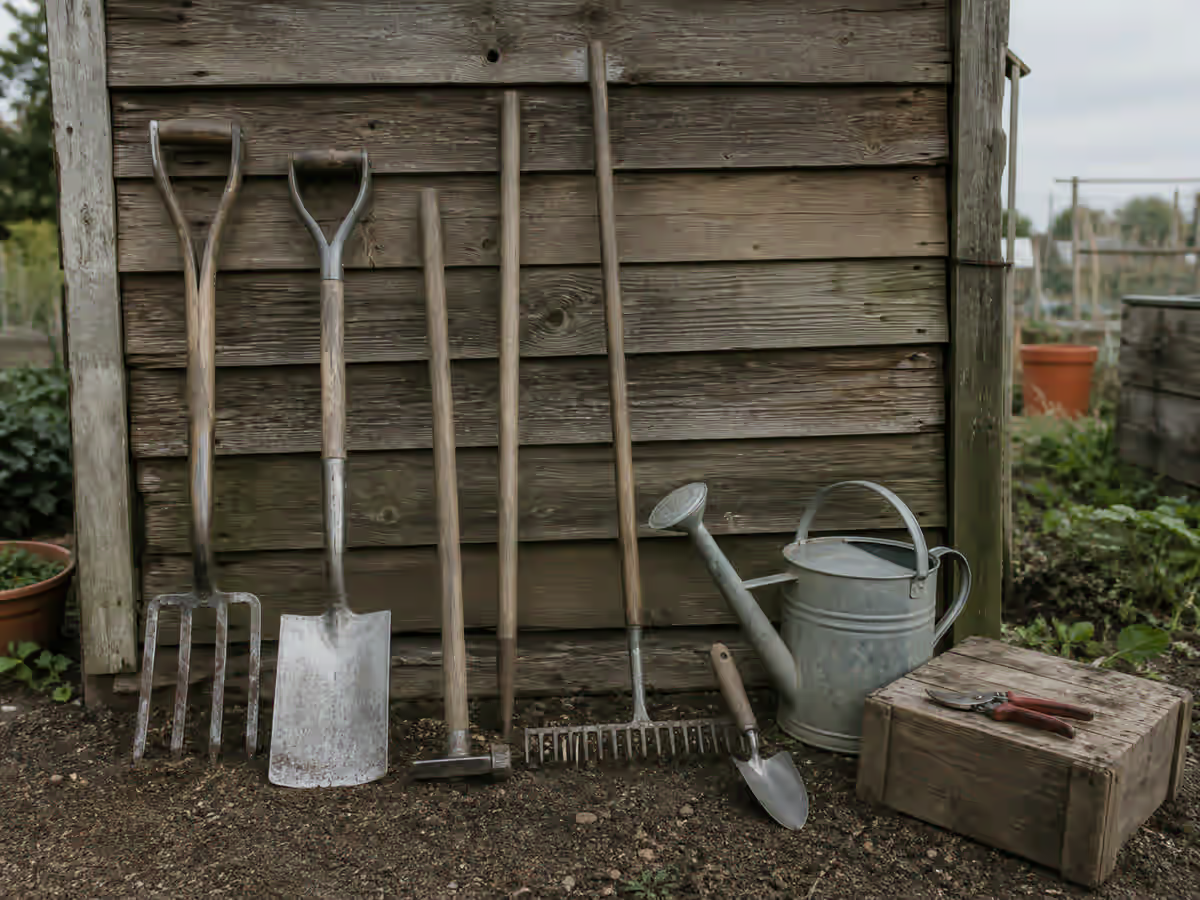
A fork, a spade, a draw hoe, a rake, a hand trowel, a watering can and a decent pair of secateurs. Buy second hand where you can, because older forged tools are usually better than new pressed ones. A sharp hoe is worth more than any powered tool you could buy.
The seven you need
Buy these and stop. A half plot does not need anything else to be worked properly.
| Tool | What for | Roughly | What to look for |
|---|---|---|---|
| Digging fork | Lifting potatoes, breaking ground, getting perennial roots out | 25 to 60 pounds | Forged head, not pressed. Solid socket where head meets shaft |
| Spade | Edging, trenching, moving compost | 25 to 60 pounds | A treaded top edge saves your boots. Stainless is easier in clay |
| Draw hoe or stirrup hoe | Weekly weeding, taking out drills, earthing up | 15 to 35 pounds | Long handle so you stand upright. Must take an edge |
| Rake | Levelling seedbeds, raking off debris | 15 to 30 pounds | Steel head, 12 to 14 teeth. Not a plastic lawn rake |
| Hand trowel | Planting out, transplanting, weeding close in | 8 to 25 pounds | One piece forged if you can. Cheap ones bend at the neck within a season |
| Watering can | Everything | 10 to 25 pounds | Two 10 litre cans beat one 15 litre. A fine rose for seedlings |
| Secateurs | Pruning, cutting, harvesting | 15 to 40 pounds | Bypass rather than anvil. Replaceable blades and springs |
Second hand forged tools from a car boot sale are usually better made than new ones at twice the price. A rusty head cleans up. A cracked shaft can be replaced.
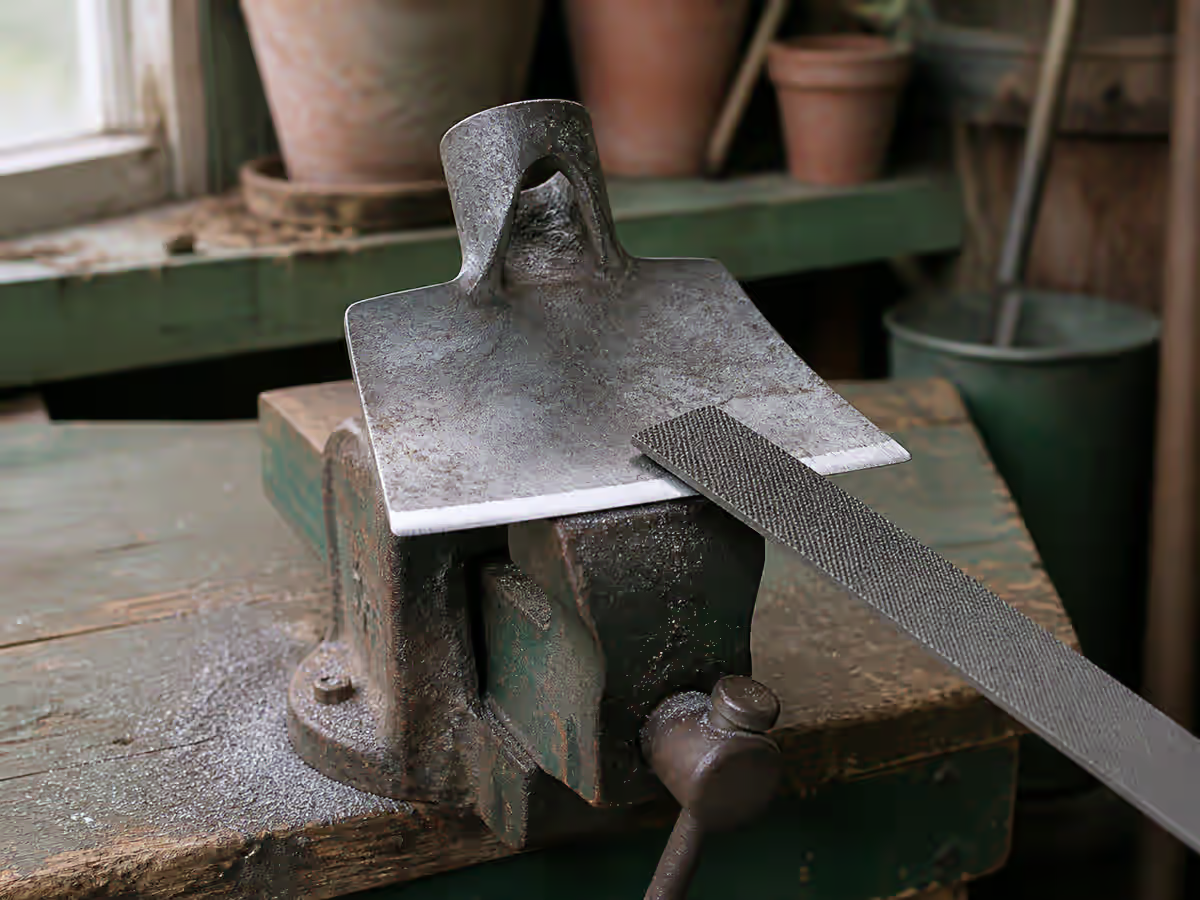
A sharp hoe is worth more than a rotavator
The hoe is the tool that decides how much time you spend on the plot, and almost nobody sharpens one.
A hoe works by slicing seedling weeds off just below the surface. A sharp edge does that with a light push and you walk the beds at a steady pace. A blunt edge drags and tears instead, so you push harder, disturb more soil, bring up more weed seed and take twice as long to do a worse job.
Take a flat file to it two or three times a season. Follow the existing bevel, half a dozen strokes in one direction only, and stop. It takes ninety seconds and it is the highest return maintenance job on the plot.
The same applies to the spade. A spade with a sharpened leading edge cuts through turf and root instead of crushing it, and it makes edging a path a pleasure rather than a fight.
What should you skip on a half plot?
| Thing | Why people buy it | Why it does not earn its place |
|---|---|---|
| Rotavator | To clear a weedy plot fast | Chops perennial roots into hundreds of fragments and each grows. Turns one problem into a much bigger one |
| Powered cultivator | To prepare beds each spring | No dig beds do not need preparing. Once you are mulching, there is nothing for it to do |
| Full sized wheelbarrow | It looks essential | Often too wide for allotment paths. A builders bucket and a two wheeled trolley suit a half plot better |
| Seed sowing gadgets | To sow evenly | Your fingers and a pinch of seed are as accurate and never jam |
| Heated propagator | To start seed early | Only worth it if you actually grow chillies or aubergines. Most things want a March sowing anyway |
| Cloche kits | To warm the soil | A sheet of old glass, some clear plastic or a length of fleece over hoops does the same for nothing |
| Long handled bulb planter | Planting garlic and onions | A trowel or a dibber is faster for the forty holes a half plot needs |
The cheap things genuinely worth having
None of these is a tool exactly, and all of them earn their place several times over each season.
- A roll of fine mesh netting and some hoops. This one item saves more crops than anything else you can buy
- A roll of fleece, for late frosts, carrot fly and warming soil
- String and a couple of short canes, for straight rows and marking what is where
- Wooden or plastic labels and a pencil. Pencil does not fade, permanent marker does
- A folding pruning saw, for bramble, old fruit wood and shed repairs
- A bucket of sharp sand or grit, for improving drainage where herbs and roots go
- An old kneeler or a folded sack, because forty is not thirty
Looking after them
Tools left in a damp shed all winter rust, stiffen and rot at the handle. Twenty minutes in November roughly doubles how long they last.
Scrape the soil off, wash the heads and dry them properly. Rub the metal with an oily rag, any oil will do, including old cooking oil. Wipe wooden handles with linseed oil, which stops them drying out and splintering.
Sharpen the hoe and the spade with a flat file. Put a drop of oil on the secateur pivot and clean the sap off the blades with wire wool.
Then hang them up rather than standing them on the shed floor. Standing a fork or spade on its head in a damp shed is how the metal pits and how the shaft wicks up moisture and rots at the socket, which is where almost every old tool eventually fails.
Questions that come up
The four asked most about tools.
Stainless steel or carbon steel?
Stainless sheds heavy clay much better and does not rust, which matters in a damp shed. Carbon steel is cheaper, takes a sharper edge and is what most good second hand tools are made of. Either is fine. The quality of the forging matters far more than the metal.
Is it worth buying second hand?
Yes, particularly forks and spades. Tools made forty years ago were generally forged rather than pressed and are noticeably stronger. Look for a solid socket, no cracks at the neck, and a shaft you can replace if you need to.
Do I need a spade if I am not digging?
Yes, for edging beds and paths, moving compost, and getting perennial weed roots out. You use it far less on a no dig plot, but there is no substitute when you want one.
What should I buy first if money is tight?
Netting, before any tool. A fork and a hoe can be borrowed or bought second hand for very little, but an unnetted brassica bed produces nothing at all, and that is the difference between eating in February and not.
Written by Sam
Eight years on a half plot in Nottinghamshire. Four beds, two water butts, about two hours a week, and most of what is on this site tried twice before it worked. Dates here suit most of England and Wales, because that is where the plot is. Where a page makes a claim you could check for yourself, it links to the source.
Less kit, more crop.
One email a month about doing less on the plot and getting more from it.
One email a month. Unsubscribe any time. How we look after your details.