Succession sowing, so it stops arriving all at once
The habit that turns a fortnight of gluts followed by nothing into a steady supply from June to November. Same seed, same beds, same total crop.
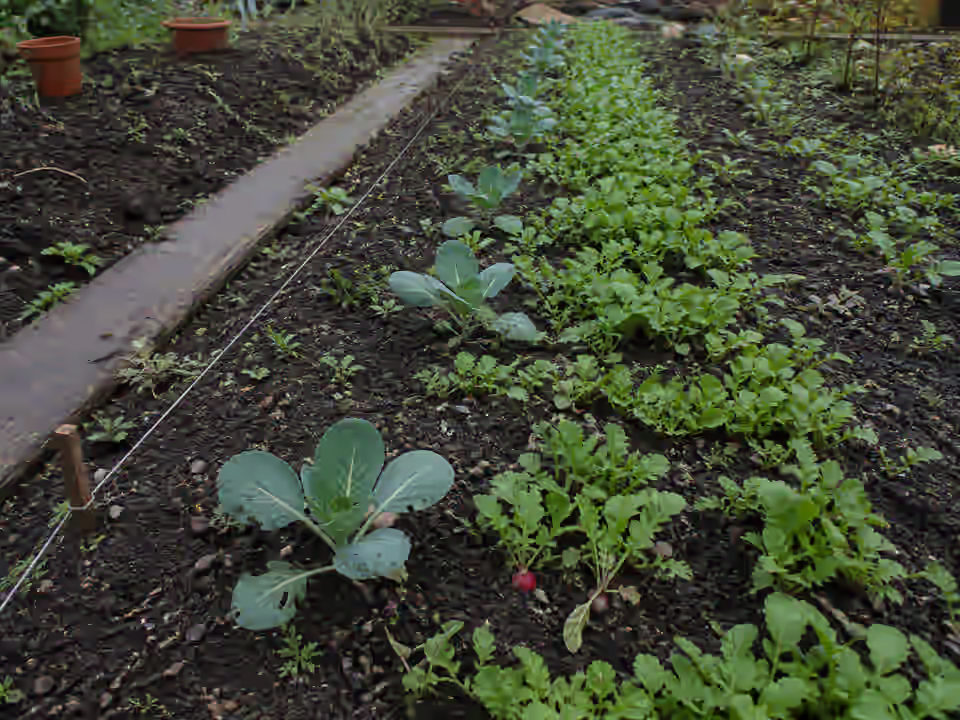
Sow a third of the packet, not the whole thing. Repeat every three weeks for fast crops like salad, and split slow crops like beans into two sowings three or four weeks apart. Put the dates in your phone, because the second sowing is the one everybody forgets.
A glut is a sowing pattern, ten weeks late
Forty lettuces ready in the same week is not bad luck and it is not over enthusiasm about lettuce. It is one packet sown in one afternoon, showing up on schedule.
Every crop takes a broadly predictable number of weeks from sowing to picking. Sow the whole packet at once and every plant hits that date together, so you get a fortnight of far too much followed by two months of nothing. Then, because there is nothing, you sow another whole packet, and the cycle repeats.
Succession sowing is just spreading the sowing so the harvest spreads with it. It costs no extra seed, no extra bed space and no extra work, because you are doing the same total sowing in smaller pieces. The only thing it costs is remembering.
What should you split, and by how much?
Not everything needs it. Fast crops need frequent small sowings, slow crops need two or three sowings, and some crops should only be sown once.
| Crop | Sow every | From | To | Row length each time |
|---|---|---|---|---|
| Salad leaves and rocket | 3 weeks | March | September | 1 metre |
| Lettuce | 2 to 3 weeks | March | August | 10 plants |
| Radish | 2 weeks | March | September | 50cm |
| Spring onions | 4 weeks | March | July | 1 metre |
| Beetroot | 4 weeks | April | July | 1 metre |
| Carrots | 5 to 6 weeks | March | July | 1.5 metres |
| Turnips | 4 weeks | March | August | 1 metre |
| French beans | 4 weeks | May | July | 2 metres |
| Runner beans | Twice only | Mid May | Mid June | Half the frame each time |
| Courgettes | Twice only | Late May | Mid June | One plant each time |
| Peas | 4 weeks | March | June | 2 metres |
Sow once only: parsnips, maincrop potatoes, onions from sets, garlic, purple sprouting, spring cabbage and leeks. All of these have one right window and splitting them gains nothing.
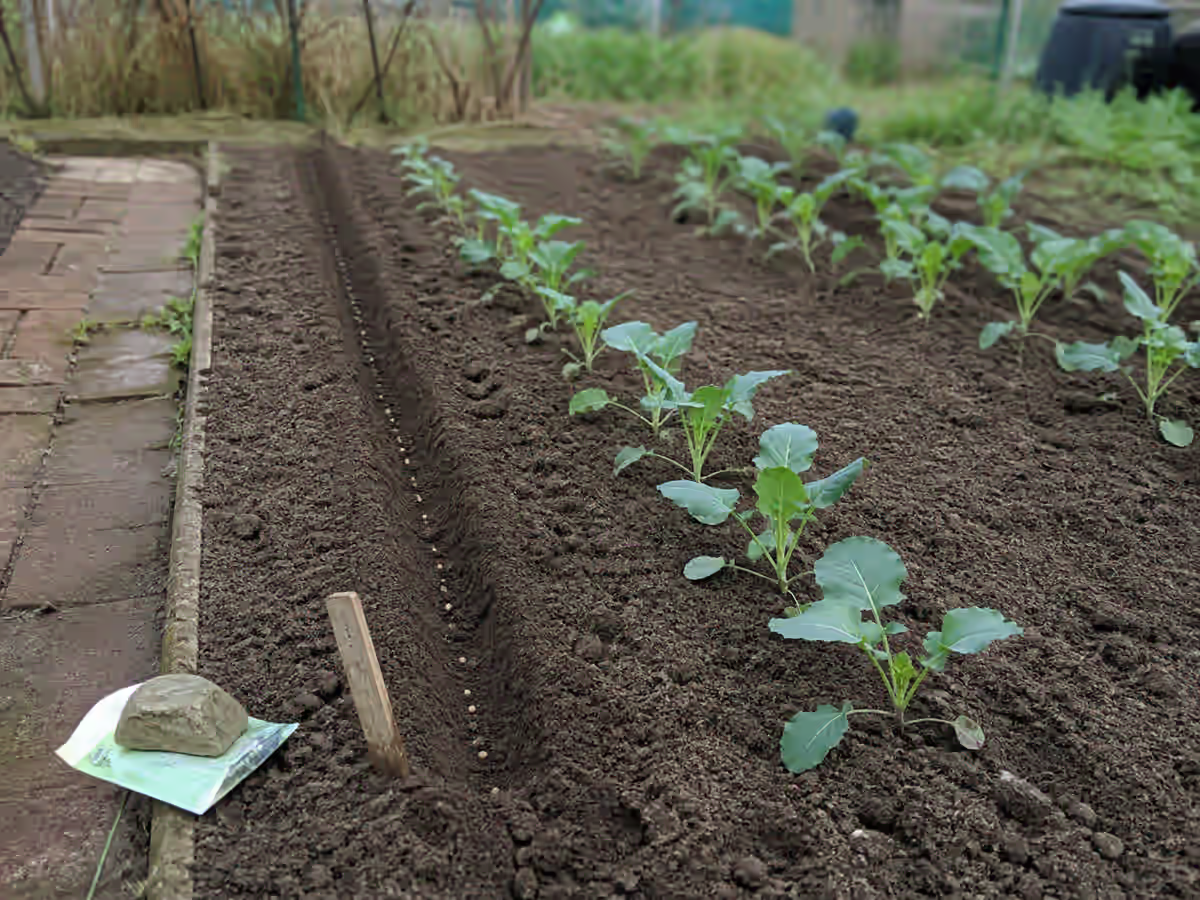
The second sowing is the one you forget
Everyone manages the first sowing. It is March, the plot is empty, there is time and enthusiasm, and the seed packets are new.
The second sowing falls in late April, when the plot is suddenly busy, and it is the one that gets skipped. Then the third, in May, gets skipped as well, and by July you have the exact gap you were trying to avoid.
Two things fix it, and neither is willpower. Put the dates in your phone as a repeating reminder before the season starts, in February when you have time to think. Three weekly, from March to September. It takes five minutes once.
And use the crop itself as the trigger. When the first row is up and looking like a row, sow the next one. When the second row is up, sow the third. That way the plot reminds you instead of the calendar, and you never need to remember a date at all.
The second habit is more reliable, because you are already standing in front of the bed.
Catch cropping, for the gaps between
A bed is rarely full for the whole season. Fast crops slot into the gaps and are gone before the main crop needs the room.
- Radish between rows of parsnips. Up in four weeks, gone long before the parsnips need the space
- Salad between newly planted brassicas, which will not need their full 60cm until August
- Rocket or spinach in the gap after the first early potatoes come out and before the leeks go in
- Spring onions along the edge of any bed, where nothing else quite fits
- Turnips after the broad beans finish in July, ready by September
- Oriental leaves sown late July into any bed that has just emptied
Radish is the useful one here, because it also marks the row of a slow germinating crop like parsnip, so you know where not to hoe.
What goes wrong?
| Problem | What happened | The fix |
|---|---|---|
| Everything still arrives at once | Sowings were three weeks apart in spring, but crops catch up in summer heat | Widen the gap to four weeks from June, because warm soil speeds everything up |
| No room for the later sowings | The whole bed was committed to the first sowing | Plan the bed as three strips from the start, not one block |
| Later sowings bolt immediately | Sown into midsummer heat | From June sow in light shade, and switch to bolt resistant varieties |
| Later sowings never mature | Sown too late in the season | Check the weeks to maturity against the first frost. Nothing sown after mid August finishes outdoors except salad |
| Forgot after the first two | No trigger in place | Sow the next row when the previous one is visibly up |
Questions that come up
The five asked most about succession sowing.
Does succession sowing need more space?
No. It needs the same space used across a longer period. One bed sown in three strips three weeks apart produces the same total as one bed sown all at once, just spread over ten weeks instead of two.
Will I run out of seed?
No, the opposite. A packet of lettuce holds several hundred seeds and sowing a pinch at a time makes it last two or three seasons. Sowing whole packets is what wastes seed.
How late can I keep sowing?
Salad until September, and land cress and corn salad in September for winter. Most other things need to be in by late July to finish before the light goes. Check weeks to maturity against your first frost date.
Should I succession sow in modules or direct?
Direct for roots and anything that resents disturbance. Modules are useful for lettuce and brassicas because you can raise the next batch while the bed is still occupied, then plant out the day it clears.
Which crop is worth starting with?
Salad, because the feedback is fast and the difference is dramatic. Once you have done a season of three weekly salad rows, the habit transfers to everything else on its own.
A reminder to sow the next short row.
The second sowing is the one everybody misses. One email a month, on the first.
One email a month. Unsubscribe any time. How we look after your details.