Growing beans and peas
The group that feeds the soil as well as you. Broad beans in November, runners in May, and the one bed on the plot that leaves it better than it found it.
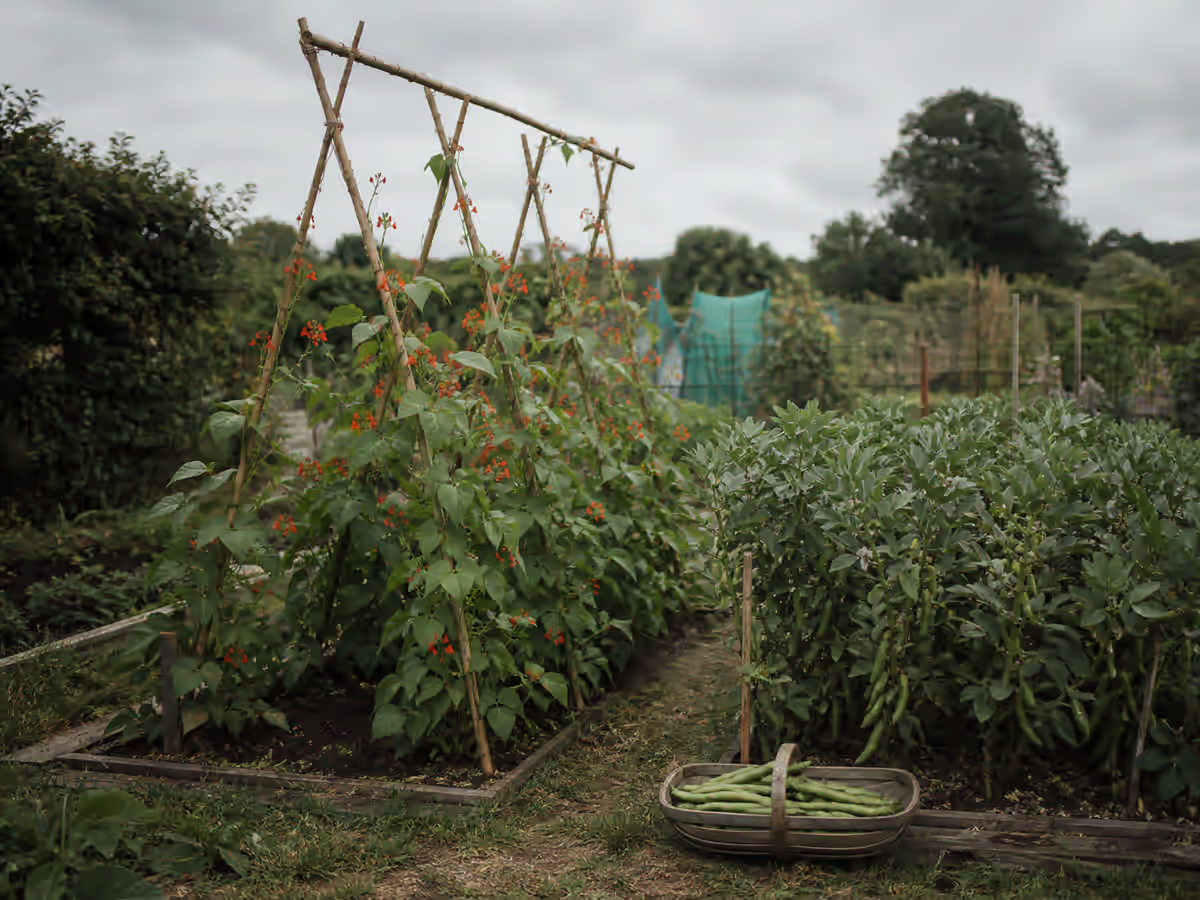
Sow broad beans in November for a late May crop, or February for late June. Sow runner and French beans direct from mid May, 20cm apart at the foot of each cane. Pick every two or three days to keep them flowering. Cut the tops off when finished and leave the roots in the ground.
Beans and peas at a glance
| Crop | Sow | Depth | Spacing | Picking from | From one 3m bed |
|---|---|---|---|---|---|
| Broad beans, autumn sown | Early November | 5cm | 20cm, double rows 25cm | Late May | 4kg to 6kg |
| Broad beans, spring sown | February to March | 5cm | 20cm, double rows 25cm | Late June | 4kg to 6kg |
| Runner beans | Mid May to mid June | 5cm | 20cm at each cane | Late July | 8kg to 12kg |
| French beans, climbing | Mid May to early July | 5cm | 15cm at each cane | Late July | 5kg to 8kg |
| French beans, dwarf | Mid May to mid July | 5cm | 15cm, rows 45cm | Late July | 3kg to 5kg |
| Peas | March to early June | 4cm | 7cm in a wide flat drill | Early July | 2kg to 4kg |
Peas give the smallest return for the space and the effort of any crop here. Grow them because fresh peas are genuinely different, not because they are efficient.
Why broad beans go in during November
An autumn sown broad bean germinates, makes a plant about 10cm high, and then more or less stops until February while it puts roots down. When the light returns it is already established and crops from about the third week of May. A February sowing does all of that from a standing start and crops in late June.
That three week difference lands exactly at the tail of the hungry gap, so autumn sown broad beans are often the first substantial thing you pick all year.
They also duck the blackfly. Blackfly arrive on soft growing tips in late spring. An autumn sown plant is already podding by then, so you can pinch the top 8cm out and lose nothing. A spring sown plant is still growing when they arrive and takes the full hit.
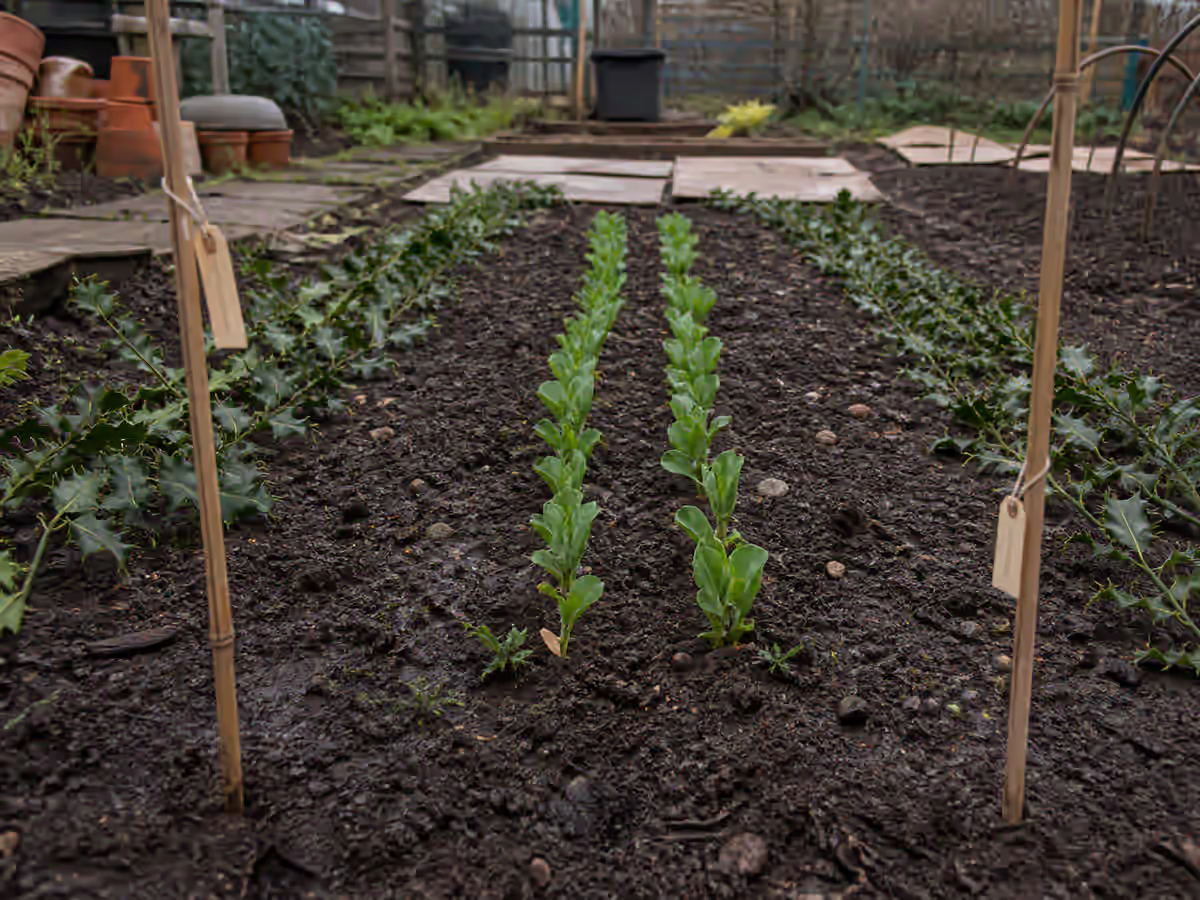
Sow in a double row, 20cm between plants and 25cm between the two rows, with 60cm to the next pair. The double row lets the plants hold each other up, which matters far more on a windy plot than any staking you do afterwards. Use a hardy variety, and expect mice to take some, so sow a few spare at the row ends.
Building a bean frame that survives August
A collapsed runner bean frame in the last week of August, fully laden and soaking wet, is a rite of passage. It does not have to be.
- Build the frame before the beans go in, never after
- Push canes in at least 30cm deep, further on light soil
- Tie the crossing point with string rather than relying on the crossed canes to hold
- Run a horizontal cane along the top and lash it at every crossing. This is the part people skip and it is what stops the whole thing folding sideways
- Angle a wigwam so it sheds wind, and site a long double row end on to the prevailing wind
- Pinch out the growing tips when they reach the top of the canes
What goes wrong?
| Problem | What you see | What to do |
|---|---|---|
| Blackfly on broad beans | Dense black clusters on the growing tips | Pinch out the top 8cm once the first pods set. Squash what is left. No spray needed |
| Flowers but no pods on runners | Plenty of red flowers, nothing setting | Dry roots or very hot nights. Water at the base thoroughly. Old advice to mist the flowers does nothing |
| Mice taking sown beans | Gaps in the row, no seedlings | Commonest cause of autumn sowing failure. Start in pots in a cold frame instead, or sow spares |
| Chocolate spot | Brown blotches on broad bean leaves and pods | Fungal, worse in a wet spring. The beans inside are fine. Do not compost heavily affected foliage |
| Stringy runner beans | Tough pods with a fibrous seam | Picked too late. Pick every two or three days. Once pods swell, the plant stops flowering |
| Pea moth | Maggots inside the pods | Worst in midsummer sowings. Early and late sowings largely escape it |
Never pull the roots up
When the plants finish, cut the tops off at ground level and compost them, but leave the roots exactly where they are.
Peas and beans host bacteria in nodules on their roots that take nitrogen out of the air and fix it into the soil. Pull the roots and you take that away with them. Leave them to rot in place over autumn and winter and the nitrogen stays in the bed.
That is the entire reason legumes sit immediately before brassicas in a four bed rotation. The beans put the nitrogen in, and the cabbages, kale and purple sprouting that follow are hungry for exactly that. It costs nothing and it is the closest thing to a free lunch the plot offers.
Questions that come up
The five asked most about beans and peas.
Should I sow all my runner beans at once?
No. Half in May and half in mid June gives you beans from late July to the first frost, instead of a fortnight of glut followed by stringy pods. It is the same seed and the same total crop, just spread over ten weeks.
My runner beans flower but never set pods. Why?
Almost always dry roots, sometimes very hot nights. Water thoroughly at the base rather than over the foliage, and mulch. Spraying the flowers with water is a persistent myth that does nothing.
Do I need to soak the seed before sowing?
No, and it often does harm. Soaked beans split and rot in cold wet soil. Sow them dry into moist ground and let them take up water at their own rate.
French or runner beans for a half plot?
Runners crop more heavily per metre of row and keep going longer. Climbing French beans are more tender, freeze better and never go stringy. If you only have room for one frame, runners give more food, French give better eating.
Why are my peas not worth the space?
Because they mostly are not, in yield terms. A 3m bed of peas gives a few meals. They are worth growing for the taste of a fresh pea, which is genuinely unlike a frozen one, but never plant them expecting them to feed you.
Where this comes from
Sowing depths and spacings below are ordinary practice. The two things that go wrong with beans and peas, and the blackfly question everyone asks about, are set out properly here.
- RHS, Broad bean chocolate spot, on the fungal spotting that hits overwintered beans hardest in a wet spring
- RHS, Aphids, on blackfly, and on why pinching out the growing tip removes the colony site
- RHS, Pea moth, on the maggot in the pod, and why the sowing date decides it
Last reviewed 17 August 2026.
Written by Sam
Eight years on a half plot in Nottinghamshire. Four beds, two water butts, about two hours a week, and most of what is on this site tried twice before it worked. Dates here suit most of England and Wales, because that is where the plot is. Where a page makes a claim you could check for yourself, it links to the source.
A nudge in May, when the glut is actually decided.
Sowing in small batches rather than all at once. One email a month, at the point it helps.
One email a month. Unsubscribe any time. How we look after your details.