Crop rotation on four beds
Four beds, four groups, move each one along by one bed every year. That is the whole system, and it is the cheapest disease control there is.
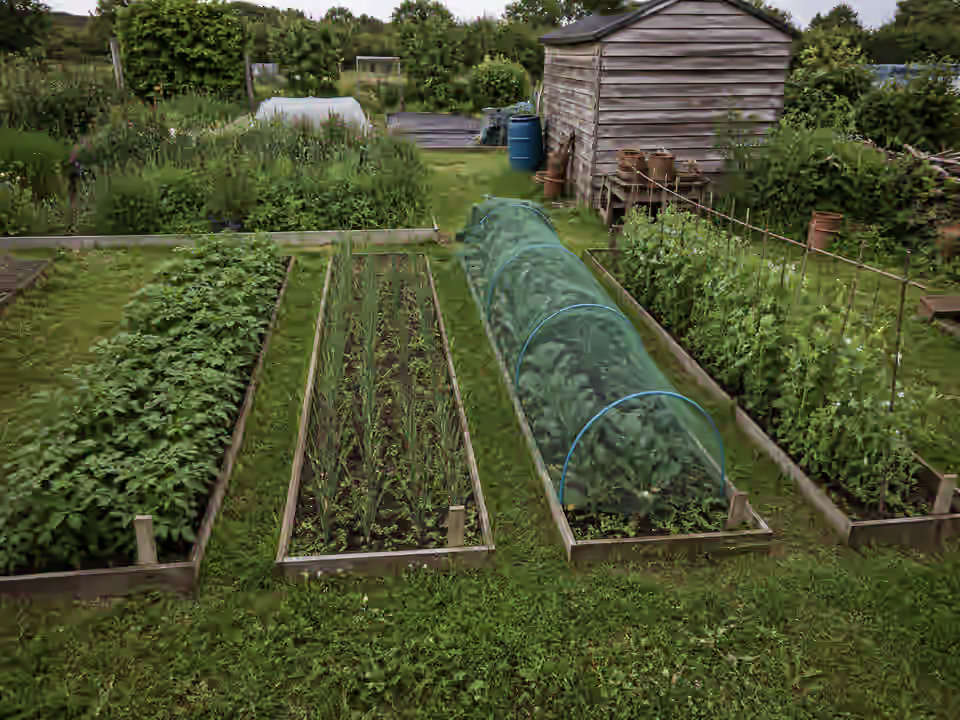
Put potatoes in bed one, legumes in bed two, brassicas in bed three, and roots and onions in bed four. Every year move each group along one bed. After four years each group is back where it started, and no soil disease has had a chance to build up.
The four groups
Everything you grow belongs to one of these four, or to the permanent corner that sits outside the rotation entirely.
| Group | What is in it | What it does to the soil | What it needs |
|---|---|---|---|
| Potatoes | First earlies, second earlies, maincrop | Foliage smothers weeds. Digging opens the soil up | A generous mulch. No fresh manure in the trench |
| Legumes | Broad beans, runner beans, French beans, peas | Leaves nitrogen behind in the root nodules | Very little. Leave the roots in when you clear the tops |
| Brassicas | Purple sprouting, kale, cabbage, calabrese, swede, turnip | Heavy feeders. Takes the nitrogen the legumes left | Firm ground, netting, and a pH near neutral |
| Roots and onions | Carrots, parsnips, beetroot, onions, garlic, leeks | Takes least out. Deep roots open the lower soil | The leanest bed. Rich ground makes roots fork |
Courgettes, squash, sweetcorn and salad do not really belong to any of them. Slot them into wherever there is a gap.
Four years on four beds
Read across a row to see one year. Read down a column to see the story of one bed.
| Bed 1 | Bed 2 | Bed 3 | Bed 4 | |
|---|---|---|---|---|
| Year 1 | Potatoes | Legumes | Brassicas | Roots and onions |
| Year 2 | Roots and onions | Potatoes | Legumes | Brassicas |
| Year 3 | Brassicas | Roots and onions | Potatoes | Legumes |
| Year 4 | Legumes | Brassicas | Roots and onions | Potatoes |
| Year 5 | Back to year 1 |
Write this out once, put it in the shed, and you never have to think about it again.
Why the order is the order
The sequence is not arbitrary. Each group hands something to the one that follows it.
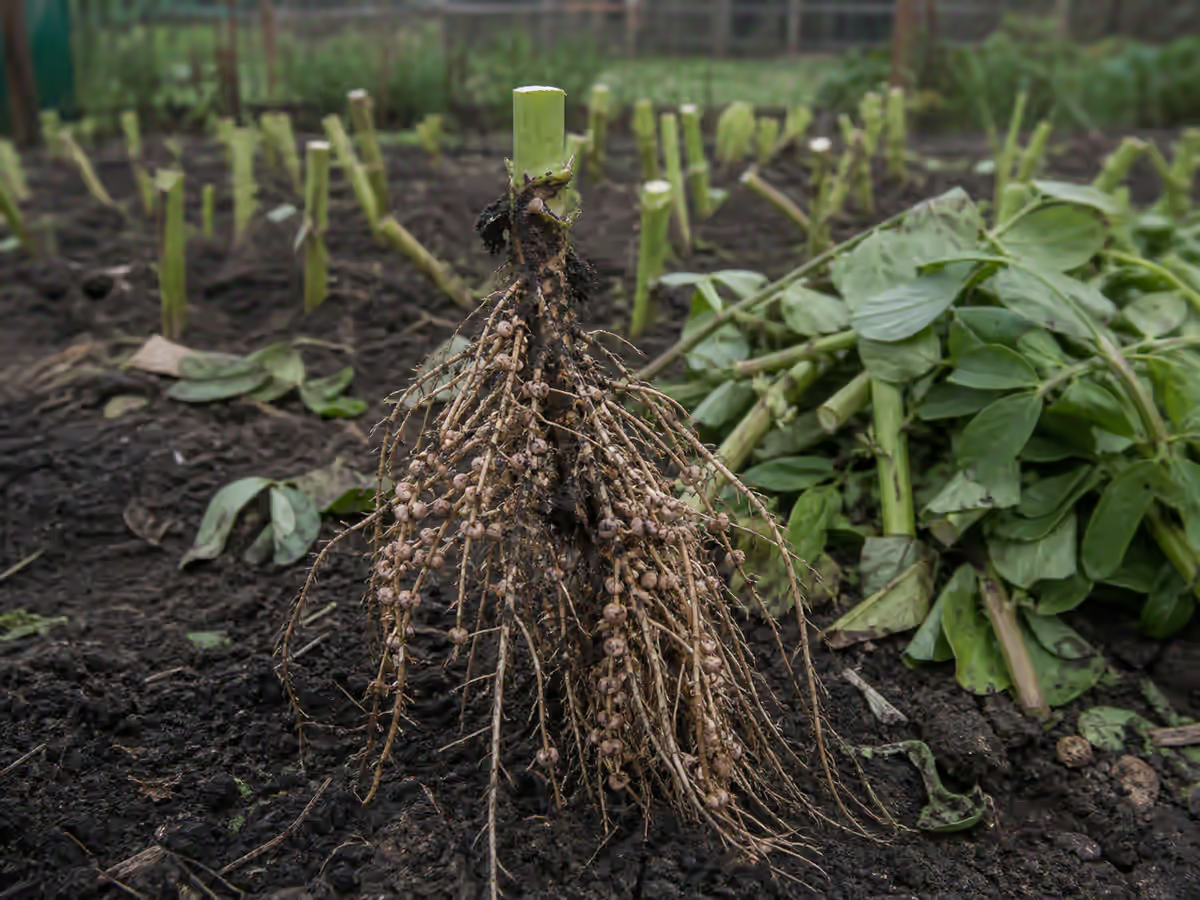
Legumes to brassicas is the important one. Peas and beans host bacteria in root nodules that fix nitrogen out of the air. Cut the tops off at ground level, leave the roots in the ground to rot, and the nitrogen stays in the bed. Brassicas are hungry for exactly that, so they follow directly.
Brassicas to roots works because the brassicas have used up the excess nitrogen. Roots put into rich ground fork and split, chasing the richness. They want the leanest bed in the cycle, which is the one the cabbages have just emptied.
Roots to potatoes works because potatoes want the mulch and the manure, and applying it to the bed the roots have just left does no harm to anything.
And potatoes to legumes works because the potato foliage leaves the ground clean and weed free, and beans are undemanding enough to follow anything.
What is rotation actually for?
Two things, and the second matters much more than most people realise.
The first is nutrients, which is the part everybody knows: different groups take different things out and put different things back, so moving them evens the demand out across the plot.
The second is soil borne disease, and this is the real reason. Clubroot in brassicas, onion white rot, and potato cyst eelworm all build up in soil where the same group is grown repeatedly. All three persist for many years, and none of them has a cure. Once you have clubroot in a bed, it is there for decades.
Rotation does not remove those organisms, but it stops them building to the level where they wreck a crop. A four year gap between brassica crops in a given bed is generally enough to keep clubroot below the threshold where it matters, which is why four beds and four groups fits a half plot so neatly.
This is also why the rotation is worth keeping even when it is inconvenient. The cost of breaking it shows up three years later, not immediately.
When it does not fit neatly
A four bed rotation on a real half plot is never perfectly tidy. Six situations that come up, and what to do about them.
- Courgettes, squash, sweetcorn and salad belong to no group. Put them wherever there is room, and do not lose sleep over it
- Swede and turnip are brassicas, despite being roots. They belong with the cabbages, not the carrots
- Rhubarb, asparagus, herbs and soft fruit are permanent. Keep them in a corner outside the rotation entirely
- When first earlies come out in June, plant winter brassicas into the same bed. That is a within year handover, not a break in the rotation
- If a group needs more room than one bed, borrow half of the next one and accept the rotation is approximate
- Keep a written record of what was where. Nobody remembers three years back, and the memory is the whole system
Questions that come up
The five asked most about rotation.
Does rotation really matter on a small plot?
Yes, and arguably more, because a half plot has nowhere to escape to. Clubroot or white rot in a small plot affects a much larger proportion of your growing space, and neither can be cured.
What if I only have three beds?
A three year rotation still works and is much better than none. Combine roots and onions with the legumes, or drop potatoes and buy them, which on a small plot is a reasonable trade anyway.
Where do tomatoes go?
With the potatoes. They are the same family and share blight, so keep them together and move them as one group. Never follow potatoes with tomatoes in the same bed.
Can I grow the same salad crop in the same place every year?
Salad is low risk and short lived, so in practice yes. It is not carrying the diseases that make rotation matter. Slot it into gaps wherever they appear.
I have inherited a plot and have no idea what was grown where. What now?
Start your rotation from this year and write it down. If you find swollen distorted brassica roots or white fluffy rot on old onion stumps, note which bed and avoid that group there for as long as you can.
Where this comes from
The four bed cycle here is one workable version rather than the only one. What the rotation is defending against is a matter of record.
- RHS, Crop rotation, on the standard groupings and the reasoning
- RHS, Club root, the brassica problem rotation is mostly aimed at
- RHS, Onion white rot, on sclerotia that sit dormant for fifteen years, which is longer than any rotation you can run
- RHS, Potato blight, on why volunteers left in the ground carry it through the winter
Last reviewed 17 August 2026.
Written by Sam
Eight years on a half plot in Nottinghamshire. Four beds, two water butts, about two hours a week, and most of what is on this site tried twice before it worked. Dates here suit most of England and Wales, because that is where the plot is. Where a page makes a claim you could check for yourself, it links to the source.
Write it down once, then stop thinking about it.
One email a month on planning a half plot so it runs itself.
One email a month. Unsubscribe any time. How we look after your details.