Growing salad leaves all year
The fastest return on the plot, the cheapest thing to grow against what it costs in a shop, and the crop that teaches the one habit that fixes everything else.
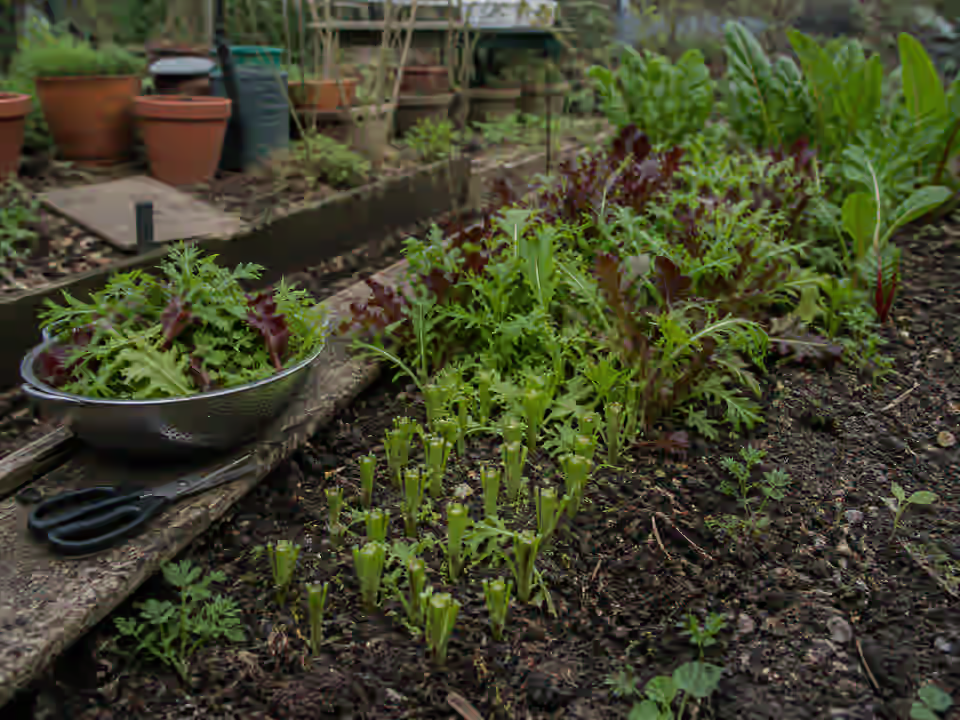
Sow a short row every three weeks from March to September, never a whole packet at once. Sow 1cm deep in rows 15cm apart and thin to 10cm. Cut across the top leaving 3cm and it regrows two or three times. Land cress and corn salad sown in September stand outdoors all winter.
The salad year
Different leaves for different parts of the year. Trying to grow lettuce in July or rocket in May is most of why people decide salad is difficult.
| Leaf | Sow | Ready | Best season | Worth knowing |
|---|---|---|---|---|
| Lettuce, loose leaf | March to August | 5 to 7 weeks | Spring and autumn | Bolts in midsummer heat. Sow in light shade from June |
| Rocket | March to September | 3 to 4 weeks | Spring and autumn | Bolts fast and goes fiery in summer heat. An autumn crop really |
| Mixed cut and come again | March to September | 4 to 5 weeks | All season | The best value sowing on the plot |
| Land cress | August to September | 8 weeks | Winter | Tastes like watercress and stands outdoors all winter unprotected |
| Corn salad | August to September | 10 weeks | November to April | The most weather proof leaf there is |
| Winter lettuce | September | March | The hungry gap | Sits all winter, then races away in February |
| Oriental leaves and pak choi | Late July to September | 6 to 8 weeks | Autumn | Bolts immediately if sown before July |
Land cress and corn salad are the two least known and most useful sowings on the whole calendar. They cost pennies and they are the difference between a bare February and a salad.
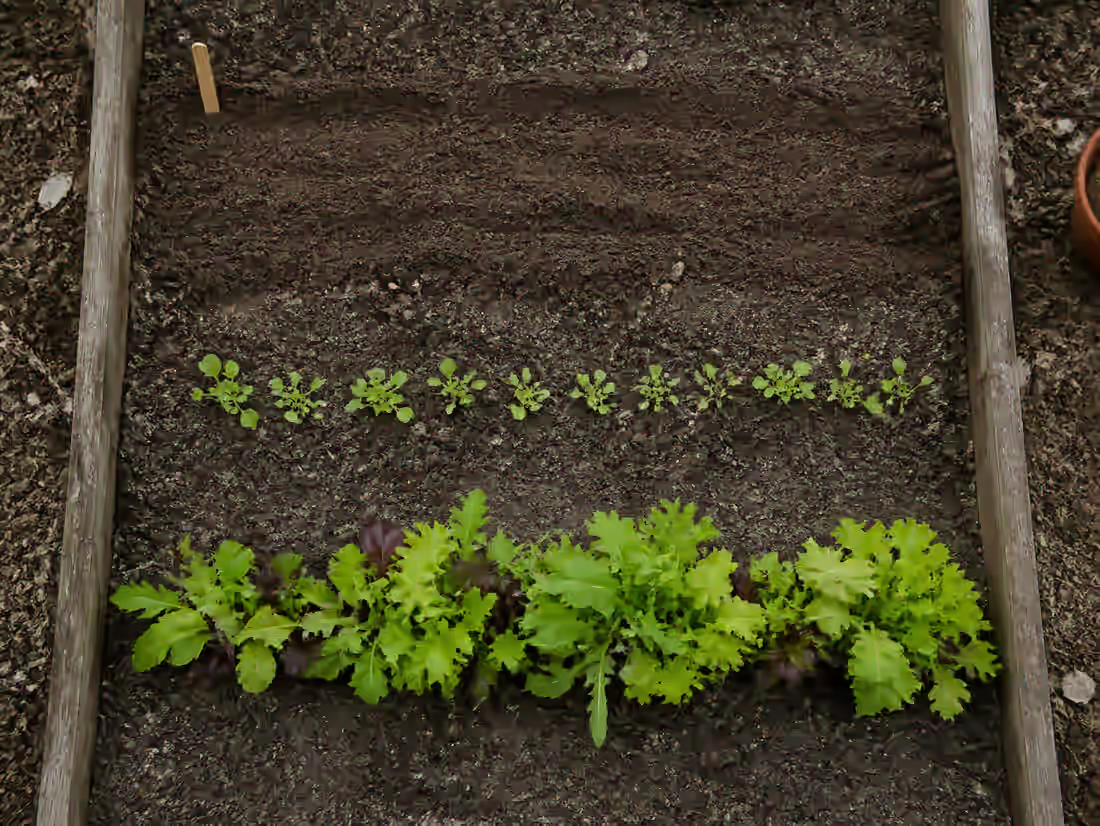
Sow a short row, not a packet
This is the single habit worth taking from this page, and it applies to far more than salad.
A whole packet of lettuce sown in one go in April gives you forty lettuces ready in the same week in May, of which you eat six, and then nothing at all until you sow again. Almost everyone does this in their first year and concludes they are bad at growing salad.
Sow a row about a metre long, roughly a pinch of seed, every three weeks from March to September. Same packet, same bed, same total crop. It just arrives across six months instead of one fortnight.
Put the dates in your phone rather than trusting yourself to remember, because the second sowing is the one everybody misses. By the time the first row looks ready to cut, the second should already be up.
Cut and come again, properly
Done right, one sowing gives you three cuts over about six weeks. Done wrong it gives one cut and a row of stumps.
- Cut across the whole row with scissors, leaving about 3cm of stem standing
- Never cut into the growing point at the very base, or it will not regrow
- Cut in the morning while the leaves are turgid, not in the afternoon heat
- Water the row straight after cutting to push the regrowth
- Expect three cuts, then pull the row and sow again. The fourth cut is always bitter
- Take the outer leaves only from lettuce hearts you want to keep going longer
What goes wrong?
| Problem | What you see | What to do |
|---|---|---|
| Bolting | A tall flower stem, leaves turn bitter | Heat and long days. Sow in light shade from June, keep the row watered, and switch to summer varieties |
| Slugs | Seedlings vanish overnight, holes in leaves | Worst on a newly cleared plot. Sow in modules and plant out at 5cm tall rather than sowing direct |
| Patchy germination | Gaps along the row | Lettuce will not germinate above about 25C soil temperature. Sow in the evening and water the drill first in summer |
| Bitter leaves | Harsh taste even before flowering | Usually a dry row, or a fourth cut from an exhausted sowing. Water more and resow more often |
| Everything at once | Forty lettuces in one week | One large sowing instead of six small ones. This is the fix on the whole page |
| Flea beetle | Tiny round shot holes in rocket and oriental leaves | Cosmetic on cut and come again. Fleece over the row stops it if it bothers you |
Salad through a British winter
Most people stop sowing salad in September and start again in March, which leaves a six month gap in exactly the part of the year when a fresh leaf is worth the most.
Land cress sown in late August or early September stands outdoors through frost, snow and everything else with no protection at all. It tastes almost identical to watercress and it will still be there in March. Corn salad, sometimes sold as lamb lettuce, is even tougher and gives you small mild rosettes from November to April.
Winter lettuce sown in September behaves differently: it makes a small plant, sits doing nothing from December, then races away in February and gives you the first proper salad of the year right in the hungry gap.
Between the three, one short row of each in September, you can cut something fresh in every month of the year on an ordinary British half plot with no glass and no heat.
Questions that come up
The five asked most about salad.
Why does my lettuce always bolt in summer?
Heat and long days trigger it, and lettuce is a cool season crop pretending to be a summer one. From June, sow in the light shade of taller crops, keep the row damp, and accept that spring and autumn are its real seasons.
How often should I really sow?
Every three weeks, March to September. Nine or ten short rows across the year. If that sounds like a lot, it is about a pinch of seed and four minutes each time.
Can I grow salad in the shade of the beans?
Yes, and from June onward it is the best place for it. The shade that would hold back a tomato is exactly what stops lettuce bolting.
Do I need a greenhouse for winter salad?
No. Land cress and corn salad stand outdoors unprotected through a normal British winter. A cloche or fleece improves the quality and keeps the leaves cleaner, but neither is necessary.
Is it worth growing bagged salad varieties?
A bag of supermarket leaves costs more per kilo than almost anything else you can buy, and it is three days old when you get it. Salad is the crop where growing your own makes the clearest financial and quality difference.
Where this comes from
Cut and come again, the fortnightly metre and the scissors are all just method. The one thing that will take a whole sowing overnight is worth understanding rather than just fighting.
- RHS, Slugs and snails, on what actually works, and on the predators worth encouraging instead of pellets
Last reviewed 17 August 2026.
Written by Sam
Eight years on a half plot in Nottinghamshire. Four beds, two water butts, about two hours a week, and most of what is on this site tried twice before it worked. Dates here suit most of England and Wales, because that is where the plot is. Where a page makes a claim you could check for yourself, it links to the source.
A reminder to sow the next short row.
The second sowing is the one everybody misses. One email a month, on the first.
One email a month. Unsubscribe any time. How we look after your details.
Where to go next
Eating in winter
What actually stands outdoors from November to April.