Getting through the hungry gap
Mid March to mid June, and at its worst from about 20 April to the end of May. Last year’s crops have finished, this year’s are eight weeks off, and the plot looks like it has beaten you.
What is genuinely still standing, the second harvest almost everyone composts, and the sowings that close the gap, which all happened the previous June.
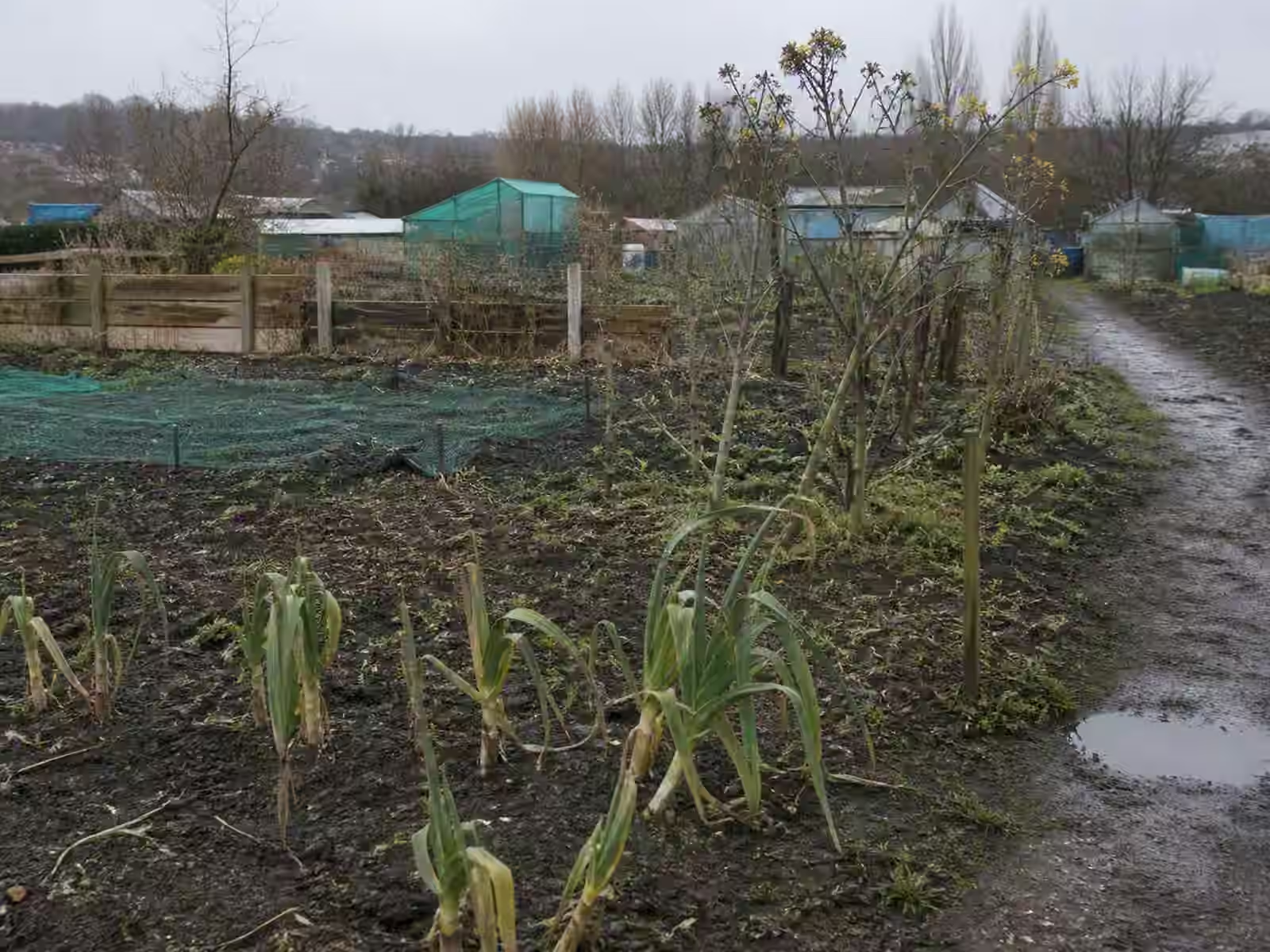
Mid March to mid June, and at its worst from about 20 April to the end of May. Last season has finished and this one is eight weeks off. What closes it is purple sprouting and kale sown the previous May, spring cabbage in August, and knowing which stored crops still reach April.
What it is, and when it actually bites
The hungry gap is the stretch of the year when last season’s crops have finished and this season’s are not ready. It is not a modern inconvenience or a sign that you planned badly. It is the oldest problem in British food, and it is the reason the traditional farming year had a lean spring built into it.
On a half plot it runs from roughly the middle of March to the middle of June, and it bites hardest across about five weeks from 20 April. That window is the emptiest the plot will be all year, and it arrives at exactly the point when the weather is finally pleasant and you most want the plot to be doing something.
It runs later in the north and in a cold spring. It can also start earlier after a mild winter, which is the opposite of what most people expect, and the next section explains why.
The gap, week by week
Mid March. Stored onions start sprouting, the last leeks go woody in the middle, and the potatoes in the sack are growing shoots.
Late March to mid April. Purple sprouting broccoli, spring cabbage and the end of the leeks. If you have these three, you are comfortable.
20 April to the end of May. The gap proper. Overwintered brassicas run to flower, stored roots are finished, and nothing sown this spring is ready.
Late May. Autumn sown broad beans, the first real cut of salad, and asparagus if you have it. The gap starts closing.
Mid June. First early potatoes. It is over, and you will not think about it again until March.
| Period | What is happening | What there is to pick |
|---|---|---|
| Mid March | Stored onions start sprouting, the last leeks run up | Leeks, kale, chard, forced rhubarb |
| Late March to mid April | Overwintered brassicas put on a burst, then start to flower | Purple sprouting, spring cabbage, kale |
| 20 April to end of May | The gap proper. Stores are empty and sowings are weeks off | Kale shoots, sprout tops, asparagus, rhubarb |
| Late May | Autumn sown broad beans and the first real cut of salad | Broad beans, salad, radish, spring onions |
| Mid June | First early potatoes come out and it is over | Potatoes, peas, salad, beetroot |
Runs a week or two later in the north, and later again after a cold spring.
It is day length, not cold
This is the part that surprises people. Overwintered brassicas do not give up in April because of the weather. They bolt because the day passes roughly thirteen hours and the plant switches from making leaves to making flowers and seed. That switch is triggered by light, not temperature, which is why a warm early spring empties the plot sooner rather than later. A mild March feels like good news for about a fortnight.
Stored crops know what month it is
Onions, garlic and potatoes in store are dormant rather than dead, and they come out of dormancy on the same seasonal cue as everything growing outside. From about March they sprout, soften and go over regardless of how carefully you dried and stored them. Good storage moves this by a few weeks. Nothing moves it by a few months, so plan for onions to finish in March rather than hoping.
Anything sown now takes eight to twelve weeks
Which is the whole difficulty. Something sown in the first week of April will not feed you until late May at the earliest, and radish at about four weeks is the only genuine exception on the whole seed rack. The gap therefore cannot be fixed by anything sown during it. The work that closes an April gap was done the previous June, and that is the single most useful sentence on this page.
It is worst in year two
In year one you are not expecting much and the gap passes unnoticed. In year two you have had one good August, you have found out how much a half plot can actually produce, and then you walk down in April to absolutely nothing. That is the moment people either start planning a year ahead or quietly decide that an allotment is a summer thing, and it is the reason this guide exists.
What is genuinely still standing in April
Eight things that will be alive and worth eating on a British half plot in the middle of the gap, assuming they went in at the right time the year before. Nobody has all eight. Three of them is enough to make April feel completely different.
| Crop | When it was sown | Picking window | Worth a bed? |
|---|---|---|---|
| Purple sprouting broccoli | May, the year before | Late February to late April | Yes. The best crop there is for the gap |
| Spring cabbage | Mid August, the year before | April into May | Yes |
| Leeks | May, the year before | November to mid April | Yes, though they run up as days lengthen |
| Kale | May to June, the year before | November to May | Yes. The most reliable green on the plot |
| Chard and perpetual spinach | July, the year before | October to May | Yes |
| Overwintered salad | September, the year before | March to May | Yes, under fleece |
| Rhubarb | A crown, planted once | April to June | Yes. Usually the earliest thing on the plot |
| Asparagus | A crown, three years earlier | Late April to 21 June | Only if you can spare the permanent bed |
Eight things, and every one of them was decided by a sowing made the previous summer.
Purple sprouting broccoli
The best crop there is for the gap and the entire reason it earns nine months of a bed. Sown in May, planted out in June at 60cm, netted from the day it goes in, and then it crops from late February through to mid April. Cut the central spear first, which pushes the plant into producing side shoots, then keep cutting those. Keep picking and it runs for six weeks. Stop for ten days and it flowers and finishes.
Spring cabbage
Sown mid August, planted out in September, and then it stands all winter looking like it will never amount to anything. From April it hearts up quickly. The trick worth knowing: plant them at 15cm apart rather than 30cm, then cut every other one in March as loose spring greens and let the remainder heart up properly for April. Two crops out of one bed and one sowing.
Leeks
Will stand into April, but as the days lengthen they start to bolt and push up a hard woody core through the centre. Once you can feel that core when you cut one, use the whole row within a fortnight. A bolting leek is still perfectly good food if you cut the core out, but it will not wait for you.
Kale
The most reliable green on the plot through February and March. Then in April it runs up to flower, which most people read as the end of the crop and pull it. It is not the end of the crop. It is the start of the better half of it, which is the next section.
Chard and perpetual spinach
Sown the previous July, it stands through winter looking thoroughly miserable and then puts out a flush of clean new leaf from late March, a good three weeks ahead of anything else. Cut all the tatty winter leaves off at the base in February and it comes back stronger and cleaner. Almost no work for a crop that lands exactly where it is needed.
Overwintered salad
Land cress, corn salad and a hardy winter lettuce sown in September under a cloche will pick lightly through the winter and then strongly from March. It is not a large amount of food. It is fresh green leaves in April, which is precisely the thing that is missing, and it takes about a square metre.
Rhubarb
From April, and usually the earliest thing on the whole plot. Forcing a crown under an upturned bucket or bin from January gives you pale sweet stems three to four weeks earlier again. Only force any given crown every third year though, because it takes a great deal out of the plant and a forced crown needs two seasons to recover properly.
Asparagus
Late April to the third week of June, and then you stop cutting whatever it is doing, so the plant can build itself back up for next year. It lands squarely in the gap, which is the real argument for it. Against it: three years of waiting before a proper cut, and a permanent bed that has to be kept genuinely weed free for twenty years.
The second harvest almost everyone composts
There is a crop standing on most plots in April that gets pulled up and thrown on the heap, because the plant looks like it has finished. Brassicas running up to flower in spring produce flowering shoots that are tender, sweet and taste close to sprouting broccoli.
They are the single most overlooked food in the hungry gap, they need no planning at all, and the only thing standing between you and them is knowing to look. The rule for all of them is the same: pick the shoots at 10 to 15cm, before the yellow flowers open. Once they open, the shoot turns stringy and the plant puts everything into seed.
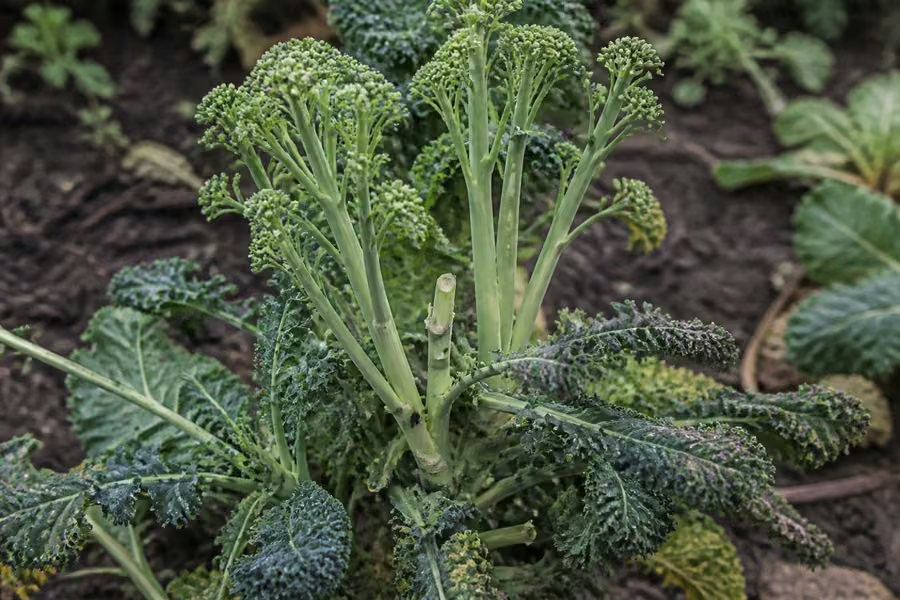
Kale shoots
When kale bolts in April it throws up a mass of tender shoots topped with small flower buds. Pick them like sprouting broccoli and cook them the same way. They are noticeably sweeter than the winter leaves were, and picking makes the plant produce more. One short row of kale will keep giving these for three or four weeks, straight through the worst of the gap.
Brussels tops
The leafy crown at the top of a sprout plant is a small tight cabbage and it is the best thing on the whole plant. Cut it once you have taken the sprouts below it, in February or March. Taking the top stops the plant, so do the sprouts first. Most people pull the entire stem straight out and never find out the top was there.
Cabbage stumps
Do not pull the stump when you cut a winter or spring cabbage. Cut a shallow cross about 1cm deep into the top of the stump and leave it where it is. In six to eight weeks it pushes out a flush of four or five small loose heads. A second crop, from a bed you had already written off, for the cost of one cut with a knife.
Swede and turnip tops
Both send up leafy shoots in spring, and by then the roots have gone woody and are not worth much anyway. The young leaves and shoots are good greens, cooked like spring cabbage. Same rule again: take them before the flowers open. Turnip tops in particular were a standard spring vegetable in Britain for centuries and have simply fallen out of use.
Kale shoots in April are the most overlooked food on a British allotment. Most people pull the plant and compost them.
Working backwards: when the gap is actually closed
Every fix for April happens between May and November of the year before. Read this as a calendar of jobs rather than a list of crops, because the difficulty has never been knowing what to grow. It is remembering to sow it in June, when the plot is full and April feels a very long way off.
May, the year before
Sow purple sprouting broccoli and kale, in modules or a short seedbed row. This single sowing does more for your following April than everything else on this list put together. If you do nothing else here, do this one, and put a note in your phone for next May before you close this page.
June
Plant out the purple sprouting and kale at 60cm apart and net them the same day, not the following week. Plant your leeks. This is the month in which the following spring is actually decided, in the middle of a plot that is full of food and where absolutely nobody is thinking about April.
Every fix for April happens between May and November of the year before. Nothing sown in April closes the gap.
Mid August
Sow spring cabbage. The window here is genuinely narrow, roughly the first three weeks of August. Sow earlier and the plants get too big and bolt before winter; sow later and they are too small to come through it. This is the one date on the list worth being fussy about.
September
Plant out the spring cabbage at 15cm if you want the two crop trick, or 30cm if you want hearts only. Sow hardy salad, land cress and corn salad under a cloche or fleece. Sow chard now if you did not manage it in July.
October
Plant garlic and overwintering onion sets. Neither of these feeds you during the gap directly, but garlic is the longest keeper on the plot and will still be usable in May, which is the closest thing to a stored crop that spans the whole gap.
November
Sow broad beans in the first half of the month. They crop from late May, three to four weeks ahead of a spring sowing, and they are the crop that actually ends the gap rather than merely surviving it. On heavy wet ground or a very cold site, sow in February instead and accept a June crop.
January and February
Force a rhubarb crown under a bucket. Chit potatoes. Cut the old leaves off the chard. Worth knowing plainly: nothing you sow in these two months will reach the gap, so you can stop looking for something that will and put the effort into the list above instead.
If it is already April and you have nothing
Then nothing you sow this week will produce food before the end of May. That is arithmetic rather than defeatism, and pretending otherwise is how people lose a fortnight and a packet of seed to a row that was never going to be ready in time.
So do two things at once, and give the second one more weight than feels natural.
First, get the fastest possible things into the ground for a late May crop. The list beside this is everything that can realistically make it.
Second, and more importantly, put three dates in your phone right now: sow purple sprouting and kale in May, plant them out and net them in June, sow spring cabbage in mid August. Ten minutes of admin today is worth more than anything you can plant this month, because it means this is the last April that looks like this.
And buy vegetables this spring without feeling anything much about it. Every experienced grower on your site is buying them in April too. The plots that have food in April belong to people who sowed in June, not to people who tried harder in the spring.
The fastest things you can sow now
Pea shoots, three weeks. Sow dried peas thickly in a shallow drill, almost touching, and cut the tops at 10cm. The fastest green on this list and the one nobody thinks of. A bag of dried marrowfat peas from a supermarket works and costs almost nothing.
Radish, four weeks. The only genuinely quick root, and the one crop that will beat the gap from a standing start.
Rocket, three to four weeks. Up in four days, cut in under a month, and it will bolt quickly in warm weather, which does not matter here.
Cut and come again salad, five weeks under fleece, six without.
Turnips, six to eight weeks. Sown early April and pulled small at golf ball size, when they are sweet rather than woody.
Spring onions, eight weeks. Sow thickly and use them as they come rather than thinning.
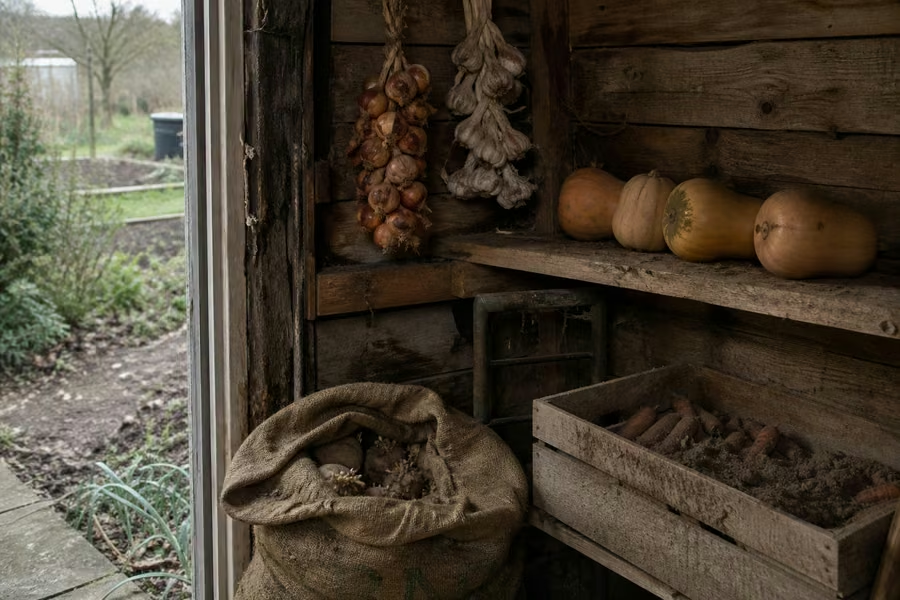
Storage that actually reaches the gap
The other half of the answer, and the half that gets less attention. Standing crops give you something green in April. The store gives you the bulk underneath it, and how long each thing lasts is largely decided in the fortnight after you lift it rather than by anything you do later.
Realistic end dates below, for a cool dry shed rather than a cellar.
| Crop | How it is stored | Realistically lasts until |
|---|---|---|
| Garlic | Plaited or netted, cool and dry | May, sometimes June |
| Onions | Well dried storing varieties, hung in nets | March |
| Winter squash | Cured about ten days, then somewhere around 12C to 15C | February |
| Potatoes | Paper or hessian sacks, completely dark, cool but frost free | March |
| Carrots and beetroot | Tops cut off, layered in damp sand in a box | February |
End dates are for a cool dry shed. A heated house halves every one of them.
Garlic, to May or June
The longest keeper on the plot and the only stored crop that genuinely spans the whole gap. Dried properly and hung somewhere cool and dry, softneck garlic keeps to May or June and hardneck to about March. This is the strongest single argument for growing your own garlic rather than buying it, and it costs you a bed for nine months of low effort.
Onions, to March
Well dried storing varieties hang until about March and then start sprouting. Use the thick necked ones first, always and without exception, because a thick neck never keeps and will rot in the middle of a string and take its neighbours with it. Store plaited or in nets, cool, dark, dry, and never in a sealed box or a plastic bag.
Winter squash, to February
Cure them for about ten days somewhere warm and dry after cutting, which hardens the skin, then keep them at room temperature indoors rather than in a cold shed. Butternut keeps longest, to around February. Crown Prince to January. Check them weekly and use anything with a soft spot that same day, because one going over will take the shelf.
Potatoes, to March
In paper or hessian sacks, completely dark, cool but frost free. Light turns them green and warmth sprouts them, so a shed is usually better than a garage. Maincrop only. First earlies do not keep at all, which is part of why the earlies are the ones worth the ground on a half plot and the maincrop is the one worth buying.
Carrots and beetroot, to February
Lifted in November, tops cut off cleanly, then layered in a box of just damp sand or old compost in a cool shed so they are not touching. It works genuinely well and almost nobody bothers to do it. Parsnips are the exception to all of this: leave them in the ground, where the frost improves them, and lift them as you want them right through to March.
Questions that come up
The six asked most often about the gap, answered plainly.
When exactly is the hungry gap?
Roughly mid March to mid June, at its worst from about 20 April to the end of May. It runs a fortnight or so later in Scotland and the north, and later again in a cold spring. It can also start earlier after a mild winter, which catches people out every time, because warmth brings overwintered crops into flower sooner rather than keeping them going for longer.
Is a greenhouse or polytunnel the answer?
It helps, but less than people expect and not in the way they expect. Under cover, spring sowings come two to three weeks earlier and overwintered salad crops far better. What it does not do is make things grow appreciably faster in the dark months, because the limiting factor in the gap is day length rather than temperature. A few metres of fleece and two cloches will get you most of the benefit for a very small fraction of the cost, which on a half plot is the better trade.
Why does everything bolt at the same time in April?
Because they are all responding to the same signal, which is day length rather than warmth. Once the day passes about thirteen hours, overwintered brassicas switch from producing leaves to producing flowers and seed. It happens across the plot in the same fortnight, it is not something you did wrong, and there is nothing you can do to stop it. What you can do is be ready to eat the flowering shoots, which is the section above.
What did people actually eat before supermarkets?
Stored roots, dried peas and beans, whatever brassicas were still standing, and the first green things of the year: nettle tops, wild garlic, sorrel. Which is very close to the list on this page with the shop taken away. Worth knowing, because it makes clear that the gap is a structural feature of growing food in Britain rather than a personal failure of planning. It has been the hard part of the year here for a very long time.
Can I just freeze my way through it?
Partly, and there is nothing wrong with doing so. A freezer of August beans, blanched and bagged, genuinely does bridge April. Two honest points though. Frozen courgette is poor whatever anyone tells you, and freezing does nothing at all for the thing you actually miss in April, which is something fresh and green that was picked that day. Aim to freeze the bulk and grow the greens.
Should I leave the plot empty over winter to rest it?
No. Ground does not need resting, and empty ground in winter is ground growing weeds and losing nutrients to the rain. If a bed genuinely has nothing to do, cover it with compost, cardboard or a green manure. But the beds that carry you through the gap are beds that had something planted in them in June, and the habit of clearing everything in autumn is one of the main reasons plots are empty in April.
Written by Sam
Eight years on a half plot in Nottinghamshire. Four beds, two water butts, about two hours a week, and most of what is on this site tried twice before it worked. Dates here suit most of England and Wales, because that is where the plot is. Where a page makes a claim you could check for yourself, it links to the source.
The May sowing that decides next April.
Purple sprouting in May, spring cabbage in the first three weeks of August, broad beans in early November. Three dates, spread across the year, easy to miss and impossible to catch up on. One email at the start of each month with the ones that matter now.
One email a month. Unsubscribe any time.
Where to go next
The gap is a planning problem before it is a growing problem, so all three of these sit upstream of it.
Design it out on paper
The step in the planning method where you read down the picking column and find the empty months.
The other end of the problem
August, when everything arrives at once. The same planning failure, pointing the other way.
What to do this month
Whatever month you are actually in, the sowings that matter now for later.