Growing courgettes, squash and pumpkins
The most productive thing on a half plot and the most over planted. One courgette plant is a household. Two is a fortnight of apologising to neighbours.
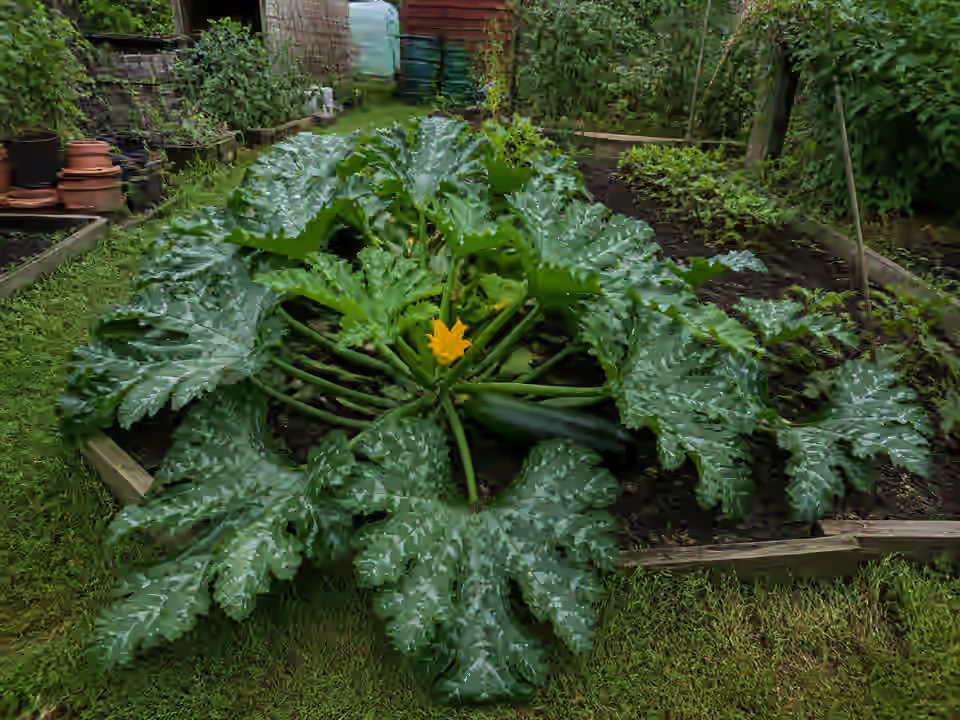
Sow indoors late April, seed on its edge, one per 9cm pot. Plant out at the end of May after the last frost, 90cm apart for courgettes and 1.5m for winter squash. Pick courgettes at 15cm every other day. Cure winter squash for ten days before storing.
Courgettes and squash at a glance
| Crop | Sow | Plant out | Spacing | Harvest | Per plant |
|---|---|---|---|---|---|
| Courgettes | Indoors late April | End of May | 90cm apart | July to September | 20 to 30 fruit |
| Winter squash | Indoors late April | End of May | 1.5m apart | September to October | 3 to 5 fruit |
| Pumpkins | Indoors late April | End of May | 1.8m apart | October | 1 to 3 fruit |
| Cucumbers, outdoor | Indoors early May | Early June | 45cm apart, up a net | July to September | 10 to 20 fruit |
Winter squash needs a lot of ground for a few fruit. On four beds it is a luxury. Courgettes give more food per square metre than almost anything else you can grow.
How many should you actually grow?
One courgette plant. Possibly two.
A single healthy courgette plant fills roughly a square metre and produces a picking sized fruit every two days from mid July until the first frost. That is somewhere between twenty and thirty courgettes across the season, from one plant.
Two plants is about fifty. Three is the reason people on allotments start leaving carrier bags outside the shed with a note on them.
If you want variety rather than volume, grow one green and one yellow, and accept that you are now growing for the neighbours as well. If you want to eat well and not resent the crop by August, grow one.
Sowing and planting out
Six steps, and the first and the last are the two that most often go wrong.
- Sow the seed on its edge rather than flat. Laid flat it sits in moisture and rots more often
- One seed per 9cm pot, 2cm deep, indoors from late April. They germinate in under a week
- Do not sow in March. They grow fast and a plant sown too early is pot bound and checked before it can go out
- Harden off over a week to ten days before planting
- Plant out at the end of May, after the last frost. One frost kills them outright
- Sink a plant pot or a cut bottle into the soil beside each plant and water into that, not over the leaves
Watering into a sunken pot puts the water at the roots rather than on the crown, which is where rot starts.
Picking is the job
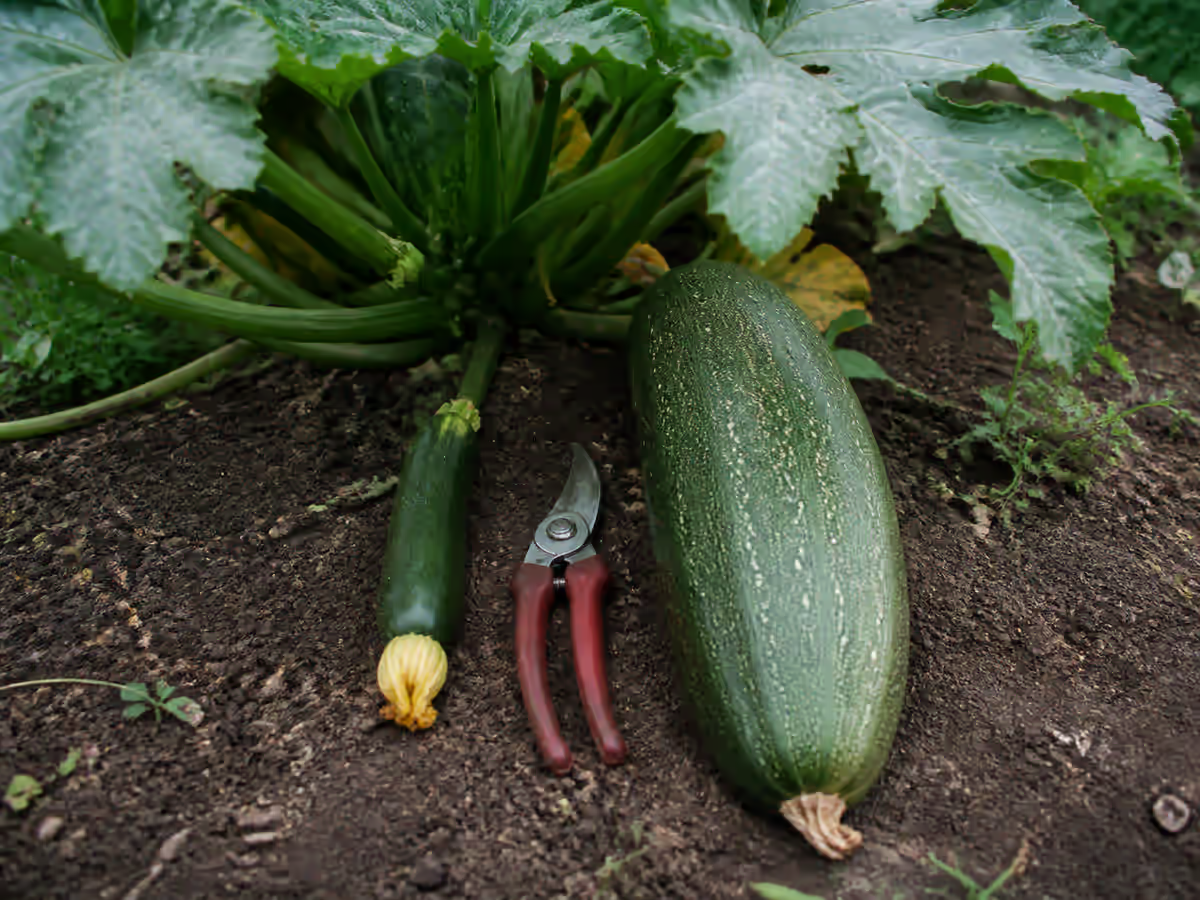
A courgette is a fruit the plant is trying to turn into a marrow full of ripe seed. Its entire purpose is to reproduce. If you let one fruit swell and mature, the plant reads that as job done and slows right down.
So picking is not tidiness, it is what keeps the plant producing. Pick at about 15cm, every other day, and take even the ones you do not need. A plant picked hard keeps flowering until the frost. A plant with a marrow left on it makes half as much for the rest of the season.
Two days away in August is the difference between a courgette and a marrow. A fortnight away is three marrows and a plant that has effectively stopped.
Winter squash is the opposite. Leave it on the plant as long as possible, until the stem goes corky and the skin is hard enough to resist a thumbnail, then cut it with a good long stalk. A squash cut short at the stem rots at the wound.
What goes wrong?
| Problem | What you see | What to do |
|---|---|---|
| Powdery mildew | White dust on the leaves from August | Almost universal and mostly cosmetic this late. Water at the roots, remove the worst leaves, keep picking |
| Small fruit rotting at the tip | Fruit sets then goes soft and yellow at the end | Poor pollination in cold wet weather, or the plant is short of water. Usually resolves as the weather warms |
| Plant collapses overnight | Whole plant wilts and dies suddenly | Usually rot at the crown from watering over the plant. Water into a sunken pot beside it instead |
| Frost damage | Blackened leaves after a clear May night | They do not recover. Replant, and plant out at the end of May not the start |
| Slugs on young plants | Newly planted seedlings vanish | Plant out at a decent size, not tiny, and protect the first fortnight |
| Squash not ripening | Still soft skinned in October | Not enough summer. Cut before the first frost anyway and cure indoors. Grow a smaller variety next year |
Curing squash, which decides whether it keeps
Curing is the step that separates a squash you eat in February from one that goes soft by Christmas, and it takes no work at all.
After cutting, leave the fruit somewhere warm, dry and airy for about ten days, ideally around 20C. A greenhouse bench, a sunny windowsill or the top of a cupboard all work. The skin hardens and the small wounds seal over.
It is ready when a thumbnail pressed firmly into the skin will not mark it. Then move it somewhere cooler, around 12C to 15C, and keep it off the floor and out of direct light. A shelf indoors is better than a shed, because a squash that freezes is finished.
Cured properly, butternut and most winter squash keep until February. Uncured, the same fruit is soft by December.
Questions that come up
The five asked most about the squash family.
My courgettes turned into marrows. What do I do with them?
Grate them, squeeze the water out and freeze in 250g bags for cooking. Do not freeze slices, they turn to mush. Then pick every other day from now on, because the plant has slowed down while that marrow was on it.
Do I need to hand pollinate?
Usually not outdoors in Britain. In a cold wet early summer the first few fruit may fail, which looks alarming. If you want to help, pick a male flower, strip the petals and dab it into the female flowers, which are the ones with a tiny fruit behind them.
Can I grow squash up a frame to save space?
Yes for smaller varieties, and it is a good use of a half plot. Support each fruit in a net bag or an old pair of tights once it starts to size up. Full sized pumpkins are too heavy for this.
Is the white on the leaves a disease I should treat?
Powdery mildew, and by August it is close to universal and largely harmless. The plant is near the end of its life anyway. Keep the roots watered, take off the worst leaves and carry on picking.
Can I save seed from my squash?
You can, but squash cross pollinate freely and the seed rarely comes true. You may get something inedible. Buy fresh seed unless you are deliberately isolating plants.
Where this comes from
One plant per square metre and picking at 12cm are what has worked here. The white dust that turns up on the leaves in late August alarms people every year, so it is worth knowing what it is.
- RHS, Powdery mildews, on why it arrives late, and why a plant that has already cropped does not need saving
Last reviewed 17 August 2026.
Written by Sam
Eight years on a half plot in Nottinghamshire. Four beds, two water butts, about two hours a week, and most of what is on this site tried twice before it worked. Dates here suit most of England and Wales, because that is where the plot is. Where a page makes a claim you could check for yourself, it links to the source.
A nudge in May, when the glut is actually decided.
One plant instead of three, and sowing in batches. One email a month.
One email a month. Unsubscribe any time. How we look after your details.