Growing herbs on an allotment
Planted once, cut for years, and the highest value crop per square metre on the whole plot. A permanent corner rather than a bed.
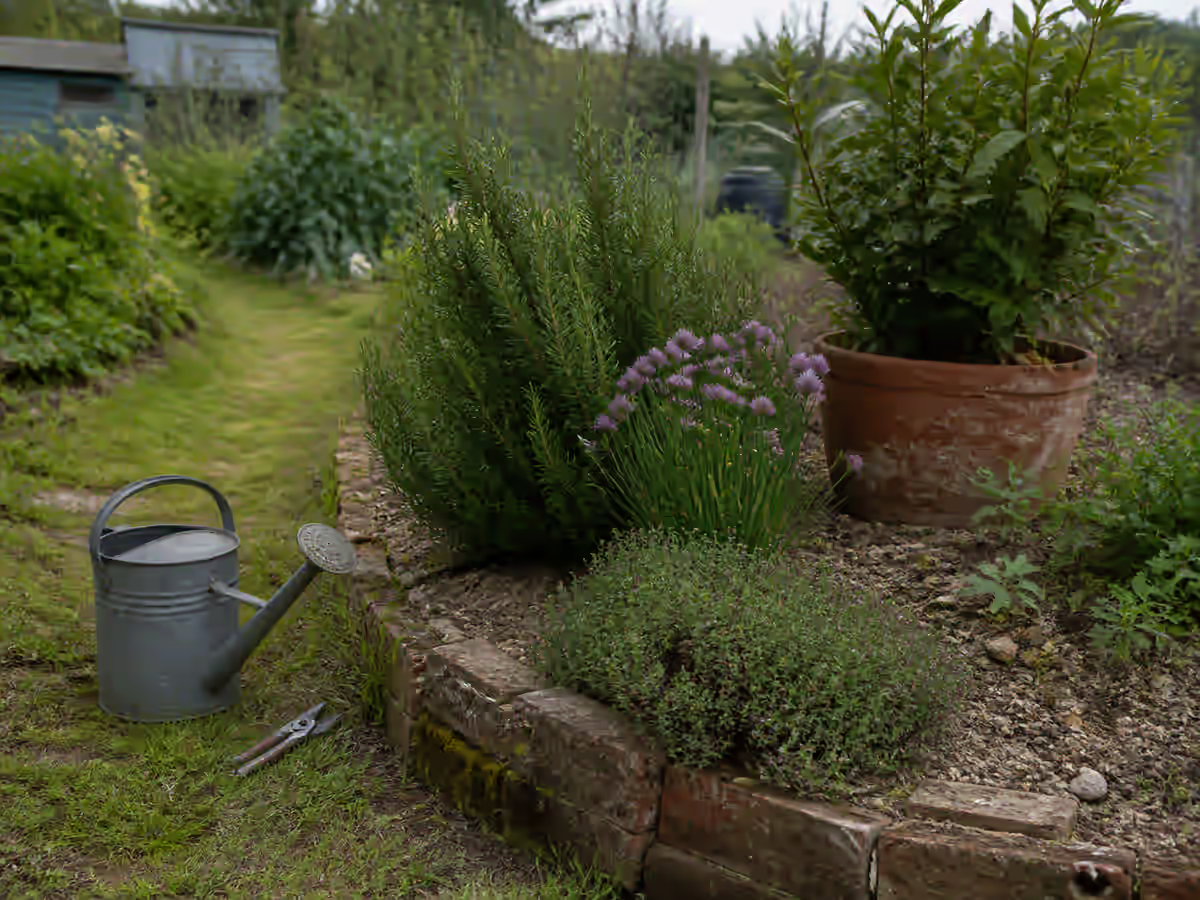
Put the perennials in a permanent corner: rosemary, thyme, sage, oregano, chives and mint, the mint in a sunken bucket. Sow parsley and coriander in succession every few weeks. Basil never works outdoors in Britain. Most herbs want poor dry soil, so do not feed them.
Herbs at a glance
| Herb | Type | Plant or sow | Space | Worth knowing |
|---|---|---|---|---|
| Rosemary | Evergreen shrub | Plant once, spring | 1m across eventually | Wants poor, sharply drained soil. Dies in wet clay |
| Thyme | Evergreen sub shrub | Plant once, spring | 30cm | Poor dry soil and full sun. Replace every four years |
| Sage | Evergreen shrub | Plant once, spring | 60cm | Cut back after flowering to stop it going woody |
| Oregano and marjoram | Perennial | Plant once, spring | 40cm | Dies back in winter, returns reliably |
| Chives | Perennial | Plant once, or sow March | 25cm | Split the clump every three years. Flowers are edible |
| Mint | Perennial, invasive | Plant in a sunken bucket | Contained | Never plant it loose. It will take a whole bed |
| Parsley | Biennial | Sow March to July | 20cm | Slow to germinate. Sow twice a year for a constant supply |
| Coriander | Annual | Sow every 3 weeks | 15cm | Bolts fast. Succession sowing is the only way |
| Bay | Evergreen tree | Plant in a large pot | Pot grown | Keep it potted or it becomes a tree |
The perennials in this table cost about twenty pounds once and then produce for a decade. Nothing else on the plot has that ratio.
Do not feed them, and do not water them
This is the part that goes against every other instinct on the plot. Most of the woody herbs come from the Mediterranean, from thin stony ground on a hillside, and they make their aromatic oils partly as a response to that stress.
Grow rosemary, thyme, sage and oregano in rich moist compost and you get large soft green plants that taste of very little and rot at the base over the first wet winter. Grow them in poor, gritty, sharply drained soil and you get smaller, tougher, far more strongly flavoured plants that live for years.
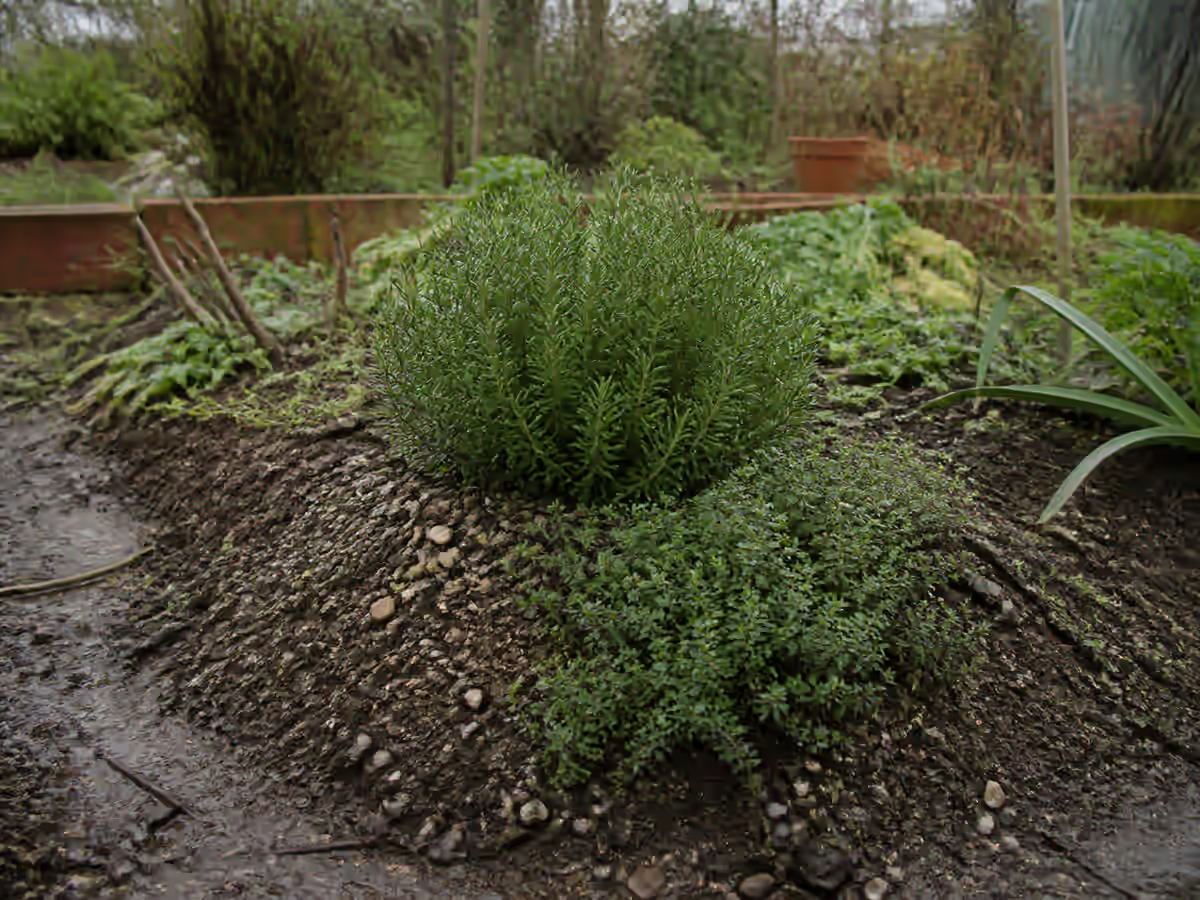
So put them in the worst corner you have. If your soil is heavy, dig in a bucket of grit or plant them on a low mound so the crown sits proud and water runs away from it. Winter wet, not winter cold, is what kills rosemary in Britain.
The exceptions are the leafy ones. Parsley, coriander, chives and mint all want moisture and reasonable soil, and they will bolt or go tough without it.
Mint, and the bucket
Mint is worth growing and it will take your plot if you let it. It spreads by runners just under the surface and it does not stop.
- Take a bucket, drill a few holes in the bottom for drainage
- Sink it into the bed with the rim standing 3cm proud of the soil surface
- Plant the mint into the bucket and fill with ordinary soil or compost
- The proud rim is what stops runners crossing the top, which they will otherwise do
- Check the rim once a year and cut off anything trying to escape over it
- Lift, split and replant the clump every three years or it exhausts itself
A mint plant put straight into a bed will be through the whole bed within two seasons and is very difficult to get out afterwards.
What goes wrong?
| Problem | What you see | What to do |
|---|---|---|
| Rosemary dies over winter | Browning from the base, whole plant collapses in spring | Winter wet at the crown, not cold. Plant on a mound in gritty soil |
| Coriander bolts immediately | Flower stem within weeks of sowing | It always does. Sow a short row every three weeks and treat each as short lived |
| Parsley will not germinate | Nothing for weeks | Normal, it is slow. Soak the drill with hot water before sowing and be patient |
| Sage goes woody and sparse | Bare stems, few leaves | Cut back by a third after flowering each year, and replace the plant every four or five |
| Mint everywhere | Shoots coming up two metres away | Only fixable by digging out the whole run. Prevent it with the sunken bucket |
| Weak tasting herbs | Big soft leaves, little flavour | Too much feed and water. Stop both. Poor soil makes better herbs |
Basil, honestly
Basil does not work outdoors on a British allotment, and it is worth saying plainly because a lot of people waste three summers finding out.
It wants consistent warmth above about 15C, no wind and no cold nights. A British June gives it none of those, and slugs treat a young basil plant as the best thing on the plot. The result is a stunted purple tinged plant with four leaves and a slug problem.
Grow it on a warm windowsill at home, in a pot, sown in May and kept indoors. That works reliably and gives you far more basil than any outdoor attempt.
The same applies to a lesser degree to tarragon and to lemongrass. Some things simply belong in the kitchen rather than on the plot, and recognising that is not a failure.
Questions that come up
The four asked most about herbs.
Where should the herbs go on a half plot?
In a permanent corner, out of the rotation entirely, ideally near the path so you actually walk past them. Herbs you have to cross a muddy bed to reach do not get used.
Can I grow herbs from seed rather than buying plants?
Chives, parsley, coriander and oregano all come readily from seed. Rosemary, thyme, sage and bay are slow and fiddly from seed and much better bought as small plants, or taken as cuttings from somebody else on the site.
How do I keep parsley going through winter?
Sow in July as well as March. The July sowing makes a plant that stands through winter and gives you leaves until it runs to seed the following spring. A cloche over it keeps the leaves cleaner.
Should I let herbs flower?
Chives, thyme and oregano flowers are all worth having and the bees will thank you. But flowering makes the leaves coarser, so cut some plants back before they flower and let others go. Sage and rosemary should be trimmed after flowering to keep them compact.
Written by Sam
Eight years on a half plot in Nottinghamshire. Four beds, two water butts, about two hours a week, and most of what is on this site tried twice before it worked. Dates here suit most of England and Wales, because that is where the plot is. Where a page makes a claim you could check for yourself, it links to the source.
The permanent corner, and everything else that runs itself.
One email a month about doing less on the plot and getting more from it.
One email a month. Unsubscribe any time. How we look after your details.