Weeding a half plot without it taking over
Weeding is a seed problem, not a weed problem. Deal with the seed and the weeding mostly stops.
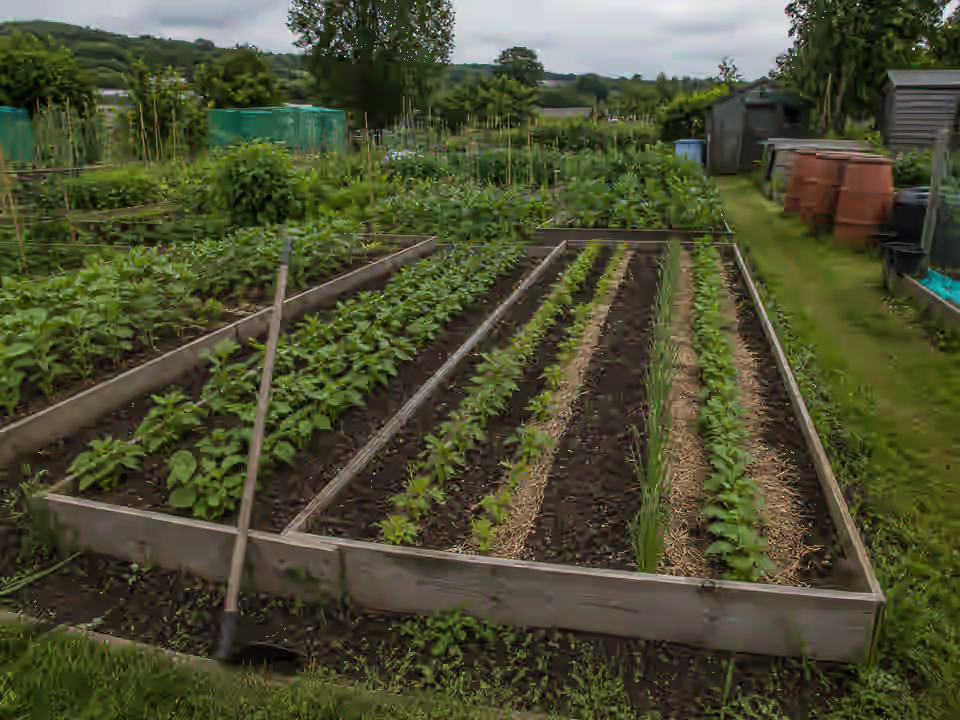
Hoe seedlings on a dry day before you can identify them, which takes minutes. Never let anything set seed, because one plant makes thousands. Cover ground you are not using. Learn to tell annual weeds from perennial ones, because they need completely different treatment.
On this page
Hoe them before you can name them
A seedling weed hoed on a dry afternoon is dead in ten minutes. The hoe severs it just below the surface, it lies on top of the soil, and the sun finishes it. You do not even pick it up.
The same weed left three weeks has roots, and now has to be pulled, which disturbs the soil and brings up more seed. Left three months it has set seed, and one fat hen plant produces tens of thousands of them, viable for decades.
So the job is to walk the beds with a hoe every week or two through spring and summer, on a dry day, and skim the surface. It takes about fifteen minutes for four beds when the weeds are tiny. It takes two hours when they are not.
The dry day part is not optional. Hoed in wet weather, half of them simply re root and carry on. Hoed dry, they die. This is why hoeing is the second job in a two hour visit, not the last one.

Annual or perennial, which changes everything
These two groups look similar in May and need completely different treatment. Getting the category right is most of the battle.
| Annual weeds | Perennial weeds | |
|---|---|---|
| Examples | Chickweed, groundsel, fat hen, annual meadow grass | Couch grass, bindweed, dock, dandelion, horsetail |
| How they spread | Seed, enormous quantities of it | Roots and rhizomes, plus seed |
| How to kill them | Hoe the seedlings. They die instantly | Dig every fragment out, or exclude light for a full season |
| What hoeing does | Kills them outright | Chops the roots into fragments, each of which regrows |
| What rotavating does | Nothing much | Multiplies them dramatically. Never rotavate perennial weeds |
| Time to clear | Weeks under cover | One to two full seasons |
The single worst thing you can do to a plot full of couch grass or bindweed is rotavate it. Every chopped root becomes a new plant.
Which perennial weeds are worth recognising?
| Weed | How to know it | How long to be rid of it |
|---|---|---|
| Couch grass | Flat pale green blades, brittle white roots running sideways just under the surface | One season under cover. Two if you chop it up first |
| Bindweed | Heart shaped leaves, white trumpet flowers, thick white brittle roots going deep | Two seasons at least. Regrows from any fragment |
| Dock | Broad flat leaves, one deep tap root, rusty seed spike | Gone immediately if you get the whole root out |
| Dandelion | Familiar rosette, deep tap root, seeds everywhere | Same as dock. Get the root, or it comes back |
| Creeping buttercup | Low rosettes joined by runners across the surface | One season. Pulls out cleanly if you get the runners |
| Horsetail | Bottlebrush shoots in spring, never flowers, roots go down metres | Years. This one is managed, not beaten |
| Bramble | Woody arching thorny stems | One season. Cut back, dig the crown, then cover |
What if it is Japanese knotweed?
Everything else on this page is a nuisance you deal with by hand. This one is a legal matter, and it is the real reason to identify a weed before you start pulling it.
Knotweed on an allotment is uncommon but not rare, and it turns up most often on a boundary: along a fence line, against a railway embankment, or beside a watercourse. In spring it comes up as red and purple shoots like asparagus tips pushing through bare ground, growing very fast into hollow canes with a zigzag stem and broad shield shaped leaves. By midsummer it is two metres or more, with sprays of small creamy flowers in late summer. In winter the canes die back to brown and brittle and stand there all season.
| Question | The position in England and Wales |
|---|---|
| Is it illegal to have it on your plot? | No. There is no legal requirement to remove it unless it is causing a nuisance |
| Can you be prosecuted? | Yes, for causing it to spread into the wild. It is listed on Schedule 9 to the Wildlife and Countryside Act 1981, and section 14(2) makes it an offence to plant or otherwise cause it to grow there |
| Can it go on the compost heap? | No. Soil and plant material contaminated with it can be classified as controlled waste |
| Can it go in the council green bin? | No, for the same reason |
Having it is not an offence. Spreading it is. That distinction is the whole of the law here.
The three things to do, in this order
- Do not dig it, strim it or rotavate it. Every one of those breaks the rhizome into fragments, and fragments regrow. Strimming is the worst of the three because it throws viable pieces across the plot. This is how one contained clump becomes a site wide problem in a single afternoon.
- Tell your site secretary and the council the same week. It is their land and their liability, and on most sites they will take it on. Do not quietly deal with it yourself.
- Leave the material exactly where it is until somebody tells you where it is going. Not on the heap, not in the green bin, not in the car.
The reason this sits on a page about weeds is that the standard allotment reflex, which is to see a weed, dig it out and throw it on the heap, is precisely the wrong response to this one. Doing it once can spread the problem across a whole site, and the person who did it is the person who caused it to spread.
Covering ground beats weeding it
The cheapest weeding is the weeding you never do. Any ground you are not actively growing in should be covered.
- Cardboard with 5cm of compost on top: kills annuals in weeks, feeds the soil, and you sow straight into it in spring
- Black plastic or old carpet: kills perennials over a full season, adds nothing to the soil, but it is the tool for couch grass
- Green manure on beds emptying in autumn: field beans or grazing rye
- A thick mulch between standing crops: stops the seed bank germinating in the first place
- Overlap cardboard sheets by 15cm, or the weeds simply come up through the joins
- Weigh everything down properly. A sheet that lifts in the wind has done nothing
Excluding light is what does the work. Anything opaque and heavy enough to stay put will do it.
Never let anything set seed
If you take one rule from this page, take this one. It matters more than how you weed, when you weed, or what tool you use.
A single fat hen plant produces something in the order of tens of thousands of seeds. Groundsel manages several generations in one summer. Those seeds stay viable in the soil for years, some of them for decades, and every one is a weed you or somebody after you has to deal with.
So when the week gets away from you and the plot is a mess, the priority is not to weed the beds tidily. It is to walk round and cut the head off anything that is flowering, starting with the biggest plants and the paths. Five minutes of that is worth more than an hour of neat hoeing elsewhere.
This is also why the plot next door matters. If your neighbour lets things seed, you inherit them, and there is not a great deal you can do except keep your own edges cut and accept a bit more hoeing.
Questions that come up
The five asked most about weeds.
Should I use weedkiller?
Most sites permit it and plenty of people do. It is largely unnecessary on a half plot: covering ground for a season deals with almost everything, and it improves the soil at the same time. The exception some people make is a targeted treatment on bindweed or horsetail, which are genuinely hard to beat any other way.
What is the best hoe?
A sharp one. A Dutch hoe pushed just under the surface suits most people, and an oscillating or stirrup hoe is faster on a big area. Sharpen it with a file two or three times a season. A blunt hoe is genuinely half as fast.
Can I compost weeds?
Annual weeds yes, as long as they have not set seed. Perennial roots and anything with a seed head, no. They survive the heap and you spread them everywhere you mulch.
How do I get bindweed out of an established bed?
Slowly. Follow each stem down and dig out as much root as you can without shredding it, then keep pulling every shoot the moment it appears. Repeatedly removing the top growth eventually starves the root, but expect two seasons.
Is it worth weeding the paths?
Yes, and it is the bit everyone skips. Paths are where the seed comes from. A strimmed or mown grass path that never flowers is a weed barrier. An unmown one is a nursery.
Where this comes from
Hoeing, mulching and never letting anything seed are method. Three weeds on this page behave in ways that catch people out, and the last of them is a legal matter rather than a gardening one.
- RHS, Bindweed, on why a fragment of root regrows and why pulling alone never clears it
- RHS, Couch grass, on the running rhizomes, and why rotavating multiplies it
- RHS, Japanese knotweed, on identifying it and on what control actually involves
- GOV.UK, Prevent Japanese knotweed from spreading, the official position: no duty to remove it, but it is controlled waste and you can be prosecuted for spreading it
- Wildlife and Countryside Act 1981, section 14, the offence itself, and Schedule 9 which lists the plant
Last reviewed 17 August 2026.
Written by Sam
Eight years on a half plot in Nottinghamshire. Four beds, two water butts, about two hours a week, and most of what is on this site tried twice before it worked. Dates here suit most of England and Wales, because that is where the plot is. Where a page makes a claim you could check for yourself, it links to the source.
Fifteen minutes a week, instead of two hours a month.
One email a month on doing less on the plot and getting more from it.
One email a month. Unsubscribe any time. How we look after your details.
Where to go next
Ground you have not touched
Taking on a plot that has been let go entirely.