Clearing an overgrown plot
Waist high weeds, brambles along one edge, and a tenancy agreement that says the ground has to be worked. It looks like a summer of hard labour and it does not have to be.
A staged method that clears a quarter at a time, the four weeds that decide your whole timetable, and an honest account of how long each one actually takes.
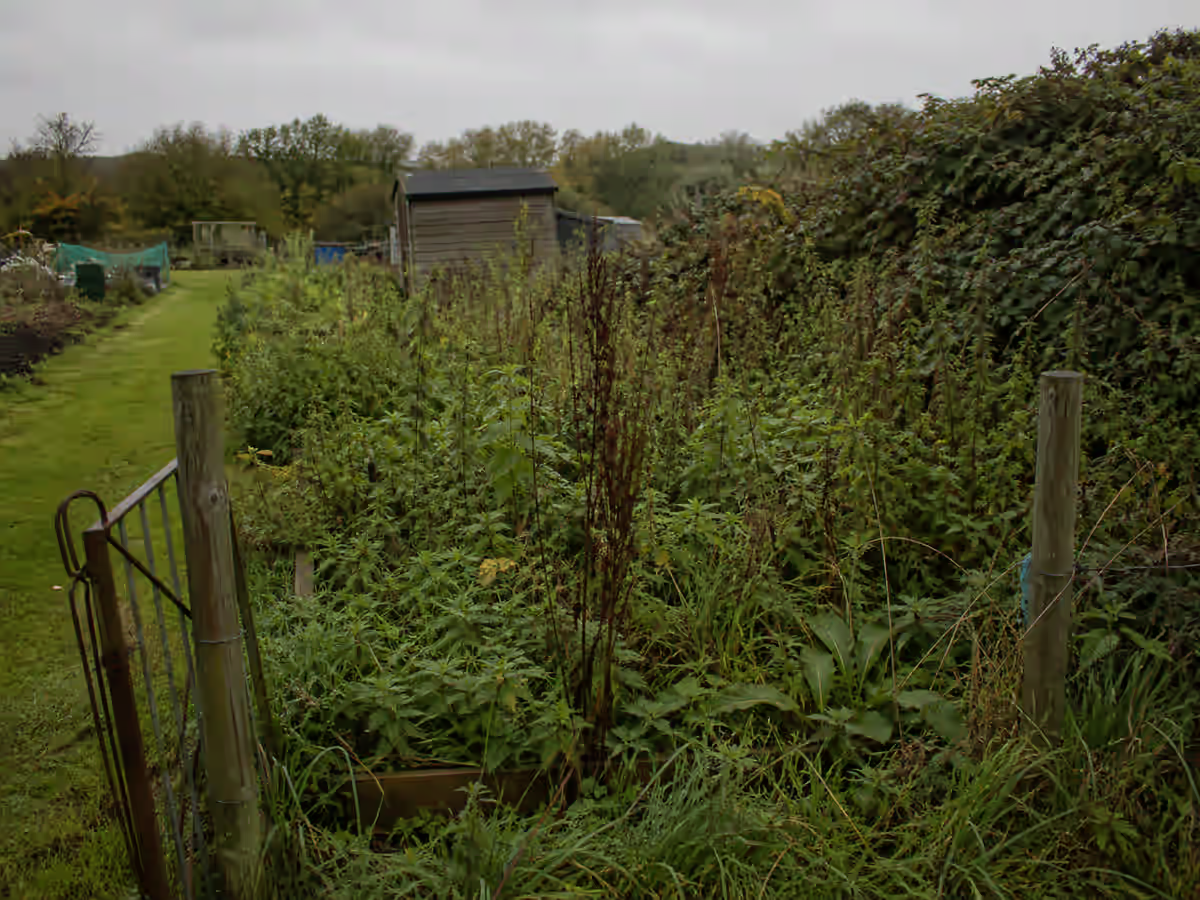
A quarter at a time, never all at once. Spend the first fortnight working out what is under the weeds before you cut anything. Then strim, cover with cardboard and compost, and bring one quarter into growing while the rest stays covered. A badly neglected plot takes two seasons.
Do not clear anything until you know what you have
Everything about how you clear this plot, how long it takes and what it costs you is decided by which weeds are on it. Two plots that look identical from the gate can be one season apart or three years apart, and you cannot tell by looking at the top growth.
So the first job is not clearing. It is walking the plot with a fork, lifting a spadeful in three or four places, and finding out what is under there. Half an hour, on your first visit, before you buy a single tool.
The division that matters is not between big weeds and small ones. It is between annuals, which grow from seed each year and die under a cover in one season, and perennials, which regrow from root and do not care about your cardboard.
A plot with nothing but annual weeds, however tall and alarming it looks, is genuinely a few weekends of work. A plot with bindweed through it is a two or three year job whatever anybody tells you. Knowing which one you have on day one is the difference between a realistic plan and a demoralising spring.
The one thing not to do
Never rotavate an overgrown plot. It is the single most common and most expensive mistake made on new allotments, and it is almost always done in the first fortnight by somebody trying to get ahead.
A rotavator chops every perennial root into hundreds of fragments and then distributes them evenly across the whole plot at an ideal depth for regrowth. Couch grass and bindweed both regrow from pieces around 5cm long. You will turn one bad corner into an entire plot of it, and you will have done it thoroughly and at speed.
Somebody on your site will offer to bring theirs round. Thank them and say no. A rotavator is a fine tool on ground that is already clean, and a disaster on ground that is not.
Cut nothing for a fortnight. What comes up tells you exactly what you are dealing with, and you only get one chance to see it.
Before the first cut: one plant to rule out
Walk the plot once and satisfy yourself there is no Japanese knotweed on it, particularly along fence lines and boundaries. Everything else on an overgrown plot can be strimmed, dug or covered without much thought. Knotweed cannot: strimming and digging break the rhizome into fragments and each fragment regrows, which is how one clump on one plot becomes a problem for the whole site. Having it is not an offence. Causing it to spread is. If you think you have it, do not touch it, and tell your site secretary the same week.
Clear a quarter at a time
The method is one sentence long: clear a quarter properly, cover the rest, and plant what you cleared. Everything below is the timing.
The reason it works is not horticultural, it is human. The people who lose an allotment are almost never the ones who lost a crop. They are the ones who cleared all 125 square metres in five weekends in March, watched it grow back by June, and never went down again.
Knock the top growth down and look underneath
Shear, strim or scythe the whole plot down to ankle height and rake it off into a heap in a corner. This is the one job worth doing across the entire plot at once, because until it is done you cannot see the shape of the ground, find the paths, or identify what you are dealing with. Borrow or hire a strimmer for an afternoon rather than buying one. Expect to find at least one thing you did not know was there: a path, a fruit bush, a length of buried carpet, a water butt.
Clear one quarter properly, and only one
Pick the sunniest, flattest, least infested quarter and clear it completely: top growth off, then every perennial root forked out by hand. Properly means properly. A quarter done thoroughly is worth more than the whole plot done at speed, because ground you half cleared is ground you will clear again in July. This is where most of your physical effort for the whole year goes, and it is worth it exactly once.
Cover everything else
The other three quarters go under cover the same weekend, and they stay there. Cardboard for annual weeds, black plastic for perennials. Ground under a cover is not neglected ground, it is ground quietly getting easier while you do nothing at all, and it is the only part of this method that works while you are at home.
Plant the cleared quarter and leave the rest alone
Get something growing in the cleared ground straight away, even if it is only potatoes or a green manure. A planted bed is what makes the plot feel like yours, and it keeps you coming down. Do not be tempted to open up more ground because the first bit went well. It always goes well in April.
Take the cover off the second quarter
Six months under cardboard will have killed the annual weeds and softened the ground considerably. Fork it over, take out anything perennial that survived, and plant it. Then repeat. Two quarters in year one and two in year two is a realistic pace for somebody with a job, and it gets you to a fully worked plot in half the time that trying to do it all at once usually takes, because the all at once version generally ends with somebody giving the plot up.
Will the site let you leave three quarters covered?
Almost certainly, but ask rather than assume. Most sites expect something like three quarters of a plot to be worked, and most treat neatly covered ground as being worked rather than neglected, because it obviously belongs to somebody who is getting on with it. What sites act on is plots that are visibly abandoned and seeding into their neighbours.
Ask the site secretary in your first fortnight what the cultivation rule actually is and how much notice you would get. Almost every site sends warning letters months before anything else happens. Knowing the real deadline instead of imagining a worse one is worth a great deal in your first spring.
The weeds that decide your timetable
Annual weeds are not on this list, because they are not the problem. Chickweed, fat hen, groundsel and annual meadow grass all die under a cover in a single season, however dense they look. They leave a seed bank behind, which is why you never dig deeply and never leave soil bare, but they do not set your timetable.
These five do. The time given against each is honest rather than encouraging.
| Weed | How to know it | How long to be rid of it |
|---|---|---|
| Couch grass | Flat pale green blades, and brittle white roots running sideways just under the surface | One full season under cover. Two if you rotavate it, because every chopped root makes a new plant |
| Bindweed | Heart shaped leaves, white trumpet flowers, thick brittle white roots | Two seasons at least. It regrows from any fragment left behind |
| Bramble | Woody arching stems and thorns | One season. Cut it back, dig out the crown, then cover |
| Nettles | Thick patches, and they sting | One season. They also tell you the soil underneath is rich |
| Docks | Broad flat leaves and one deep tap root | Gone immediately, if you get the whole root out |
| Horsetail | Bottlebrush shoots in spring, no flowers ever | Years. This one is managed rather than beaten |
| Chickweed and groundsel | Soft, shallow, and everywhere | Weeks under cardboard |
Find out which of these you have before you buy anything or book a weekend off.
Couch grass
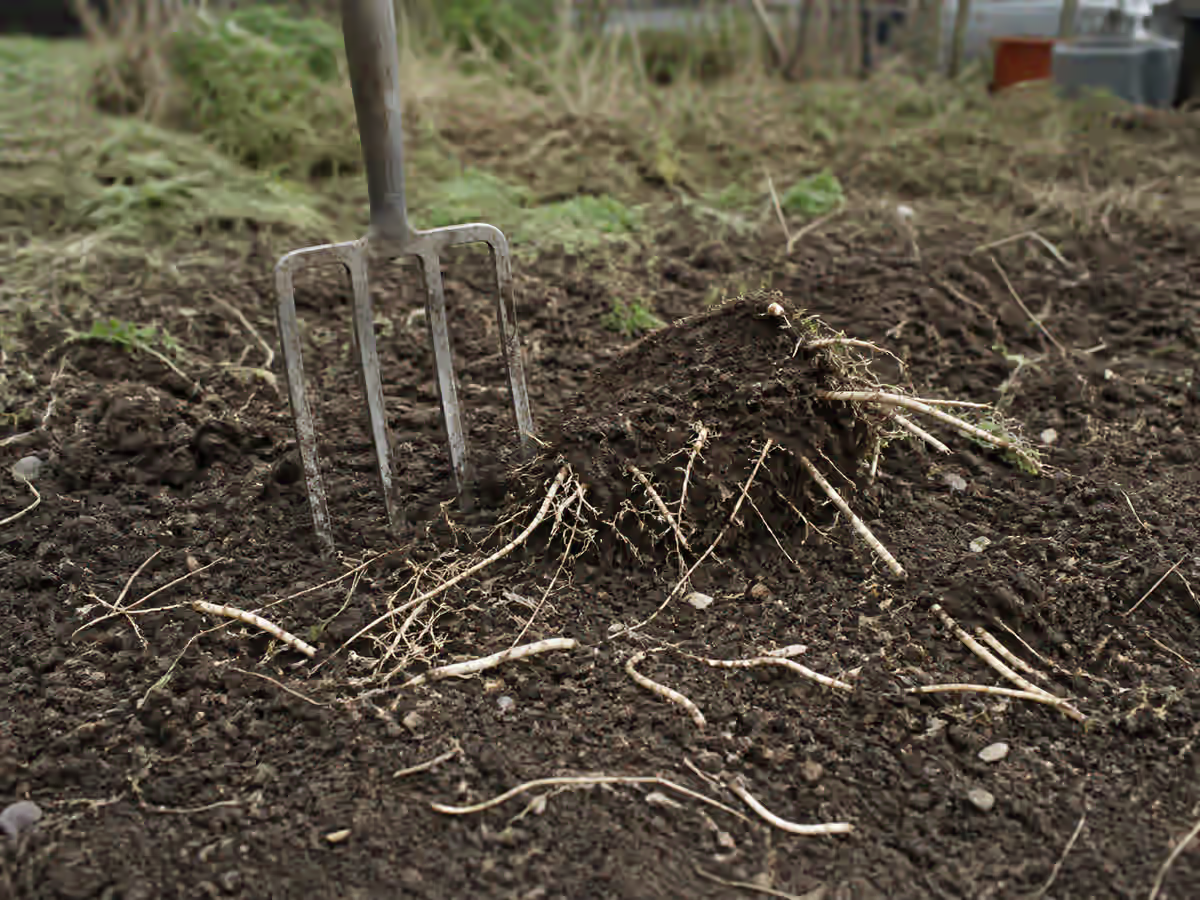
Coarse grass above ground, and underneath it a mat of white, sharp tipped, brittle rhizomes running horizontally about 5 to 15cm down. Every fragment regrows, and the pointed tips are hard enough to drive straight through a potato tuber.
What works: forking through methodically and lifting out every white root by hand, working backwards so you do not tread the fragments in. Or a full twelve months under light proof black plastic, which starves it out. It will come through cardboard inside a season, so cardboard alone is not enough here.
What does not: digging it in, chopping it up, or any single pass with any tool. Half a job on couch grass is worse than no job, because you have propagated it.
Couch grass rotavated is couch grass multiplied. Every chopped root becomes a new plant.
Bindweed
The white trumpet flowers are pretty and the news is not. Fleshy white roots go down well over a metre, they are brittle, and a fragment of about 5cm makes a new plant. Digging it out of a whole plot is not realistically achievable, and people who tell you they dug theirs out generally mean they dug it out four times.
What works: exclusion for twelve to eighteen months under black plastic, or exhaustion, which means pulling or cutting every single shoot the week it appears, every week, for two to three growing seasons. Each shoot removed costs the root stored energy, and eventually it runs out. Exhaustion is the only method that works around existing crops.
Be realistic about this one. If a plot has bindweed through it, you have a three year project and a plot that will still produce food throughout. Plan for that rather than for a clean plot next spring.
Mare's tail
Also called horsetail. Dark green, jointed, prehistoric looking stems, and roots that go down as far as two metres. It comes through cardboard, through plastic, and through most things anybody has ever laid on top of it. It has been on the planet a very long time and it is not going to be beaten by your first season.
The honest position: you do not eradicate mare’s tail on an allotment. You manage it. Snap the shoots off at ground level whenever you see them, which weakens it slowly over years, and never rotavate, which multiplies it.
The consolation, and it is a real one: mare’s tail competes poorly with established crops. It looks terrible and it does far less damage to your growing than couch grass or bindweed. Plenty of productive plots have it and simply live alongside it.
Bramble
The one on this list that is genuinely beatable in a day, which is worth knowing when a plot looks unmanageable because of them. Brambles are woody and shallow rooted from a single crown, so they are a job rather than a campaign.
What works: cut the canes back to a 30cm stump with loppers so you can see and reach, then dig the crown out with a spade or a mattock. Get the whole crown and it is finished. Leave part of it and it resprouts, but it will not have spread across the plot in the meantime.
Wear proper gloves and long sleeves, and cut the canes into short lengths as you go rather than dragging whole ones about, which is how people end up wearing them.
Docks and nettles
Docks have a thick tap root going down 30cm or more, and they regrow from what you leave behind. Dig them out individually with a spade rather than pulling, and go deeper than feels necessary. They are slow but they are not a spreading problem.
Nettles are good news, which almost nobody says. They have shallow yellow spreading roots that fork out easily, so they are among the quickest perennials to clear. More usefully, a stand of nettles is telling you that the soil there is fertile and high in phosphate, which is generally where somebody once had a compost heap or a manure pile. A plot covered in nettles is often a plot with good ground under it.
What to cover it with
Covering is where most of the work gets done, for free, while you are somewhere else. What you use depends entirely on which weeds you found, and getting this wrong wastes a whole season.
Cardboard
Free, and the right answer for annual weeds and rough grass. Take every piece of tape, every staple and every plastic label off first, because they will still be there in three years. Overlap the sheets by at least 15cm or weeds find the joins, and weight it down thoroughly with bricks, logs or bags of compost, because one windy night will otherwise redistribute it across the site.
It breaks down in six to twelve months and the worms do genuinely pull it in. It will not stop couch grass, bindweed, ground elder or mare’s tail, all of which come straight through.
Black plastic or silage sheet
The only covering that reliably beats couch grass and seriously weakens bindweed, because it excludes light completely. Leave it down twelve months for couch and twelve to eighteen for bindweed. Peg or weight the edges properly and check it after gales.
It is ugly, it goes brittle in sunlight after two or three years, and a few sites have rules about it, so ask. Second hand silage sheet from a farm is cheap and lasts far better than thin polythene from a DIY shop.
Woven weed membrane
Useful under permanent paths and poor over beds. It lets water through, which is its selling point, and it lasts for years. The problem is that perennial weeds grow up through the weave rather than being stopped by it, and once couch grass has rooted through a membrane you cannot lift it without leaving shredded plastic in your soil for the next decade.
Use it under woodchip paths where nothing needs to grow. Keep it off ground you intend to plant.
Old carpet: no
It was standard practice for decades and most sites now ban it outright, with good reason. Modern carpet is largely synthetic with rubber or latex backing, and it breaks down into the soil rather than composting. Once it starts disintegrating it is unliftable and you are picking fibres out of your beds for years.
If there is carpet already on your plot, getting it out is a legitimate first job. Wool backed hessian carpet is a different case, but you are unlikely to be able to tell, so do not risk it.
Clearing with a crop
Once a quarter is roughly clear, potatoes are the traditional next step and the reputation is only half deserved. They do not suppress weeds by any special power of their own. What clears the ground is that earthing up disturbs the surface twice at exactly the right moments, and lifting them in July turns the whole bed over and gives you one more chance to pull out every root you missed.
Squash and courgettes do something genuinely different: their leaves cover a square metre each and shade out anything trying to germinate underneath. Neither crop will deal with couch grass or bindweed for you, but on ground that had annual weeds, a season of potatoes followed by a mulch will finish the job.
The kit, and the order you use it in
Borrow or hire before you buy any of this. You will not know what you actually reach for until you have done a few sessions, and an overgrown plot is the worst possible moment to be choosing tools in a shop.
A garden fork, not a spade, for perennial roots. This is the one that matters. A spade slices couch grass and bindweed into fragments and plants them; a fork lifts the mat and lets you pull the roots out whole. If you buy one thing secondhand and heavy, buy this.
A sharp spade for turf edges and dock tap roots, where cutting cleanly is what you want.
Loppers and a folding pruning saw for bramble, before the mattock or spade goes anywhere near the crown.
Shears, or a borrowed strimmer, for the first knock down. Shears are slower and perfectly adequate on a half plot, and they do not need fuel, goggles or a neighbour’s goodwill.
A kneeler or a folded sack, which sounds trivial and is the difference between finishing a session and stopping early.
Work backwards across the ground you are clearing so you are always standing on uncleared soil, not treading root fragments back into the bit you just did. It is a small habit and it saves a surprising amount of repeat work.
Your back is the limiting resource
Not the weeds, not the tools, and not the weather. The most common way a new plot goes wrong is an enthusiastic first Saturday followed by ten days of not being able to move properly, and then a fortnight of avoiding the place.
Ninety minutes at a time, then stop, even when it is going well and especially when it is going well. Two short visits in a week clear more ground than one long one, because the second long one never happens.
Alternate the job. Twenty minutes forking on your feet, then something standing up like cutting brambles or moving cardboard, then back. It is repetition in one position that does the damage rather than effort as such.
Keep the load close and turn your feet, not your waist. Nearly every allotment back injury is a twist with a full fork rather than a lift.
The plot has been like this for two years. It can wait another fortnight.
Your first year, depending on when you got the keys
The method is the same whenever you start. What changes is the order, what you plant first, and how much you should reasonably expect to eat this year.
| Keys in | What is genuinely realistic in year one | What to get in the ground |
|---|---|---|
| January to March | Two beds cleared and planted. The rest covered and left alone | First early potatoes, onion sets, broad beans, salad |
| April to June | One bed cleared and planted. Everything else covered | Courgettes, runner beans, salad, beetroot |
| July to September | One bed cleared. Use the rest of the year to cover and plan | Spring cabbage, garlic in October, overwintering onions |
| October to December | Clear nothing. Cover everything, and spend the winter planning | Garlic in October, broad beans in November |
Every row here assumes about two hours a week. Nobody clears a neglected half plot in a weekend.
You took it on in autumn
The best possible time, and worth knowing if you are choosing when to accept a plot. The ground is soft after summer, top growth is dying back so the shape of the plot is visible, and you have the whole winter for covers to do their work while nothing is growing to resist them.
Knock it down, clear one quarter, cover the rest, then plant garlic in October and broad beans in early November. You will walk into your first spring with cleared ground and two crops already in it, which puts you a full season ahead of somebody who started in March.
You took it on in winter
Nearly as good, and physically the easiest. Nothing is growing, so covers go down onto dormant ground and get a head start. Frost breaks up clods you have turned, so rough digging now is finished properly by the weather rather than by you.
Get every cover down in the first fortnight regardless of conditions. Clear one quarter on whichever days the ground is workable, and do not force it when it is waterlogged, because working wet soil compacts it and you will feel that for two years.
You took it on in spring
The hardest start, because everything is growing fast, you can see it happening, and you feel behind from the first week. This is when people rotavate, and it is when most plots get lost.
Knock the top growth down, cover three quarters immediately, and clear one quarter for potatoes. Potatoes are exactly the right crop for this situation: they go in late, they cope with rough ground, and lifting them in July hands you a broken up bed and a second look at every root you missed. Accept that this year is about ground rather than food.
You took it on in summer
Awkward but workable. The ground is dry and hard, so forking roots out is heavy going, but the weeds are in full growth and completely identifiable, which is genuinely useful. You will know exactly what you have.
Cut everything down, cover it all, and clear one quarter for autumn: salad in August, overwintering onion sets and garlic in October. Do not try to grow a summer crop this year. Water the ground before you try to fork it and the job halves in difficulty, which is worth two trips with a can.
Questions that come up
The six asked most often by people standing at the gate of a new plot.
How long until it is genuinely clear?
It depends entirely on what you found on day one. Annual weeds alone: one season, and the plot is clean by the following spring. Couch grass: twelve to eighteen months under black plastic, or a hard season of forking followed by vigilance. Bindweed: two to three years, honestly. Mare’s tail: it becomes something you live with rather than something you finish. Working a quarter at a time, most half plots with ordinary perennial weed problems are fully in production in their second full season.
Should I use weedkiller?
That is your decision, and the first thing to check is your site’s rules, because some allotment associations ban it outright and some councils have their own policy. Where it is permitted, glyphosate applied to actively growing foliage in late summer is effective on couch grass and does weaken bindweed, and it has to be reapplied over more than one season on established bindweed regardless.
The method on this page works without it, costs nothing, and takes longer. Plenty of people use one, plenty use the other, and both get to a clear plot. If you do spray, never do it in wind, keep well away from neighbouring plots and any pond, and follow the label rather than advice from the person on the next plot.
Do I have to clear it all before I plant anything?
No, and you actively should not. Planting something in the first cleared quarter within the first month or two is what keeps you coming back, and coming back is the whole game. A plot with one productive bed and three covered quarters is a plot going well. A plot fully cleared and entirely unplanted in June is the one that gets given up in August.
What about all the weed seed I am bringing to the surface?
A real issue, and the argument for disturbing the soil as little as the job allows. Weed seed germinates near the surface in light, so every deep turn brings up a fresh flush. Get the perennial roots out by all means, because that has to be done once and done properly, then stop digging and cover the surface instead. Once perennials are dealt with, mulching rather than digging drops the annual weed pressure noticeably across two or three seasons.
The plot next door is abandoned and seeding onto mine. What do I do?
Tell the site secretary, without treating it as a complaint about a person, because most sites already have a process and some have a waiting list ready. Meanwhile, protect your boundary: keep a mown or covered strip about half a metre wide along that edge, and cut anything on your side before it flowers. You cannot stop seed blowing in, but you can stop couch grass and bindweed rooting their way across, and that is the part that actually costs you.
Is it worth taking on a badly overgrown plot at all?
Usually yes, if you can see the ground is reasonable underneath and you go in with a two year plan rather than a two month one. Overgrown plots have often been undisturbed for years, which means good structure and plenty of worms, and a stand of nettles is a fair sign of fertile ground. The two things that genuinely should give you pause are heavy bindweed throughout and buried rubbish, particularly asbestos sheeting from an old shed, which is a matter for the site management and not for you to move.
Where this comes from
The order of work here, and the covering, is one way of doing it rather than the only way. The three perennials that decide your timetable are worth reading about properly before you start.
- RHS, Bindweed, on the depth the roots run and why one pass never does it
- RHS, Couch grass, on clearing it before you build beds on top of it
- RHS, Japanese knotweed, the one plant to identify before you strim anything
Last reviewed 17 August 2026.
Written by Sam
Eight years on a half plot in Nottinghamshire. Four beds, two water butts, about two hours a week, and most of what is on this site tried twice before it worked. Dates here suit most of England and Wales, because that is where the plot is. Where a page makes a claim you could check for yourself, it links to the source.
One quarter at a time, in the month it suits.
Covers down in November, brambles out in February, the second quarter opened up in June. One email at the start of each month with the jobs that suit the season, including the ones for ground you have not planted yet.
One email a month. Unsubscribe any time.
Where to go next
Once a quarter is clear, the question changes from what to remove to what to put in it.
Draw it before you plant it
Paths and beds to scale on one sheet, so the cleared ground gets used properly rather than filled.
What to put in the first bed
Five crops that forgive a late start and a first year of guesswork.
Keep it from coming back
Hoeing at the right stage, and never leaving soil bare, which is what stops all of this happening twice.