Two hours a week
It is enough for a half plot, but not evenly. April wants four hours and December wants none, and the plots that fail are almost never the ones that ran out of time in July.
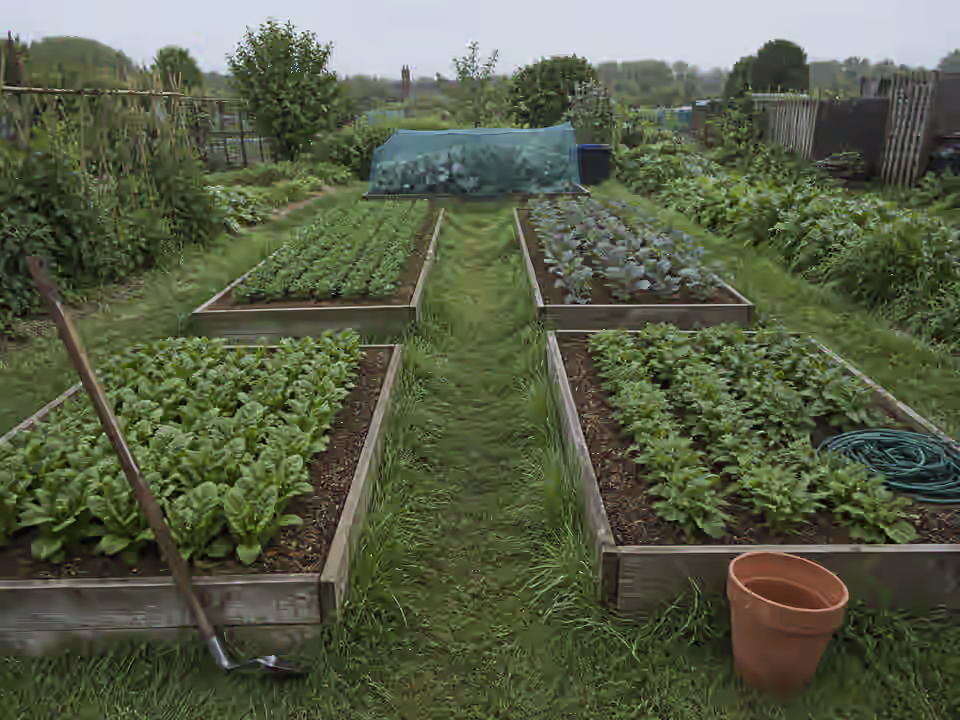
Two hours a week works if you hoe every visit, mulch every bed and grow eight crops in long runs rather than fourteen in short ones. It comes to about 110 hours across a year, weighted hard towards March, April and May. Front load your time, drop the jobs that only look like gardening, and the summer takes care of itself.
Where do the two hours actually go?
Two hours a week is an average across the year, not a weekly schedule. Written out month by month it looks like this.
| Month | Hours a week | What eats them |
|---|---|---|
| January | 0 to 1 | Seed order, sharpening tools, nothing outdoors |
| February | 1 | First sowings under cover, warming a bed under plastic |
| March | 3 | Potatoes in, seedbed raked, first direct sowings |
| April | 4 | Peak sowing, planting out, watering begins |
| May | 4 | Planting out, hoeing weekly, netting the brassicas |
| June | 3 | Hoeing, watering, the first bed handover |
| July | 2 to 3 | Picking, watering, sowing for autumn |
| August | 2 to 3 | Picking daily, holiday cover, winter sowings |
| September | 2 | Storing, clearing spent beds, covering ground |
| October | 2 | Garlic in, beds mulched and covered |
| November | 1 | Turning compost, repairs |
| December | 0 to 1 | Almost nothing, and that is correct |
That totals roughly 110 hours a year, a shade over two a week. Sixteen of those weeks want three hours or more and they are all in a row. If you can only find two flat hours every week of the year, grow three beds rather than four.
What do you do every single visit?
Same order, every time, whether you have forty minutes or three hours. The order matters more than the total, because the jobs that get skipped are always the ones at the end.
- Hoe first, for five minutes, before you look at anything else. Weeds you can already see have cost you a week
- Walk the whole plot once and look. Two minutes. This is how you catch pigeons, slugs and a burst hose early
- Pick everything ready, even what you do not need. Unpicked beans and courgettes stop the plant producing
- Water only what has just gone in and what is fruiting. Nothing else, and never in the middle of the day
- One job from this month’s list. Thirty minutes. Just the one
- Put the tools away and shut the shed. The five minutes that stops you buying a third trowel
Which jobs can you safely drop?
Most of what fills a gardening year is habit rather than need. These are the ones worth cutting, and the three that are not.
| Job | Verdict | Why |
|---|---|---|
| Digging beds over each autumn | Drop | Mulch instead. Same result, a quarter of the time, better soil |
| Hand weeding on your knees | Drop | Hoe weekly instead. A tenth of the time for the same plot |
| Watering everything | Drop | Water what has just gone in and what is fruiting. Established roots find their own |
| Raising every plant from seed | Mostly drop | Buy brassica and squash plants. Nine plants for £15 and six weeks of your spring back |
| Edging grass paths fortnightly | Drop | Twice a year is plenty. Nobody is judging the edges |
| Growing fourteen different crops | Drop | Eight in long runs beats fourteen in short ones, on both time and yield |
| Netting the brassicas | Keep | Forty minutes that saves an entire crop from pigeons and butterflies |
| Weekly hoeing | Keep | The highest return per minute on the whole plot |
| Mulching | Keep | Every hour spent mulching saves about three weeding and watering |
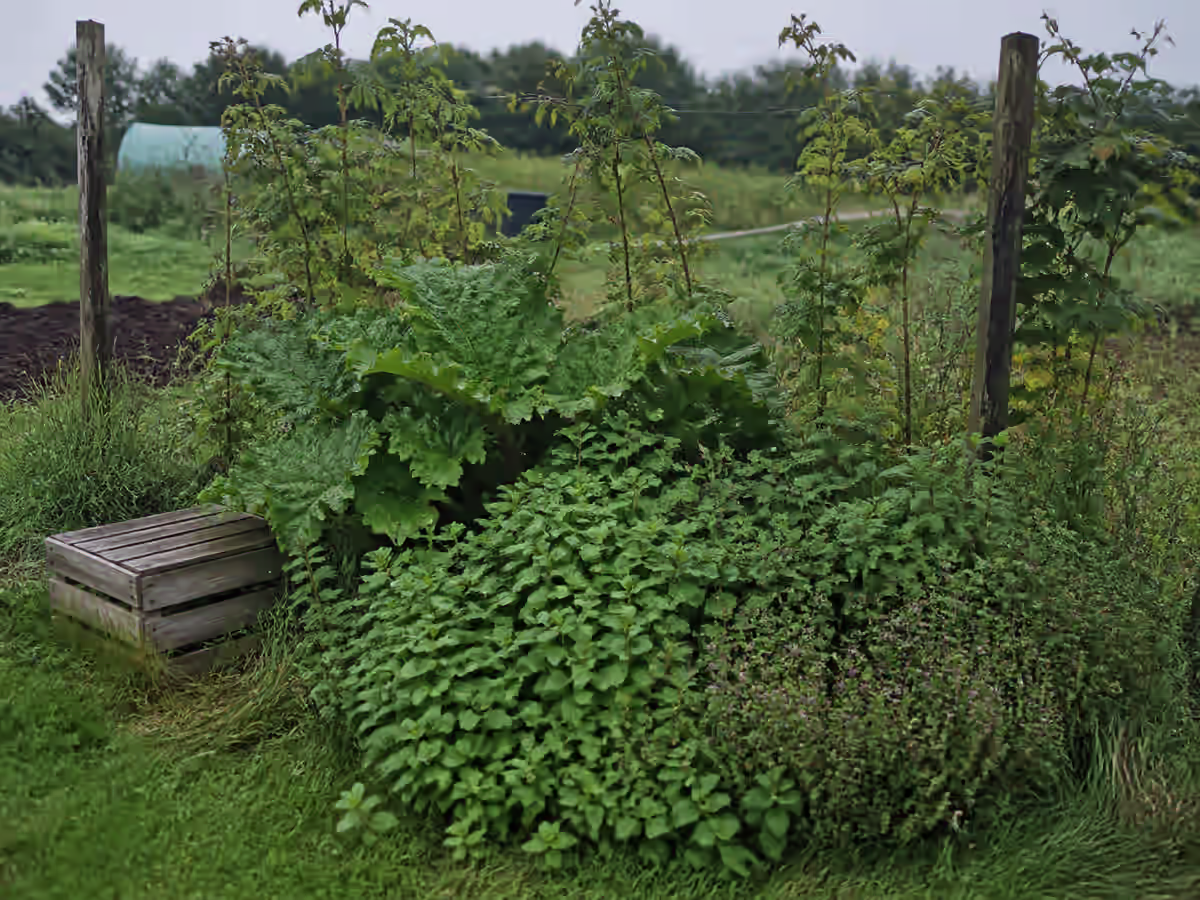
A perennial corner is the quiet version of the same idea. Rhubarb, autumn raspberries and a few herbs cost three hours once and then feed you every year for almost nothing.
What buys back the most time?
Six changes, ranked by hours returned per hour or pound spent.
| What | Costs | Gives back a year |
|---|---|---|
| Mulching every bed | One bulk bag, 4 hours | 25 hours of weeding and watering |
| A sharp Dutch hoe, filed twice a season | £20 and 10 minutes | 20 hours of weeding |
| Growing eight crops, not fourteen | Nothing | 15 hours, and less waste |
| A water butt on the plot | £30 and an hour to set up | 10 hours of carrying cans |
| Buying brassica and squash plants | £15 | 8 hours of propagating and hardening off |
| A perennial corner | 3 hours once | 5 hours a year, indefinitely |
Mulch and a sharp hoe between them account for around 45 of the hours you are trying to save. Everything else on this page is detail by comparison.
What if you miss three weeks in July?
Nothing fatal, and it helps to know that in advance so you do not come back, look at it, and quietly give up.
The salad will have bolted. The courgettes will be marrows and there will be six of them. Beans left on the plant will have gone stringy and, worse, will have told the plant to stop flowering, so strip every tough pod onto the compost and it will start again within a fortnight.
The weeds will be up but almost certainly not seeding. That is the only part that really matters, and two hours with a hoe puts it right.
Miss three weeks in April instead and the year is genuinely damaged, because there is no second chance at a sowing window. That asymmetry is the whole argument for front loading your hours.
Miss July and you lose a crop. Miss April and you lose the year.
Questions that come up
The five asked most about fitting a plot around everything else.
Is two hours a week genuinely enough?
For four beds on a half plot, yes, provided the hours are in the right months and you hoe every visit. It is not enough for fourteen crops, bare soil, or a plot you only visit at weekends in fine weather. The method matters more than the total.
What if I can only get there at weekends?
That works, and it is how most people do it. One visit of two hours beats two visits of one, because half of every trip is walking, unlocking and fetching water. What weekends cost you is watering flexibility in July, which a good mulch largely solves.
Should I buy a rotavator to save time?
No. It is fast once and expensive forever. Rotavating chops every piece of couch grass and bindweed root into a new plant, so you trade one afternoon now for three years of weeding. On a half plot a fork and cardboard will beat it comfortably.
How do I cover the plot when I am away?
Pick everything before you go, even things that are not quite ready. Water deeply the morning you leave, then mulch. Ask a neighbour to pick your beans and courgettes and tell them to keep whatever they take, which makes it a favour rather than a chore.
Is a half plot too much for two hours a week?
No, but a full plot is. That is the honest reason this site is built around half plots. If you have a full one and only two hours, work three or four beds properly and cover the rest, and consider asking the committee to split it.
The trick is knowing which two hours matter.
A short email at the start of each month: what to sow, what to pick, and the one job worth doing.
One email a month. Unsubscribe any time. How we look after your details.
Where to go next
The two jobs that do the work
Hoeing and mulching between them save around 45 hours a year.
Growing fewer things, better
Eight crops in long runs, planned once in an afternoon.
The other two systems
No dig and seed saving take work out of the year in different places.