The allotment in October
Garlic month. The plot is winding down, the last of the summer crops come out, and one twenty minute job now gives you a crop next July for almost no further effort.
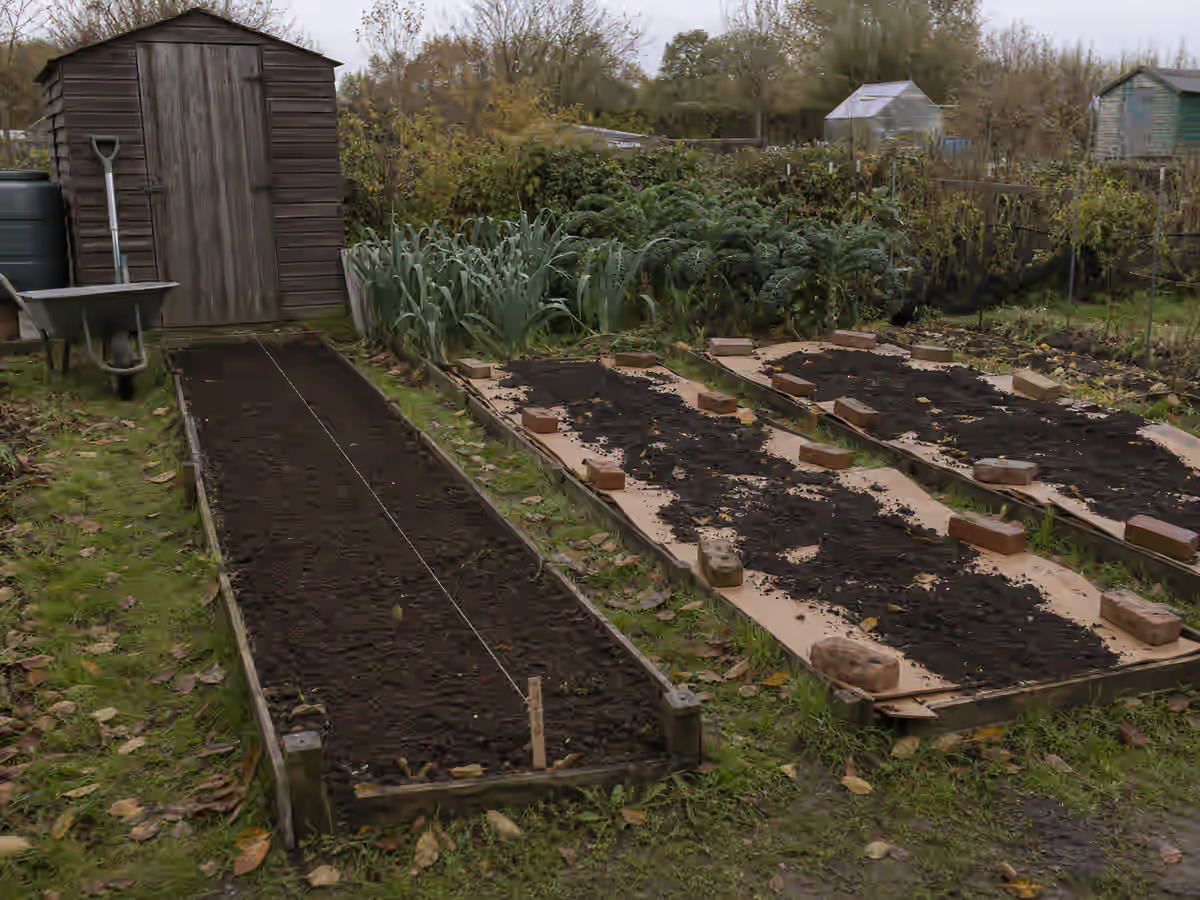
Plant garlic. It is the single best value job of the month and it needs a cold spell to make a proper bulb, so October is right. Lift and store the last roots, clear the summer crops, and cover every bed you are not growing in.
On this page
- What should you sow and plant in October?
- What should you lift and store in October?
- What can you pick in October?
- Which jobs matter most in October?
- Planting garlic, which is the best value job of the year
- What is not worth doing in October?
- One quiet job a month, in the month it counts.
- Where to go next
What should you sow and plant in October?
A short list, and garlic is the one that matters. Everything here is planted now and harvested next summer.
| Crop | Where | Depth | Spacing | Ready |
|---|---|---|---|---|
| Garlic | Direct, all month | Tip 5cm below the surface | 15cm apart, rows 30cm | July next year |
| Overwintering onion sets | Direct, first half of the month | Tip just showing | 10cm apart, rows 30cm | June next year |
| Broad beans | Direct, from late October | 5cm | 20cm apart, double rows 25cm | Late May next year |
| Winter salad | Under a cloche only | 1cm | Thin to 15cm | Through winter |
| Green manure | Broadcast, early October | Rake in | Scattered | Cover or cut down in spring |
| Bare root fruit | Direct, from late October | As the plant needs | As the plant needs | Year two onward |
Buy seed garlic rather than using a supermarket bulb. Supermarket garlic is usually a warm climate variety and often carries virus.
What should you lift and store in October?
This is the month the shed shelf fills up, and how carefully you do it decides what you are eating in February.
| Crop | How to store it | Realistically lasts until |
|---|---|---|
| Maincrop potatoes | Paper or hessian sacks, completely dark, cool but frost free | March |
| Carrots | Tops off, layered in damp sand in a box | February |
| Beetroot | Tops twisted off, layered in damp sand | February |
| Winter squash | Cured ten days, then somewhere around 12C to 15C | February |
| Onions | Dried and netted or plaited, cool and dry | March |
| Garlic | Plaited or netted, cool and dry | May, sometimes June |
What can you pick in October?
| Crop | How it is doing | Worth knowing |
|---|---|---|
| Leeks | Coming into their own | They stand all winter. The ground is the best store there is |
| Kale | Good, and improving | Frost genuinely sweetens it |
| Parsnips | From after the first frost | Leave them in the ground and lift as needed |
| Winter cabbage and savoy | Ready | Cut and leave the stump for a second flush |
| Chard and perpetual spinach | Still going | Cut the outside leaves and it carries on into winter |
| Celeriac | From late October | Lift as needed, it stands until Christmas |
| Autumn raspberries | Until the first frost | Then cut every cane to the ground in February |
| Jerusalem artichokes | From late October | Lift as needed. They keep best in the ground |
Which jobs matter most in October?
- Plant the garlic, and label the row so you do not hoe it off in March
- Clear the bean frames, coil the netting and get the canes under cover
- Lift and store carrots, beetroot and the last potatoes before the wet
- Cover every empty bed with cardboard and compost, or sow green manure
- Empty and turn the compost bay, and start a new one with the summer clearings
- Firm any autumn planted brassicas that have rocked loose in the wind
Planting garlic, which is the best value job of the year
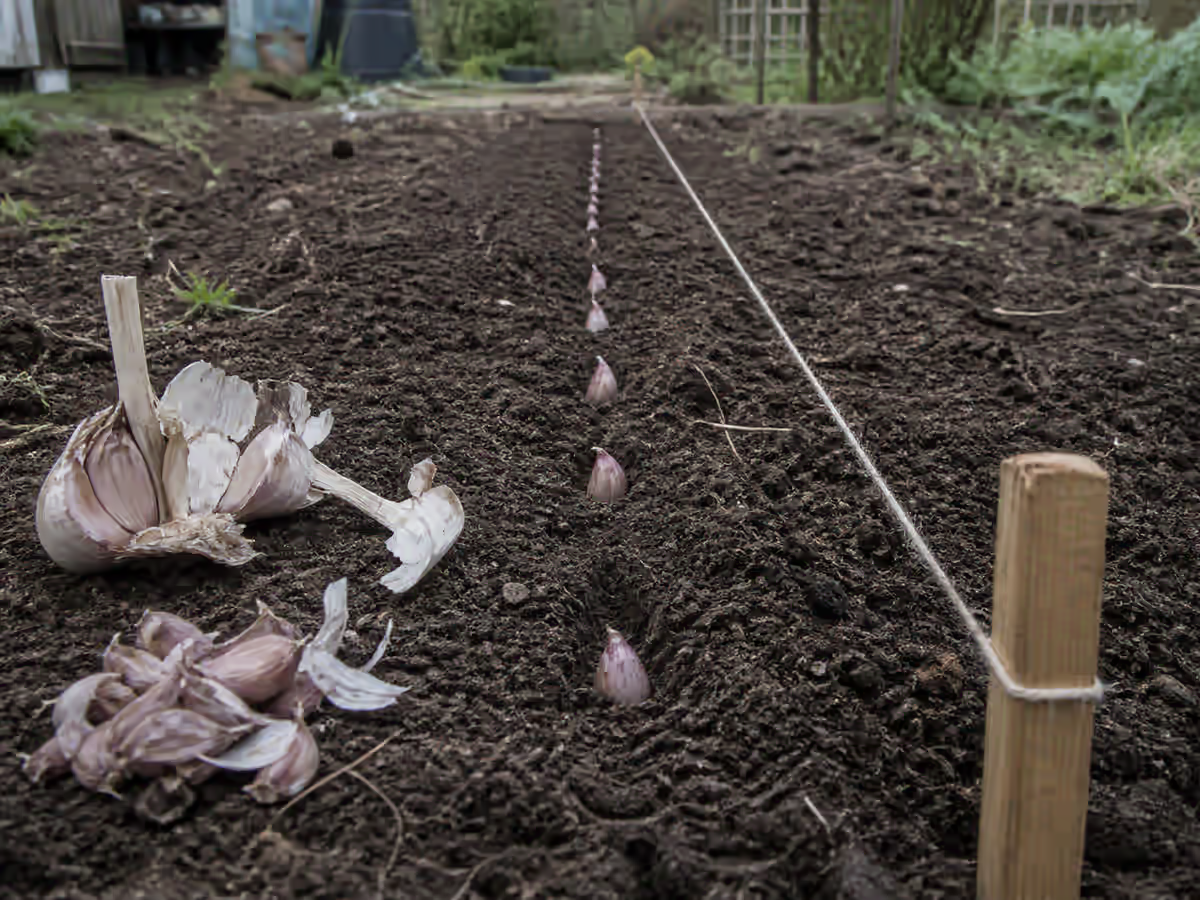
Split the bulb into cloves the day you plant, not before. Take the biggest cloves from the outside and use the small inner ones in the kitchen, because clove size at planting is the single strongest predictor of bulb size at harvest.
Push each clove in pointed end up, so the tip sits about 5cm below the surface, spaced 15cm apart with 30cm between rows. On a half plot two rows a metre and a half long is about forty cloves, which is more garlic than most households get through in a year.
It goes in now because garlic needs a period below about 10C for a month or more to trigger the bulb splitting into cloves. Miss that cold spell and you get one solid round bulb instead, which is edible but disappointing. This is why October and November plantings beat spring plantings almost every year.
Then it needs essentially nothing. Keep the row weed free, do not water it, and lift it next July when the bottom two or three leaves have yellowed. Nine months in the ground for twenty minutes of work and no attention in between, which is the best ratio on the entire plot.
What is not worth doing in October?
Do not plant supermarket garlic. It is usually grown for a warmer climate, it frequently carries virus, and it has often been treated to stop it sprouting. Seed garlic costs a few pounds and is a different crop.
Do not dig the beds over. Cover them. Winter rain on freshly turned soil undoes the structure and washes the goodness out of the top layer.
Do not leave the canes and netting out over winter. Bamboo left in wet ground rots at the base by spring, and netting left up fills with leaves, sags and tears.
Questions that come up
The four asked most in October.
Is October or November better for garlic?
October is slightly better in most of the country, because the cloves get roots down before the cold. November is perfectly workable, and even January still makes a bulb, just a smaller one. Do not force it into sodden ground.
Should I lift my leeks and store them?
No. Leeks are one of the few crops that store better in the ground than anywhere else. Lift them as you want them, right through to April.
Do I need to cut down the asparagus?
Yes, once the ferny growth has gone properly yellow, which is usually mid to late October. Cut it to about 5cm and mulch over the crowns. Cutting it while still green robs the crown of the food it is drawing back down.
What is the best thing to cover empty beds with?
Cardboard with about 5cm of compost on top is hard to beat, costs nothing if you collect boxes, and means you can sow straight into the bed in spring without digging. Black plastic works but adds nothing to the soil.
One quiet job a month, in the month it counts.
Garlic in October, broad beans in November, seed orders in January. One email, on the first.
One email a month. Unsubscribe any time. How we look after your details.
Where to go next
Set it up to run itself
The crops and systems that need least attention for most return.