Growing potatoes on a half plot
The crop that makes a new plot feel like it is working, and the one most people give far too much space to.
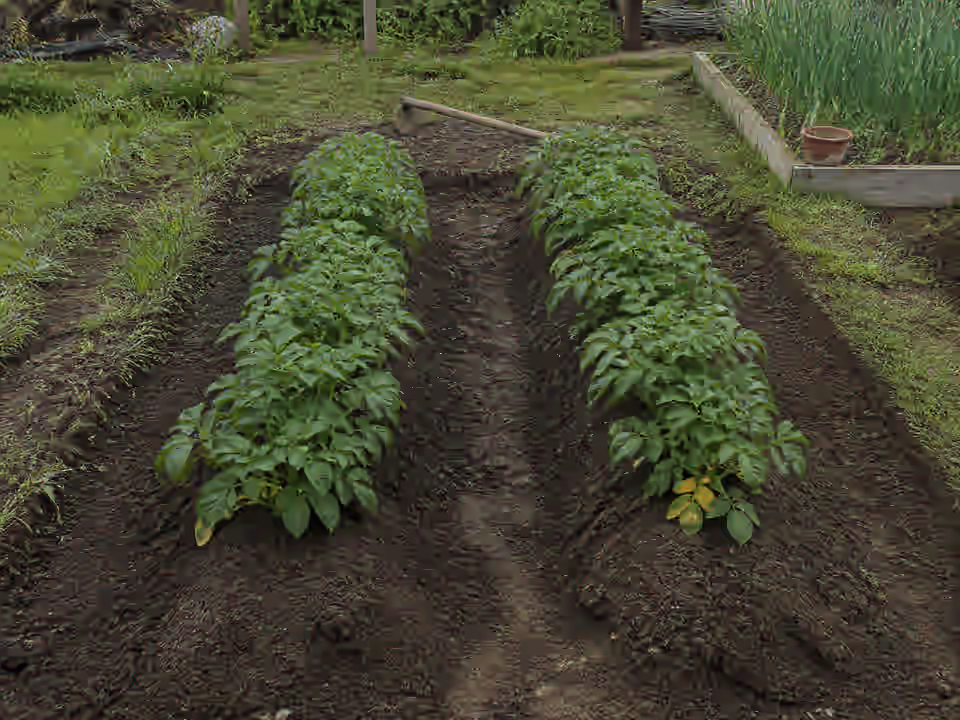
Grow first earlies and buy the maincrop. Chit from February, plant mid March at 30cm apart in rows 60cm apart, 12cm deep. Earth up as the shoots appear. Lift from late June, about ten to twelve weeks after planting. One 3m bed gives 12kg to 18kg.
Potatoes at a glance
| First earlies | Second earlies | Maincrop | |
|---|---|---|---|
| Chit from | February | February | February |
| Plant | Mid to late March | Early to mid April | Mid to late April |
| Spacing | 30cm apart, rows 60cm | 35cm apart, rows 70cm | 37cm apart, rows 75cm |
| Depth | 12cm | 12cm | 15cm |
| Weeks in the ground | 10 to 12 | 13 to 15 | 18 to 22 |
| Lift from | Late June | Late July | September |
| From one 3m by 1.2m bed | 12kg to 18kg | 15kg to 20kg | 18kg to 25kg |
| Stores? | No. Eat within days | A few weeks | Until March |
On a half plot, grow first earlies. They clear the bed in June for winter brassicas, they taste nothing like a shop potato, and they usually miss blight entirely.
How many should I actually grow?
One 3m by 1.2m bed takes about 20 seed potatoes at first early spacing and gives you somewhere between 12kg and 18kg. That is roughly six to eight weeks of potatoes for two people, eaten as they come.
That is the right amount. The temptation on a new plot is to give potatoes two or three beds, because they are forgiving and the yield feels satisfying. But a maincrop bed is occupied from April to September, which is the entire growing season, to produce something that costs very little in a shop and stores no better than the shop version.
A half plot has four beds. Giving a quarter of your whole plot to a crop you can buy for a pound a kilo is the single most common way to end up with a plot that produces a lot of one thing and nothing in February.
Chitting and planting
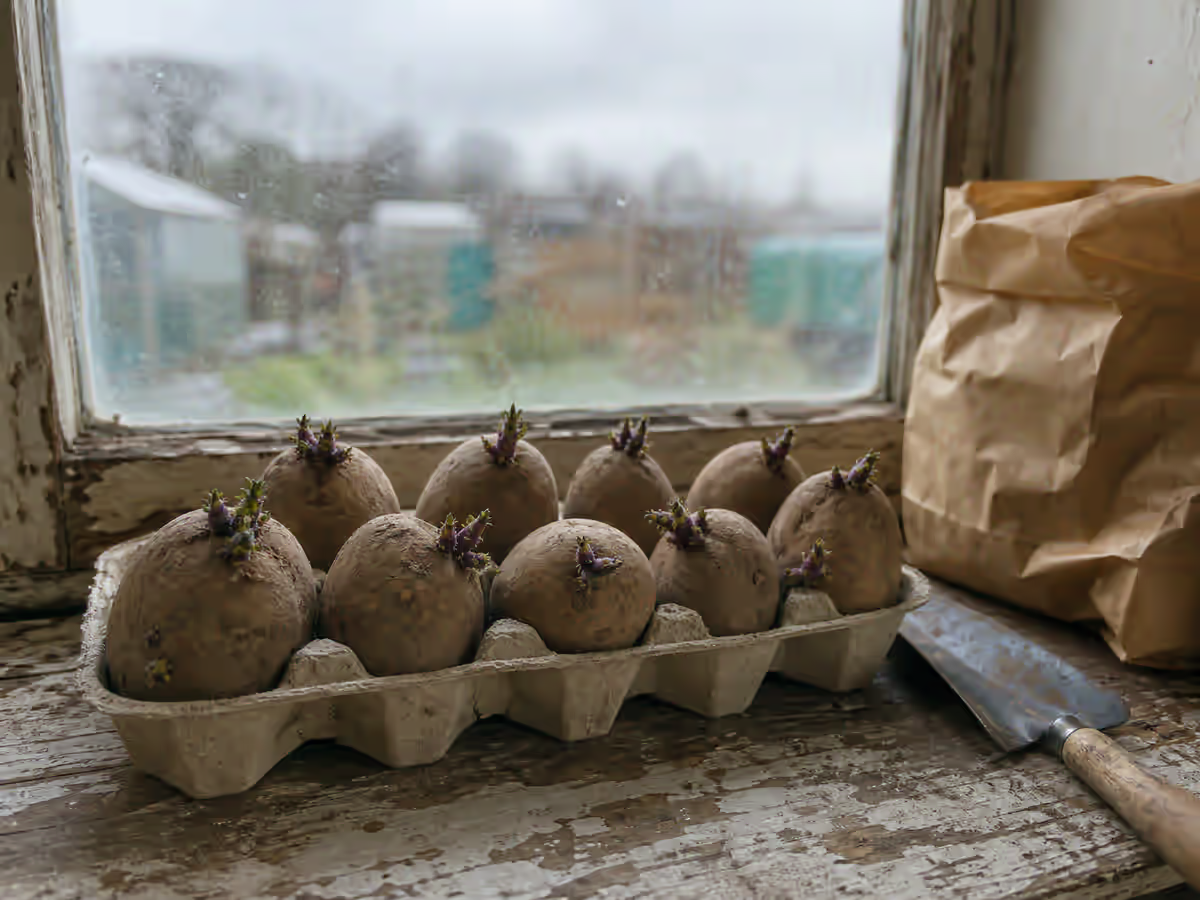
Stand the tubers rose end up in egg boxes somewhere cool, light and frost free from February. The rose end is the blunt end with the most eyes. Six weeks later you want short stubby dark shoots about 2cm long, not long white ones, which means light matters more than warmth.
Take out a drill 12cm deep, set the tubers shoots upward, and cover. Do not put manure in the trench. It encourages scab, and on a bed that has been mulched it is unnecessary anyway.
Leave 60cm between rows. That gap is not wasted space, it is the soil you earth up with later.
Earthing up, and why it does three jobs at once
The moment the first dark shoots break the surface, pull soil up over them from both sides until they are buried again. Repeat two or three times between April and June.
- It protects the emerging shoots from a late April or May frost
- It keeps light off the developing tubers, which is what turns them green and inedible
- It buries a whole flush of weed seedlings without you weeding at all
- It gives the plant more depth to form tubers in, which is where the extra yield comes from
Once the foliage closes over the bed, stop. The crop is made and the plants smother anything else that tries to grow.
What goes wrong?
| Problem | What you see | What to do |
|---|---|---|
| Blight | Brown patches on leaves with a pale halo, spreading fast in warm wet weather | Cut all foliage off at ground level and remove it from the plot. Leave the tubers two weeks, then lift |
| Green tubers | Green patches on the skin | Earthing up was too shallow. Green potatoes are toxic. Cut the green off generously or discard |
| Scab | Rough corky patches on the skin | Cosmetic only. Caused by dry alkaline soil or fresh manure. Peel and eat |
| Slug holes | Neat round holes through the tuber | Worst in maincrops left in the ground into September. Lift earlier, and grow earlies instead |
| Hollow heart | A cavity in the middle of a large potato | Irregular watering after a dry spell. Harmless, and worse in very large tubers |
| Frosted shoots | Blackened growth after a clear night | They regrow from the tuber. Earth over them and expect a fortnight of delay |
Lifting and what follows them
First earlies are ready ten to twelve weeks after planting. Flowering is a rough signal only. Scrape the soil away from one plant with your hand and look: egg sized means lift, marble sized means wait a fortnight.
Push the fork in at least 30cm out from the stem and lever upward rather than digging down through the crop. Go through the loose soil with your hands afterwards, because every tuber you miss comes up as a volunteer in next year rotation and carries blight through the winter.
Then plant something the same week. A bed cleared in late June and left until spring is nine months of nothing. Leeks, purple sprouting broccoli, kale and winter cabbage all want planting in June and all follow potatoes perfectly, because potato foliage leaves the ground clean and weed free.
Questions that come up
The five asked most about potatoes.
Do I have to chit them?
For first earlies it is worth the shelf space and buys you roughly a fortnight. For maincrops it makes very little measurable difference. Nobody has ruined a crop by not chitting.
Can I use potatoes from the supermarket?
You can, and they often grow, but they are treated to suppress sprouting and they carry no guarantee against virus or eelworm. Seed potatoes are certified disease free and cost very little for the twenty you need.
Can I grow potatoes in the same bed each year?
No. Keep them moving on a four bed rotation. Potato cyst eelworm builds up in soil where potatoes grow repeatedly and there is no cure once you have it, only a long gap.
Are potatoes good for breaking in new ground?
Partly true. The digging you do planting and lifting them does break up ground, and the foliage smothers weeds. But they will not clear perennial roots like couch or bindweed, and the story that they somehow clean the soil is a myth.
When do I stop watering?
Once the foliage has closed over, in most British summers you can stop. The critical period is when the tubers are forming, just after flowering. Watering heavily in a humid August mostly encourages blight.
Where this comes from
Most of this page is what has actually worked on one half plot, which is worth exactly what that is worth. The claims below are not opinion, and you should not have to take our word for them.
- RHS, Potato blight, on recognising it and how fast it moves in warm wet weather
- Food Standards Agency, Home food fact checker, on green and sprouted potatoes, and why cooking does not make a bitter one safe
Last reviewed 17 August 2026.
Written by Sam
Eight years on a half plot in Nottinghamshire. Four beds, two water butts, about two hours a week, and most of what is on this site tried twice before it worked. Dates here suit most of England and Wales, because that is where the plot is. Where a page makes a claim you could check for yourself, it links to the source.
The handover months are the ones worth getting right.
What comes out, what goes in behind it, and when. One email a month.
One email a month. Unsubscribe any time. How we look after your details.
Where to go next
What else to grow first
Potatoes are one of five. Here are the other four.