The five crops for year one
Potatoes, broad beans, courgettes, salad leaves and onions. Five crops that forgive bad timing, need no greenhouse, and give you something you would be genuinely pleased to carry home.
This is the long version, with spacings, quantities for a household of four, the one job that decides each crop, and an honest verdict on what each one actually costs you in ground.
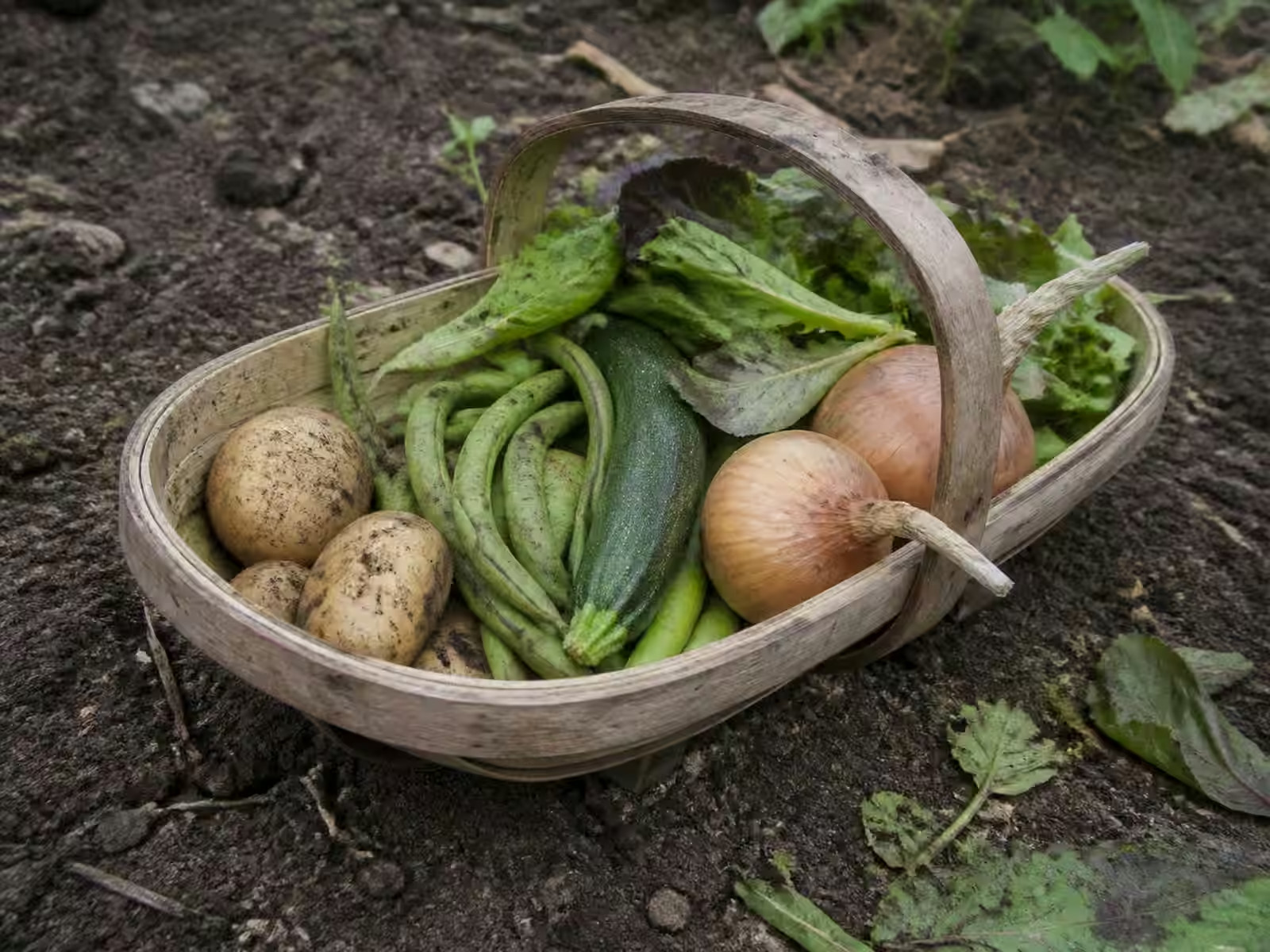
First early potatoes, broad beans, courgettes, salad leaves and onions from sets, with leeks if you want something standing in winter. They forgive a beginner, they crop at five different points in the year, and between them they teach every skill the rest of the plot needs.
Why these five, and not the other forty
There is nothing sacred about the number five. What matters is the test each one had to pass, because that same test is what you will use in year three to decide whether something new earns a bed.
| Crop | What it forgives | What it teaches you | When it crops |
|---|---|---|---|
| First early potatoes | Rough ground, careless planting, a dry spell | Earthing up, and lifting without spearing half of them | Late June |
| Broad beans | Cold, neglect, and being sown far too late | Sowing straight into the ground, and staking before it falls over | Late May |
| Courgettes | Almost everything except a late frost | Hardening off, and picking often enough | July to September |
| Salad leaves | Being forgotten for a week | Succession sowing and thinning, the two habits that matter most | Five weeks from sowing |
| Onions from sets | Dry spells and a bit of competition from weeds | Spacing, and drying a crop properly for storage | Late July |
Five crops, five different months, and between them every skill the rest of the plot needs.
It forgives bad timing
Year one timing is guesswork. Every crop here has a sowing window measured in weeks rather than days, and none is ruined by going in a fortnight late. Sweetcorn, cauliflower and Florence fennel are all perfectly good crops that punish a late or checked start, which is exactly why none of them is on this list.
It needs no glass and no heat
No greenhouse, no heated propagator, no cold frame, no polytunnel. Four of the five go straight into the ground where they are to grow. Only courgettes want a windowsill, and even they can be sown direct in early June if you have nowhere indoors to put them.
You would be pleased to carry it home
New potatoes dug the same afternoon, broad beans in May, salad cut an hour before it is eaten. On all five the plot version is clearly better than the shop version, and that gap is what keeps you walking down there on a wet Tuesday in April when nothing much is happening.
It leaves the ground better, or leaves it early
Potatoes break up neglected soil and hand the bed back clean in mid July. Broad beans leave nitrogen in their roots and are finished by early July. Both give you a second crop in the same year without you having planned for one, which is how a first year plot quietly gets ahead of itself.
What got left out, and why
Tomatoes, because outdoor ones get blight in most British summers and the reliable ones need a greenhouse. Carrots, because carrot fly will find them and fine mesh from day one is a job you do not need yet. Sweetcorn, because it has to go in a block of twelve to pollinate and returns about two meals. Parsnips, because germination is slow and patchy and the whole row can fail invisibly for eight weeks while you wait.
And runner beans, which are genuinely reliable and would otherwise qualify. They are off the list for one reason: they crop at exactly the same moment as the courgettes, and the single biggest problem a year one plot has in August is that everything arrives at once. Add all five in year two.
First early potatoes
Not for the potatoes. First earlies are on this list because of what they do to the ground and to your confidence, and the crop itself is very nearly a side effect.
Chit February, plant mid March to early April, lift from late June.
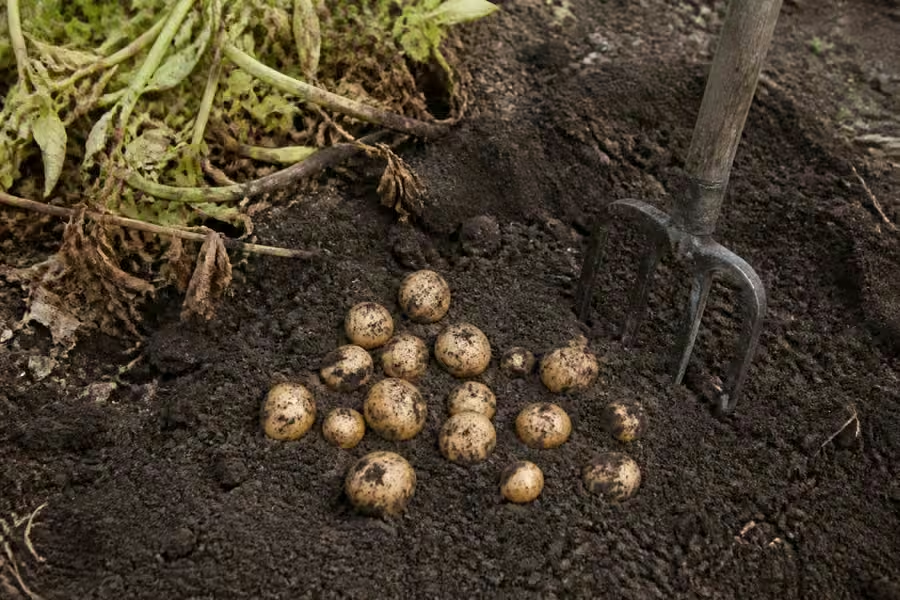
Buying and chitting
Buy certified seed potatoes rather than supermarket ones, which are treated to stop them sprouting and can carry disease onto your plot for years. Chit them from early February: stand them rose end up, that is the end with the most eyes, in an egg box on a cool light windowsill. Not in the dark and not in the airing cupboard. You want short stubby dark green shoots about 2cm long by planting time, not long pale ones. Rocket and Swift are the fastest at around ten weeks, Charlotte has better flavour and takes thirteen, and Pentland Javelin sits reliably in the middle.
Spacing and quantity
Plant 12cm deep, 30cm apart in the row, 60cm between rows. Twenty to twenty five tubers suits a household of four and takes about 4.5 square metres, roughly half a bed. A 2.5kg bag holds somewhere between 20 and 30 tubers depending on size. Earth up when the shoots are about 20cm high, drawing soil up the stems and leaving 5cm showing, then again three weeks later. Earthing up is not optional. Tubers left exposed to light go green, and green potatoes are genuinely not safe to eat.
The one job that decides the crop
Getting them into the ground before the second week of April. Earlies are a race against blight, which reaches most of Britain from mid July onwards. Planted in March they are lifted in late June and out of the ground before blight is a factor at all. Planted in May they are still growing when it arrives, and you will lose the top growth in a week. Everything else about potatoes is forgiving. This is not, and it is the reason the planting date matters more than the variety.
Honest verdict
The crop is not really the reason. Twenty five plants give 15 to 25kg, which is perhaps £20 of potatoes for a season of a quarter of your growing ground. What you are actually buying is a bed that has been broken up, weeded twice by the earthing up, and handed back clean in mid July with time for leeks, autumn salad or a green manure. On ground that was rough grass in January, that is worth considerably more than the potatoes are.
Broad beans
The first real thing you pick, and it arrives in the emptiest month of the year. Broad beans are the crop that proves to you in late May that the plot actually works, which in a first year matters more than the weight of the harvest.
Sow November or February to March, pick from late May.
Two sowing windows
Early November gives a crop in late May from a stronger plant that largely dodges blackfly by being past the vulnerable stage before it arrives. February to March gives a crop in June and is the safer choice on heavy wet ground or a cold exposed site, where autumn sowings can rot off or be taken by mice. Aquadulce Claudia is the standard autumn variety and the one to ask for. The Sutton is a dwarf at about 45cm, which suits a windy plot.
Spacing and support
Sow 5cm deep and 20cm apart, in a double row with 45cm between the two rows. A 4m double row is about 40 plants and yields 8 to 10kg of pods. They want no feeding and no watering at all once established. On an exposed site run a string between canes down both outer sides of the double row at knee height, because a March gale will otherwise flatten the lot in one night and they never fully stand back up.
The one job that decides the crop
Pinching out the tops. The week the lowest pods have set, take the top 8cm off every plant with your fingers. Blackfly colonise the soft growing tip first, so removing it takes most of the problem away before it starts, and it pushes the plant into filling the pods it already has. Do it in the week the bottom pods form, not the week you notice blackfly, which is a fortnight too late. The tops are good steamed, like spinach.
Honest verdict
The best value crop here for a first year: hardy, almost unattended, and cropping in May when nothing else is. Two warnings. A pod is mostly pod, so 10kg of pods is nearer 3kg of beans, which catches people out. And pick them young, at 6 to 8cm, while the beans inside are the size of a fingernail. Left three weeks longer they go grey, tough and floury, and that is how most people decide they do not like broad beans.
Broad beans sown in November crop three weeks earlier than ones sown in February, and the blackfly never catch up with them.
Courgettes
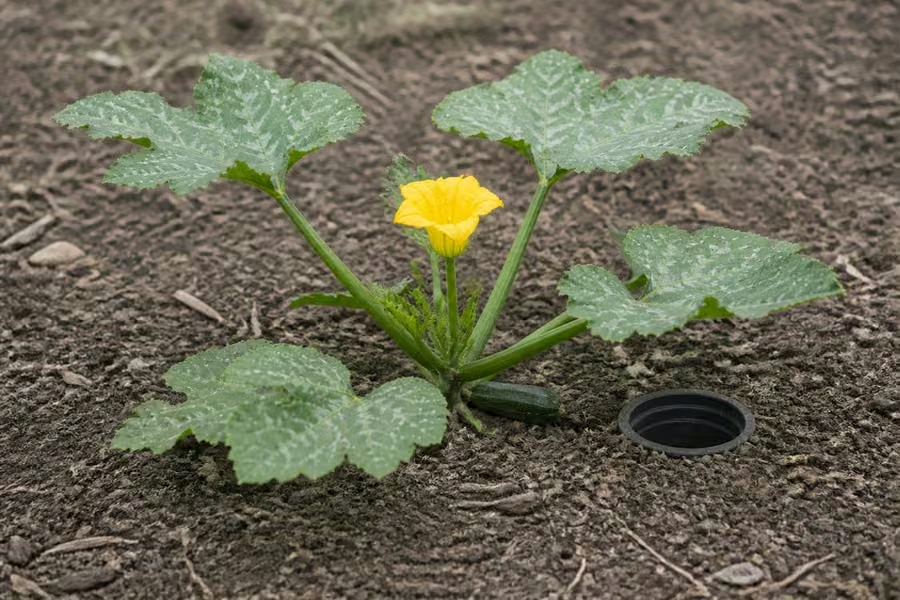
One plant will feed a household of four. It is on this list because it is close to impossible to fail with, and because it teaches you more about quantity than anything else you will grow.
Sow indoors late April, plant out after the last frost, pick from late July to the first frost.
Sowing and planting out
Sow from late April, one seed per 9cm pot, pushed in about 2cm deep and set on its edge rather than flat. On its edge matters: a flat seed sits in wet compost and rots before it germinates. They come up in under a week on a windowsill. Harden off over a week, then plant out only when frost has genuinely finished, mid to late May in the south and early June further north. A frost in the second week of May kills them outright in a single night after six weeks of care, so wait until you think it is safe, then wait one more week.
Spacing and quantity
One square metre per plant, and one plant. Two if you genuinely love them. Not three, ever. Plant into a shallow saucer shaped dip rather than a mound so water runs in rather than off, and sink a 15cm pot beside each plant as you put it in, so that later you can water to the roots instead of the surface. Defender is a green variety that crops heavily with decent mildew resistance. Yellow varieties look better in a trug and generally crop a little less.
The one job that decides the crop
Picking, every visit, at about 12cm. A courgette left on the plant becomes a marrow, and the moment one fruit starts swelling seriously the plant reads its job as done and slows down setting new ones. Picking small is not a matter of taste, it is what keeps the plant producing for eight weeks instead of three. Twice a week through August is the minimum. Go away for a fortnight and you will come back to two marrows and a plant that has stopped.
Honest verdict
Genuinely reliable and genuinely too productive. One plant gives 20 to 30 fruit across August and September. The failure mode is not death, it is glut, and the glut is decided entirely at the moment you plant the third one. Powdery mildew, a white dust across the leaves, turns up in late August and looks alarming. By then the plant has done its work and does not need saving, so leave it be.
One courgette plant fills a square metre and gives twenty to thirty fruit. Two plants is a fortnight of pressing them on the neighbours.
Salad leaves
Square metre for square metre, the highest return on the whole plot, and the crop that makes the walk down worth it in the weeks when nothing else is ready.
Sow a metre every fortnight, mid March to early September.
Sowing, one metre at a time
Thinly, in a shallow drill about 1cm deep, one metre at a time and never more, every fortnight from mid March to early September. In midsummer sow in the evening and water the bottom of the drill before you sow rather than after. Lettuce seed will not germinate much above 25C, which is the actual reason the July sowings are the ones that seem to fail for no reason.
What to grow
A cut and come again mix is the sensible year one choice. Add rocket, which is up in four days and gives you something to pick faster than anything else on the plot, and land cress, which tastes close to watercress and is hardy enough to stand outside all winter. Avoid hearting lettuces such as Iceberg in a first year: they hold ground for three months and give you a single cut.
The one job that decides the crop
Cutting with scissors, 3cm above the soil, taking the whole row across rather than picking individual leaves. Cut that way and most varieties regrow two or three more times. Picked leaf by leaf they run to seed instead. Cut in the morning and put the leaves straight into a bag rather than an open trug, because salad cut at midday and carried home loose is limp before you reach the gate.
Honest verdict
Nothing else on this list changes what you actually eat as much, and nothing else gives you something to pick within a month of sowing. Two warnings. Slugs will take an entire sowing overnight in a wet spring, so always have a second metre sown a fortnight behind as insurance rather than treating each sowing as the crop. And the whole row will bolt in a hot fortnight, which is not a failure and not something to fix. It is simply the signal to cut what is left, pull the rest, and sow the next metre.
Onions from sets
The crop that asks for the least. Push them in during March, weed them now and then, lift them in August, and they will still be feeding you the following spring.
Plant sets March, lift August, eat until March.
Sets, not seed
Buy sets, which are small part grown bulbs, rather than seed. Seed grown onions are cheaper and make bigger bulbs, but they want sowing in January under cover and they are firmly a year two job. Plant sets in March, 10cm apart in rows 25cm apart, with just the tip showing above the soil. About 100 sets takes 2.5 square metres and is most of a year for a household of four. Sturon and Stuttgarter are the reliable storing varieties to ask for.
The first fortnight is the risky one
Birds pull freshly planted sets straight out by their dry papery tops, and a hard frost lifts them out of loose soil. Walk the row twice in the first two weeks and push back anything that has come up, which takes about a minute. If birds are a known problem on your site, run fleece or net over the row for the first month. After that the crop asks nothing of you but weeding.
The one job that decides the crop
Stopping. Stop watering and stop feeding at midsummer, and when the tops bend over of their own accord in August, that is the crop telling you it has finished. Do not bend the tops over yourself, which is old advice that bruises the neck and lets rot straight in. Lift the whole row on a dry day and dry them somewhere airy and under cover for two to three weeks before they go into store. Onions put away damp will rot by Christmas, and that is genuinely the only common way to lose this crop.
Honest verdict
The lowest effort crop on this list and the one most likely to still be feeding you in March. Two honest points. Onions are cheap to buy, so this is not about saving money, it is about having a plaited string of them hanging in the shed. And a wet August is the real enemy: if the tops have gone over and rain has set in for the week, lift them anyway and dry them under cover rather than leaving them sitting in wet ground.
One thing to ask about before you plan a big onion bed
White rot. If onions and garlic on your site come up yellowing and stunted, and lifting one shows a white fluffy growth around the base of the bulb, that is white rot. It lives in the soil for fifteen years or more, it is moved around on boots and tools, and there is no cure and no treatment worth trying.
Ask your site secretary in your first month whether the site has it. It is the sort of thing everybody who has been there five years knows and nobody thinks to mention. If your site does have it, grow onions in a different bed each year, keep them off the affected ground entirely, and clean your fork between beds. Far better to find this out before you commit 2.5 square metres than in August of your second year.
Leeks
Leeks are the reason a plot still feeds you in January, and nothing else on this list gives you food in February. If there is a spare metre anywhere, this is what goes in it.
Sow in a short seedbed row in March. In June, when the seedlings are about pencil thin and 20cm tall, lift them, trim the roots back to 2cm and the tops back by a third, then drop each one into a 15cm deep hole made with a dibber, 15cm apart in rows 30cm apart.
Then fill the hole with water rather than with soil. This is the part that sounds wrong and is right: the soil washes in gradually around the plant, and the loose deep hole is what blanches the lower stem white. Forty plants takes about 1.8 square metres and sees a household through from December to March.
They then stand in the ground through hard frost and get pulled as you want them, which means you need no shelf, no clamp and no freezer space. Musselburgh is the standard hardy variety and will take anything a British winter does to it.
Why leeks are the sixth and not the first
Only because of what they ask of a first year plot. They hold ground from June to March, which is nine months of a bed, and they need a seedbed sown in March at exactly the point when a new plotholder has the least idea what they are doing.
If that is too much in year one, there is a shortcut that costs almost nothing: buy a bundle of leek plants from the site shop or a nursery in June for a few pounds and skip the seedbed entirely. Nobody will know, and you will be eating leeks in January while everybody else on the list is eating stored onions.
The five crops across one year
What the whole list looks like month by month, so you can see how little of it happens at once. Dates suit most of England and Wales. In Scotland and the far north, add a fortnight to anything sown outdoors in spring.
| Crop | Sow or plant | Plant out | Harvest | Spacing | From one 3m by 1.2m bed |
|---|---|---|---|---|---|
| First early potatoes | Chit from February | Plant mid March to early April | Late June to July | 30cm apart, rows 60cm | 12kg to 18kg |
| Broad beans | Early November, or late February | Sown where they grow | Late May to July | 20cm apart, double row 25cm apart | 4kg to 6kg |
| Courgettes | Indoors, late April | End of May, after the last frost | July to September | 90cm apart | 20 to 30 fruit per plant |
| Salad leaves | Direct, every three weeks March to September | Thin rather than transplant | Five to seven weeks from sowing | Rows 15cm apart, thin to 10cm | A cut a week through summer |
| Onions from sets | Sets planted mid March to mid April | Sown where they grow | Late July to August | 10cm apart, rows 30cm | 6kg to 9kg |
| Leeks | Seedbed in April | June, dibbed into a 15cm hole | November to April | 15cm apart, rows 30cm | 40 to 50 leeks |
Yields are what a reasonable half plot actually produces, not what the seed packet claims.
February
Stand the seed potatoes up to chit on a cool light windowsill. Order onion sets if you have not already, because the good storing varieties sell out. Nothing goes outdoors this month, and resisting a warm week in February is a real job in itself.
March
Plant potatoes from mid month once the soil is workable. Push in onion sets. Sow the first metre of salad. Sow broad beans if you did not sow them in November. Sow a short row of leeks in a seedbed. This is the busiest month of the five crop year by a distance.
April
Earth up the potatoes as the shoots come through, and again three weeks later. Sow courgettes indoors on a windowsill from late in the month. Second metre of salad. Walk the onion row and push back anything the birds have pulled out.
May
Harden off the courgettes over a week and plant them out at the end of the month in the south. Autumn sown broad beans start cropping from late May. Pinch out the bean tops the week the lowest pods set. Keep the salad going every fortnight.
June
First early potatoes from late June. Broad beans in full crop. Plant courgettes out now if you are further north. Lift the leek seedlings and dib them in. This is the month the plot starts genuinely feeding you, and the month most people decide it was worth it.
July
Lift the rest of the potatoes and clear the bed properly. Cut the broad beans off at ground level and leave the roots in for the nitrogen. Courgettes begin. Salad struggles in the heat, so sow it in the evening. Two beds are now empty in the middle of summer, which is the whole point of these two crops.
August
Courgettes twice a week without fail. Onion tops go over of their own accord: lift the row on a dry day and get them drying under cover. Sow salad again as it cools. Put something into the cleared potato and bean beds, even if it is only a green manure.
September onwards
Last courgettes until the first frost takes the plant. Onions into store once properly dry. Salad under a cloche will keep going well into autumn. Order garlic and autumn broad beans for the November sowings, which is where year two quietly begins.
Where this comes from
Most of this page is what has actually worked on one half plot, which is worth exactly what that is worth. The claims below are not opinion, and you should not have to take our word for them.
- RHS, Onion white rot, on the sclerotia that sit dormant in the soil for fifteen years and germinate only when they detect an allium
- RHS, Potato blight, on why first earlies lifted in June usually miss it entirely
Last reviewed 17 August 2026.
Written by Sam
Eight years on a half plot in Nottinghamshire. Four beds, two water butts, about two hours a week, and most of what is on this site tried twice before it worked. Dates here suit most of England and Wales, because that is where the plot is. Where a page makes a claim you could check for yourself, it links to the source.
A reminder in the week the job actually matters.
Chitting in February, pinching out bean tops in May, lifting onions on the right dry day in August. One email at the start of each month with what these five crops need now.
One email a month. Unsubscribe any time.
Where to go next
The five crops are chosen. These are the three things that decide how well they do.
Work out where they go
Four beds, a rotation group in each, and the paths drawn before a single crop.
The mistakes that cost a season
Your first year in the order it actually happens, and the five errors almost everyone makes.
What happens in August
One courgette plant is manageable. Read this before you plant the third one.