Soil and compost on a half plot
The only thing on the plot that gets better every year if you leave it alone, and worse every year if you keep digging it.
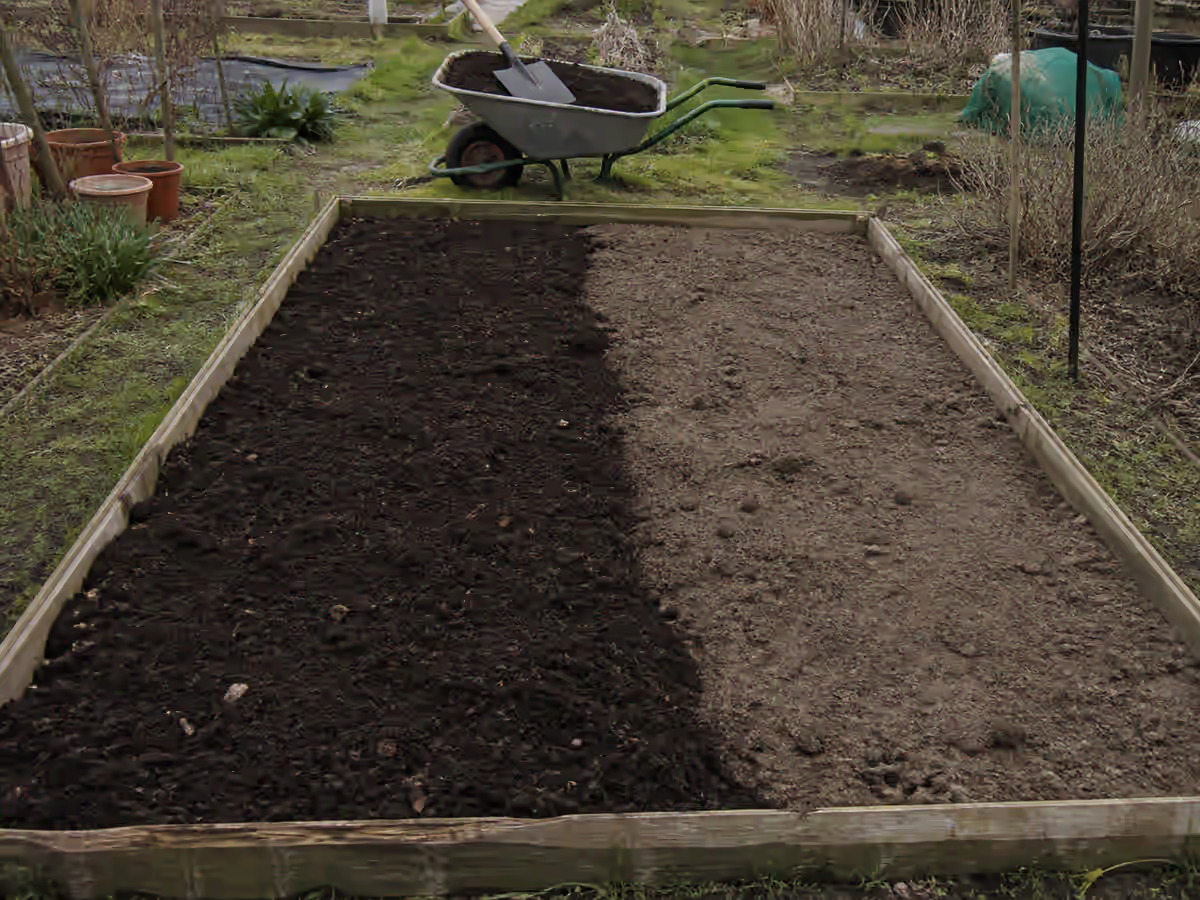
Stop digging. Cover beds with 5cm of compost each autumn and let the worms take it down. Build two pallet bays so one rots while the other fills. Mix roughly half green and half brown material. A half plot makes about half the compost it needs, so expect to buy some.
Why digging stopped being the answer
Soil is not an inert medium you improve by turning. It is a structure, built by roots, worms and fungi over years, full of channels that hold air and drain water. Digging destroys that structure every time, and the soil then spends a season rebuilding it.
Digging also brings a fresh layer of weed seed to the surface. Weed seeds can stay viable for decades a few centimetres down, waiting for light. Every spadeful turned is a new flush of weeds you did not have before.
The alternative is to put the organic matter on the top and let the worms take it down, which is what happens in every uncultivated piece of ground on earth. It is less work, it produces better structure, and it dramatically reduces weeding.
There are two honest exceptions. Getting perennial roots like couch grass and bindweed out needs digging, and there is no way round it. And a badly compacted plot, where a path has been driven over or machinery has been on it, may need breaking open once. After that, stop.
What goes in the compost bay?
Roughly half and half by volume, greens and browns. Too much green and it goes to slime. Too much brown and nothing happens at all.
| Greens, wet and nitrogen rich | Browns, dry and carbon rich | Keep out |
|---|---|---|
| Grass clippings | Cardboard, torn up | Perennial weed roots: couch, bindweed, dock |
| Vegetable peelings and kitchen scraps | Straw and old hay | Anything with seed heads on it |
| Spent pea and bean tops | Dry leaves | Cooked food, meat and fish |
| Annual weeds before they seed | Woody prunings, shredded | Diseased material: blight, clubroot, white rot |
| Comfrey and nettle leaves | Wood ash, sparingly | Cat and dog waste |
| Soft hedge trimmings | Shredded paper and egg boxes | Glossy printed paper |
A half plot will not make enough compost for its own beds. Expect to make about half of what you need and buy or source the rest.
A two bay system from pallets
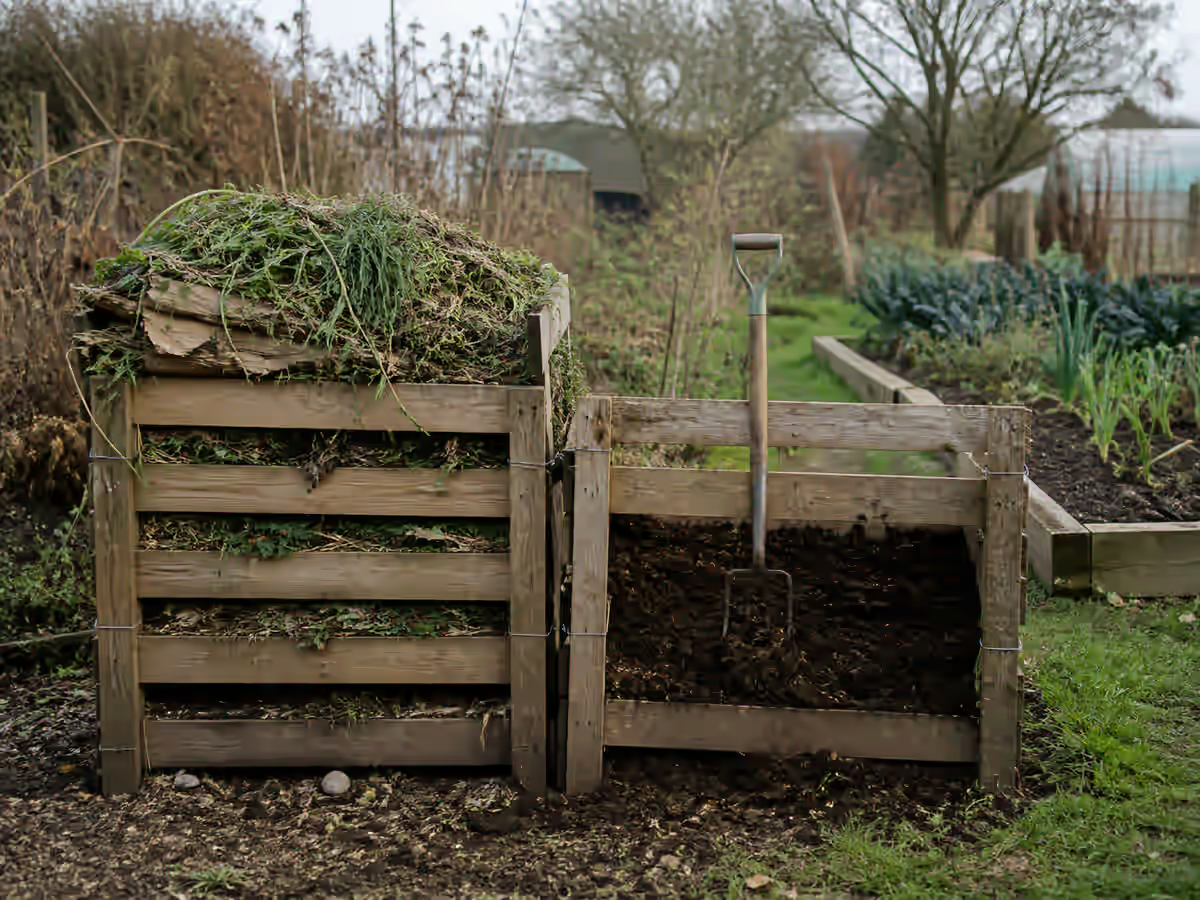
Four pallets make one bay. Six make two, which is what you actually want, so one can rot while the other fills.
- Stand three pallets as back and sides, wire the corners together with fencing wire
- Leave the front open, or slot boards in so you can lift them out to turn it
- Site it on soil, never on concrete, so worms can get in from below
- Build in layers, alternating greens and browns rather than tipping one thing in at a time
- Cover the top with old carpet or cardboard to keep rain out and warmth in
- Turn it once, from one bay into the other, about three months in
Turned once and left, a bay filled in autumn is usable compost the following autumn. Never turned, it takes about eighteen months and works perfectly well anyway.
How much compost does a half plot need?
Four beds of 3m by 1.2m is about 14 square metres of growing space. A 5cm mulch over all of it is roughly 700 litres, or about half a cubic metre, every year.
Two pallet bays worked properly will give you somewhere around 300 to 400 litres a year on a half plot, because there simply is not enough material coming off four beds to make more. So you are looking to find the other half elsewhere.
The usual sources are a bulk bag of green waste compost from the council or a local supplier, which is the cheapest per litre by a wide margin; spent mushroom compost if there is a grower nearby; and well rotted manure from a stable, which most sites have a contact for. Fresh manure needs a year stacked before it goes anywhere near a bed.
You do not need to mulch every bed every year. Prioritise the hungry ones: the brassica bed and anything growing courgettes or squash. The root bed genuinely prefers to be left lean.
What goes wrong with a compost heap?
| Problem | What it means | What to do |
|---|---|---|
| Slimy and smells of ammonia | Too much green, not enough air | Mix in torn cardboard and dry material, and turn it |
| Nothing happening at all | Too dry, or too much brown | Water it, add grass clippings or kitchen waste, and turn |
| Rats | Cooked food, or a heap that is too dry and undisturbed | Never compost cooked food. Turn it more often and keep it damp |
| Weeds growing out of it | Seed heads or perennial roots went in | Those two categories go in the council bin, not the bay |
| Ants nesting in it | It is far too dry | Soak it thoroughly and turn |
| Takes forever | Material too coarse and woody | Chop or shred anything thicker than a pencil before it goes in |
Do I need to know my soil type?
Loosely, yes, and it takes two minutes to find out. Take a handful of moist soil and try to roll it into a ball, then into a sausage.
If it will not hold together at all and feels gritty, it is sandy. It drains fast, warms up early in spring, and loses nutrients quickly. Mulch heavily and often.
If it rolls into a smooth sausage you can bend into a ring, and it feels slippery, it is clay. It holds nutrients well but stays cold and wet late into spring and sets like concrete when dry. Mulch heavily, never walk on it wet, and expect to sow two weeks later than a sandy plot.
If it holds together loosely and crumbles when poked, it is a loam, which is what everybody wants. Mulch and leave it alone.
Whichever it is, the answer is the same: organic matter on the top, every year. Compost improves a sandy soil and a clay soil in opposite directions and it is the only amendment that does.
Questions that come up
The five asked most about soil.
Is no dig really less work?
Yes, after the first year. Setting it up takes effort, because you need enough compost to cover the beds. From then on you are not digging, and you weed a great deal less because you are not bringing weed seed to the surface.
Can I put weeds in the compost?
Annual weeds yes, as long as they have not set seed. Perennial roots like couch grass, bindweed and dock, no, ever. They survive a compost heap comfortably and you spread them through every bed you mulch.
Do I need to add lime?
Only if a test says your soil is acidic and you are growing brassicas. A cheap pH kit is worth doing once. Liming a bed that does not need it locks up nutrients and causes its own problems.
Should I use a rotavator on a new plot?
No, and especially not on a weedy one. A rotavator chops every couch grass and bindweed root into hundreds of fragments, and each one grows. It turns one weed problem into a much larger one.
What about green manure?
Worth doing on any bed that will be empty over winter. Field beans and grazing rye are the usual choices. Sow in autumn, then cut down or cover in early spring rather than digging in, if you are working no dig.
Where this comes from
Compost heaps and mulch depths here are what has worked on one plot. The three soil problems that outlast any amount of good intentions are worth reading properly, because none of them is fixed by adding compost.
- RHS, Club root, on how long it persists in soil, and why liming and drainage are the levers
- RHS, Bindweed, on why a fragment of root regrows and mulching alone does not clear it
- RHS, Couch grass, on the rhizomes, and why rotavating multiplies rather than removes it
Last reviewed 17 August 2026.
Written by Sam
Eight years on a half plot in Nottinghamshire. Four beds, two water butts, about two hours a week, and most of what is on this site tried twice before it worked. Dates here suit most of England and Wales, because that is where the plot is. Where a page makes a claim you could check for yourself, it links to the source.
Less work, better soil, every year.
One email a month on doing less on the plot and getting more out of it.
One email a month. Unsubscribe any time. How we look after your details.