The pests that actually matter on a half plot
Four of them cost you real crops. The rest are mostly cosmetic, and treating everything wastes an afternoon a week for very little.
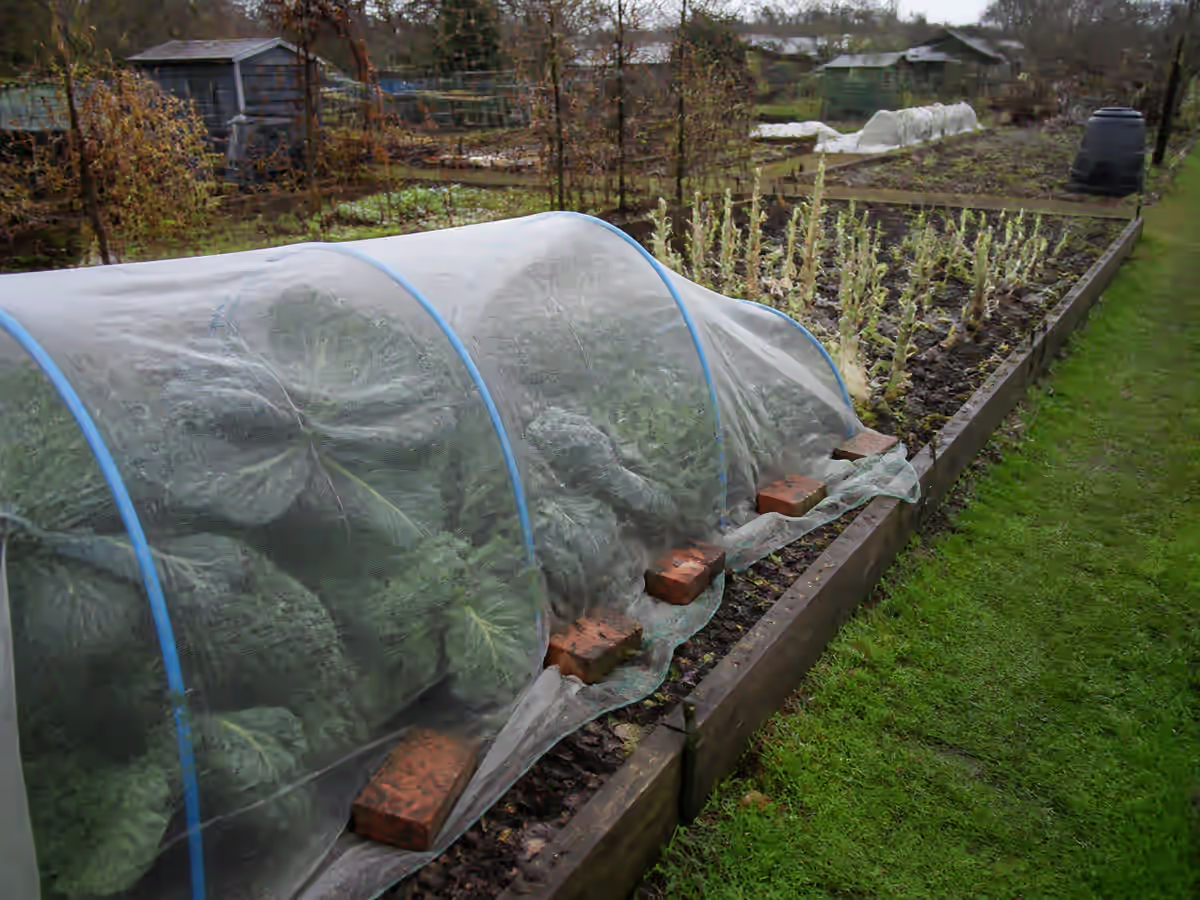
Slugs, pigeons, cabbage white caterpillars and carrot fly are the four that take whole crops. Netting and fleece deal with three of them and cost almost nothing. Everything else, including greenfly, blackfly and powdery mildew, is usually cosmetic and needs no spray at all.
The four that cost you crops
| Pest | What it takes | When | What actually works |
|---|---|---|---|
| Slugs and snails | Seedlings of everything, especially salad and courgettes | March to October, worst in wet spells | Plant out larger plants rather than sowing direct. Traps and going out after dark. Never bare soil around seedlings |
| Pigeons | Whole brassica beds, stripped to the stems | All year, worst November to March | Netting on hoops with the edges pinned down. Nothing else works |
| Cabbage white caterpillars | Brassica leaves, down to the ribs | Late May to September | Fine mesh held clear of the foliage. Squash egg clusters underneath leaves |
| Carrot fly | Carrots, parsnips and celeriac, tunnelled through | April to September, two generations | Fleece over the row from sowing. Thin on still evenings only |
Three of these four are solved with a roll of mesh and some hoops, for about the price of two bags of compost, once.
Slugs, and what actually reduces them
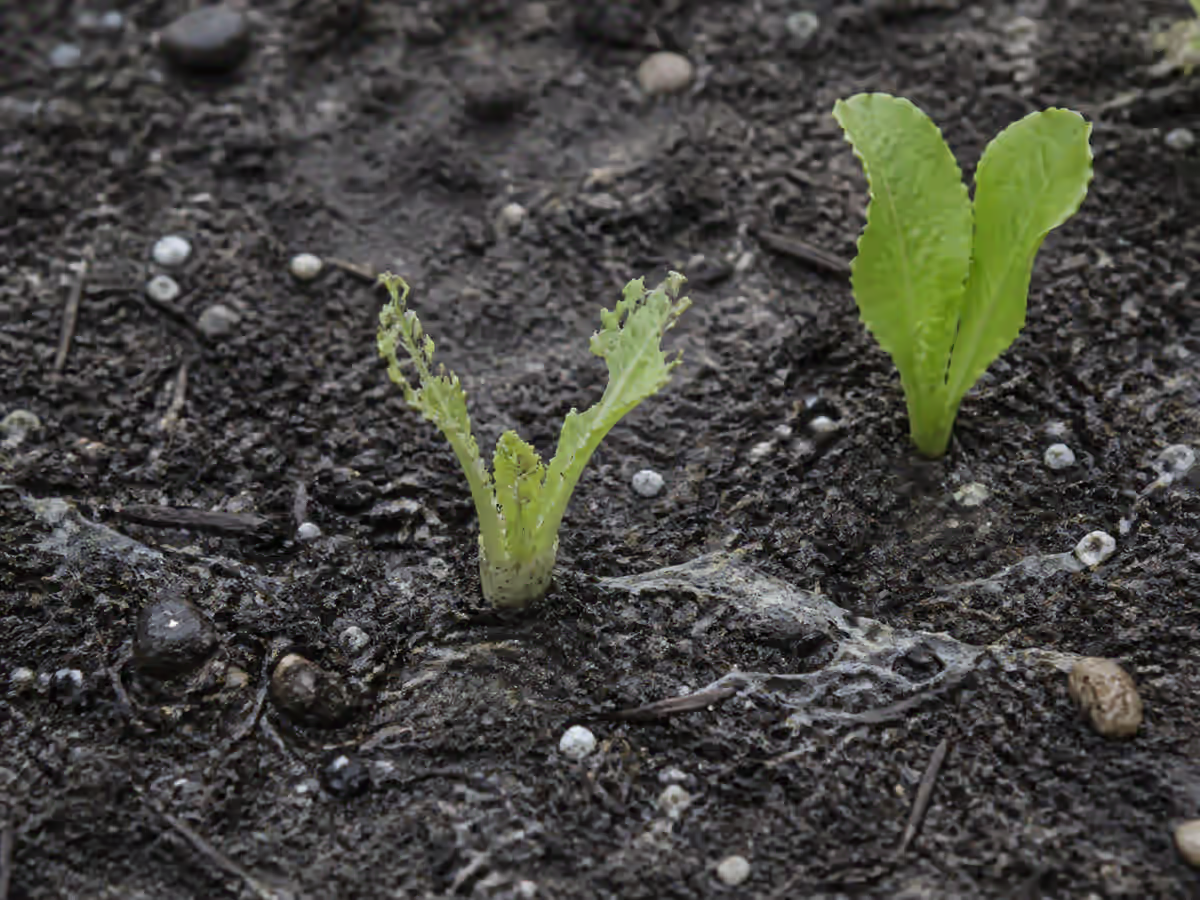
Slugs are the one that beats most people in their first year, because a newly cleared plot with plenty of decaying material and bare damp soil is close to ideal for them.
The single most effective change is not a treatment at all. Stop sowing tender things direct and plant them out at a decent size instead. A lettuce sown into the bed is gone overnight. The same lettuce raised in a module and planted out at 8cm tall usually survives, because slugs do most of their damage to seedlings.
After that, the things that genuinely help: going out with a torch an hour after dark on a damp evening and collecting, which sounds grim and is by a distance the most effective hour you can spend; beer traps sunk with the rim 2cm proud of the soil so you do not drown ground beetles; and keeping a tidy edge so there is less daytime shelter next to the beds.
What does not reliably work, despite being repeated everywhere: crushed eggshells, coffee grounds, and copper tape on open ground. Wool pellets and sharp grit help a little in dry weather and do nothing in the wet, which is exactly when you need them.
Leave a rough corner and a log pile somewhere. Frogs, toads, hedgehogs and ground beetles all eat slugs, and a plot with no shelter at all has none of them.
Netting that actually works
Most netting failures are the same three mistakes, and all of them are avoidable.
- Use fine mesh, around 7mm, not wide bird netting, if you want to stop butterflies as well as pigeons
- Hold it clear of the foliage on hoops. Butterflies lay straight through netting that is resting on leaves
- Weigh or pin every edge all the way round. A pigeon will walk in under a loose edge
- Put it on the day you plant, not the following weekend. The damage happens in the first week
- Leave enough height for the plants at full size in November, not the size they are in June
- Check after every gale, and check for birds trapped inside
A collar of cardboard or carpet underlay laid flat around each brassica stem at planting also stops cabbage root fly laying, and costs nothing.
What can you safely ignore?
These all look alarming and almost none of them costs you a crop worth the effort of treating.
| What you see | What it is | Why it does not matter much |
|---|---|---|
| Blackfly on broad bean tips | Aphids on soft growth | Pinch the top 8cm out once pods have set. Done |
| Greenfly on anything | Aphids | Ladybirds and hoverflies arrive within a fortnight. Spraying kills those too |
| White dust on courgette leaves | Powdery mildew | Near universal by August and the plant is near the end anyway. Keep picking |
| Shot holes in rocket | Flea beetle | Cosmetic on cut and come again leaves. Fleece stops it if it bothers you |
| Orange streaks on leeks | Leek rust | Strip the worst leaves. The shank underneath is fine |
| Clouds of whitefly on brassicas | Cabbage whitefly | Ugly, essentially harmless. Wash the leaves at the sink |
| Brown blotches on broad beans | Chocolate spot | The beans inside are unaffected |
Spraying for aphids is usually counterproductive. It kills the ladybird and hoverfly larvae that were about to solve the problem for you.
The three that have no cure
Three problems on a British allotment cannot be treated, only avoided, and it is worth knowing which they are before you waste a season fighting them.
Clubroot is a soil borne disease of brassicas that swells and distorts the roots and stunts the plant. It persists in soil for decades. If you have it, raise plants in large pots so they go out with a substantial root system, lime the bed to raise the pH, and lengthen the rotation as far as you can.
Onion white rot shows as yellowing leaves and a white fluffy fungus at the base of the bulb. It also lasts many years in soil. Never grow alliums in that ground again, and be careful about carrying soil on boots and tools to other beds.
Potato blight arrives in warm humid weather most years and there is no outdoor cure. Grow first earlies, which are usually lifted before it appears, and if it strikes, cut the foliage off at ground level, remove it from the plot, and leave the tubers two weeks before lifting.
Questions that come up
The five asked most about pests.
Do slug pellets work?
The ferric phosphate ones do work and are approved for use, and the older metaldehyde ones are no longer permitted. They are still less effective than planting out at a decent size and going out with a torch. Use them around newly planted seedlings if you use them at all, not scattered everywhere.
Does companion planting work?
Some of it. Interplanting to confuse pests by smell has weak evidence behind it, including the popular onions and carrots pairing. Growing flowers to attract hoverflies and ladybirds genuinely does help, so a row of poached egg plant or calendula earns its place.
Why did my brassicas wilt and die with nothing on them?
Almost certainly cabbage root fly. The larvae eat the roots, so the top looks untouched until it collapses. Collars at planting and fine mesh over the bed prevent it. There is no cure once the roots are gone.
Should I worry about ants?
Not really. They farm aphids, which is annoying, and a nest under a plant can dry the roots out. Soaking the area usually moves them on. They are not eating your crops.
Are there pests I should welcome?
Ground beetles, centipedes, spiders, frogs, toads, hedgehogs, ladybirds and hoverfly larvae all eat things that eat your crops. A completely tidy plot with no shelter has none of them, which is a good reason to leave one rough corner.
Where this comes from
This page is a working list rather than a reference work. Where a pest is worth reading about properly, these are the pages to read.
- RHS, Slugs and snails, the most useful single page here, and more measured than most advice
- RHS, Cabbage caterpillars, on mesh size and why netting resting on foliage fails
- RHS, Carrot fly, on barrier height and timing
- RHS, Aphids, on blackfly and greenfly, and the predators that deal with them
- RHS, Pigeons, on the bird that will strip a brassica bed in a February week
Last reviewed 17 August 2026.
Written by Sam
Eight years on a half plot in Nottinghamshire. Four beds, two water butts, about two hours a week, and most of what is on this site tried twice before it worked. Dates here suit most of England and Wales, because that is where the plot is. Where a page makes a claim you could check for yourself, it links to the source.
Net it before you plant it, not after.
The jobs with a real deadline, in the month they fall. One email, on the first.
One email a month. Unsubscribe any time. How we look after your details.