Growing carrots, beetroot and parsnips
The crops that ask least once they are up, store longest, and get better after a frost. Getting them up is the hard part.
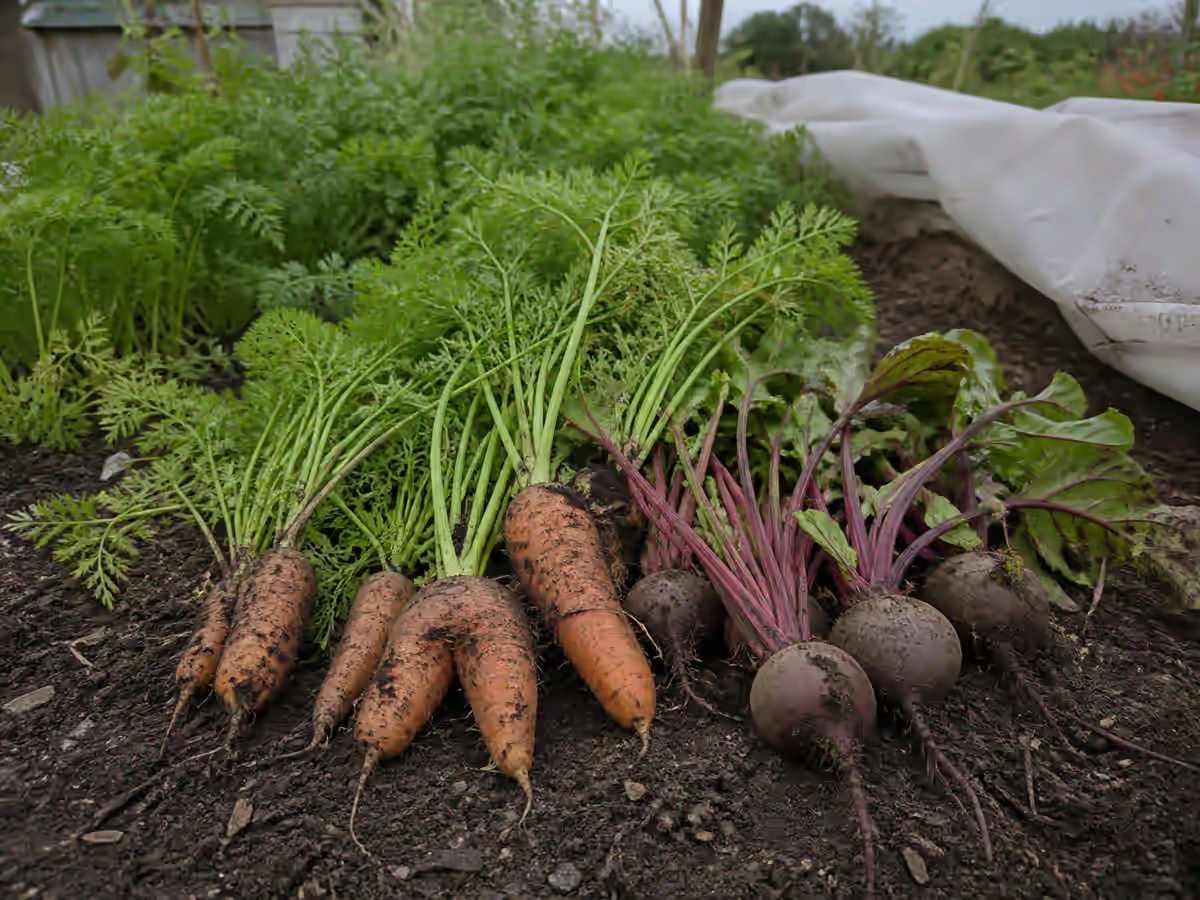
Sow all three direct, never in modules, into fine stone free soil. Carrots 1cm deep thinned to 5cm, beetroot 2cm deep at 10cm, parsnips 2cm deep thinned to 15cm. Cover carrots with fleece from sowing to stop carrot fly. Parsnips and carrots are genuinely better after frost.
Roots at a glance
| Crop | Sow | Depth | Thin to | Ready | Stores until |
|---|---|---|---|---|---|
| Carrots, early | March to April, under fleece | 1cm | 5cm apart, rows 30cm | Late June | Best eaten fresh |
| Carrots, maincrop | April to June | 1cm | 5cm apart, rows 30cm | August to November | February, in damp sand |
| Beetroot | Late March to July | 2cm | 10cm apart, rows 30cm | June to October | February, in damp sand |
| Parsnips | March to April | 2cm | 15cm apart, rows 30cm | October onward | Leave in the ground until March |
| Swede | Late April to June | 2cm | 25cm apart, rows 40cm | October to January | Leave in the ground |
| Turnips | March to August | 2cm | 12cm apart, rows 30cm | 6 to 8 weeks | Eat fresh, they do not keep |
All of these are sown where they are to grow. Roots transplanted from modules fork almost every time, because the tap root is damaged the moment it is disturbed.
Why roots fork, and how to stop it
A forked carrot or a parsnip with three legs is nearly always one of three things, and none of them is bad luck.
Stones. The tap root hits an obstruction, stops, and sends out side roots instead. On stony ground either sieve the top 20cm of one bed once and keep it as the root bed, or grow short stumpy varieties that never go deep enough to care.
Fresh manure. Roots go into rich freshly manured ground and split into multiple fingers reaching for it. Roots want the least rich bed in the rotation, which is why they come last in the four bed cycle, after the brassicas have used up the nitrogen.
Transplanting. Every root here resents being moved. Sow direct, thin ruthlessly, and never start them in modules.
Carrot fly, and the only thing that reliably works
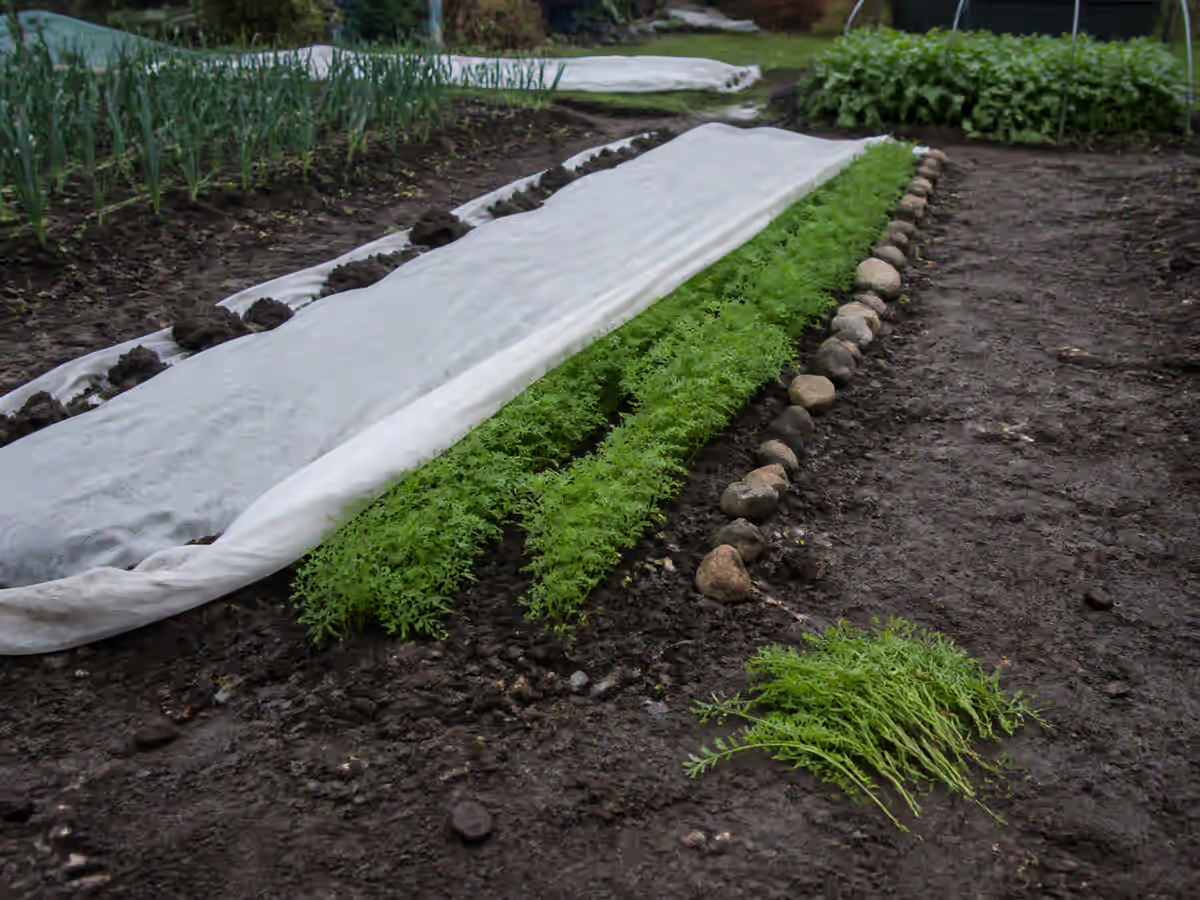
Carrot fly is the reason most people give up on carrots. The adult finds the row by smell, lays at soil level, and the larvae tunnel into the roots leaving rusty brown channels. You see nothing wrong until you pull them.
The fly flies low, under about 45cm, which is where the old advice about a 60cm barrier of fleece round the bed comes from. It works reasonably well. What works better and costs less effort is simply covering the row with fleece or fine mesh from the day you sow, and not taking it off except to weed and thin.
The smell is what draws them, and thinning is what releases it. So thin on a still evening, never on a breezy afternoon, firm the row back down afterwards, water it, and take every thinning off the plot rather than leaving them on the path.
Companion planting with onions is widely repeated and does not hold up. Sowing thinly enough to barely need thinning helps far more.
What goes wrong?
| Problem | What you see | What to do |
|---|---|---|
| Carrot fly | Rusty brown tunnels through the root | Fleece from sowing. Thin on still evenings and remove thinnings from the plot |
| Forked roots | Two or three legs instead of one | Stones, fresh manure, or transplanting. Use the least rich bed and sow direct |
| Parsnip not germinating | Nothing after three or four weeks | Normal. Parsnip is slow. But it also does not keep, so use fresh seed every year without exception |
| Beetroot bolting | Flower stem before the root swells | A cold check after sowing. Wait for warmer soil, or use a bolt resistant variety |
| Woody parsnips | Tough fibrous core | Left too long. Lift by March, before they start into growth again |
| Splitting | Roots crack open | Heavy rain after a dry spell. Water steadily rather than in bursts, and mulch |
| Tiny roots | Plenty of leaf, nothing underneath | Not thinned, or too rich a bed. Thinning feels brutal and is not optional |
Storing roots through to February
Carrots and beetroot store genuinely well in damp sand. Parsnips are better left where they are.
- Lift on a dry day in late October or November, and do not wash them
- Cut carrot tops off cleanly at the shoulder. Twist beetroot tops off rather than cutting, or they bleed
- Reject anything damaged or holed. One rotting root spoils the box
- Layer them in barely damp sand or old compost in a box, not touching each other
- Keep the box somewhere cool, dark and frost free, around 2C to 5C
- Leave parsnips, swede and Jerusalem artichokes in the ground and lift as needed
Frost genuinely improves parsnips, swede and carrots left in the ground. It converts stored starch into sugar, which is why a parsnip in December tastes nothing like one in September.
Questions that come up
The five asked most about roots.
Why has my parsnip seed not come up?
Parsnip regularly takes three to four weeks, and longer in cold soil. But it is also the one seed that genuinely does not store, so if the packet is from last year that is the more likely answer. Buy fresh parsnip seed every single year.
Do I really have to thin?
Yes. It is the job everyone skips and it is why so many people get plenty of leaf and nothing underneath. Sow as thinly as you can bear so there is less thinning to do, then thin anyway.
Can I grow carrots in a container?
Yes, and on very stony ground it is the sensible answer. A deep tub of sieved compost gives straight roots, and raising it above 45cm also puts it above most carrot fly.
Should I earth up my parsnips?
No need. Draw a little soil over the shoulders if they are pushing up and going green, but otherwise leave them. They are completely hardy and better for staying put.
When should I lift the last of them?
By March. Parsnips, swede and overwintered carrots all start back into growth as the days lengthen, and once they do the root goes woody and the flavour goes. Clear the bed and use the space.
Where this comes from
Spacings and thinning below are ordinary practice. The pest that decides whether you get a carrot crop at all is not, and the mesh height matters more than most people are told.
- RHS, Carrot fly, on the low flying adults, the mesh, and why thinning in the evening matters
Last reviewed 17 August 2026.
Written by Sam
Eight years on a half plot in Nottinghamshire. Four beds, two water butts, about two hours a week, and most of what is on this site tried twice before it worked. Dates here suit most of England and Wales, because that is where the plot is. Where a page makes a claim you could check for yourself, it links to the source.
What to sow, and what to lift, in the month it matters.
One email a month. Sowing dates, spacings and the jobs with a real deadline.
One email a month. Unsubscribe any time. How we look after your details.