Growing for winter on a half plot
Everything you eat between November and May was sown between May and September. Winter is not a season you plant in, it is one you plan for.
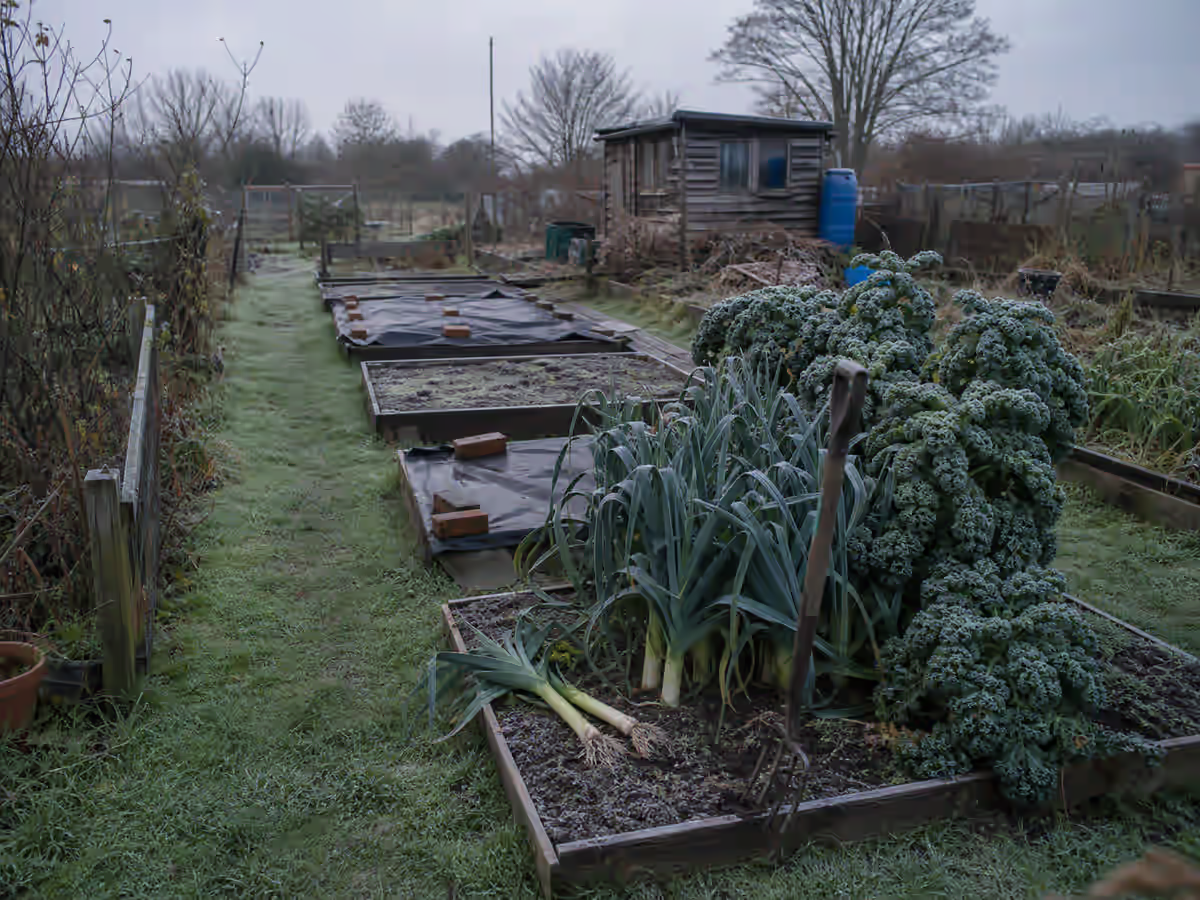
Give about one bed of four to crops that stand through winter: leeks, kale, purple sprouting, spring cabbage, parsnips and land cress. Sow brassicas in May, spring cabbage in mid August and winter salad in September. Store what will keep and leave the rest in the ground.
What actually stands through a British winter?
Everything here survives outdoors unprotected in a normal winter across most of the UK. Note the sowing dates, because they are the whole difficulty.
| Crop | Sow | Plant out | Picking window | Bed space |
|---|---|---|---|---|
| Leeks | April | June | November to April | A quarter bed for 40 leeks |
| Kale | May to early June | Mid June | November to May | 4 plants at 45cm |
| Purple sprouting broccoli | May | Mid June | February to April | 4 plants at 60cm |
| Spring cabbage | 10 to 20 August | September | March to May | 1 metre row at 15cm |
| Parsnips | March to April | Sown direct | November to March | 1.5 metre row |
| Swede | Late April to June | Sown direct | October to January | 1 metre row |
| Chard and perpetual spinach | July | Sown direct | October to May | 1 metre row |
| Land cress and corn salad | August to September | Sown direct | November to April | 1 metre row |
| Winter lettuce | September | Sown direct | March to April | 1 metre row |
| Brussels sprouts | April | June | November to January | Only if you have the room |
Almost every date in this table falls between May and September, which is exactly when the plot is at its busiest and these jobs feel least urgent.
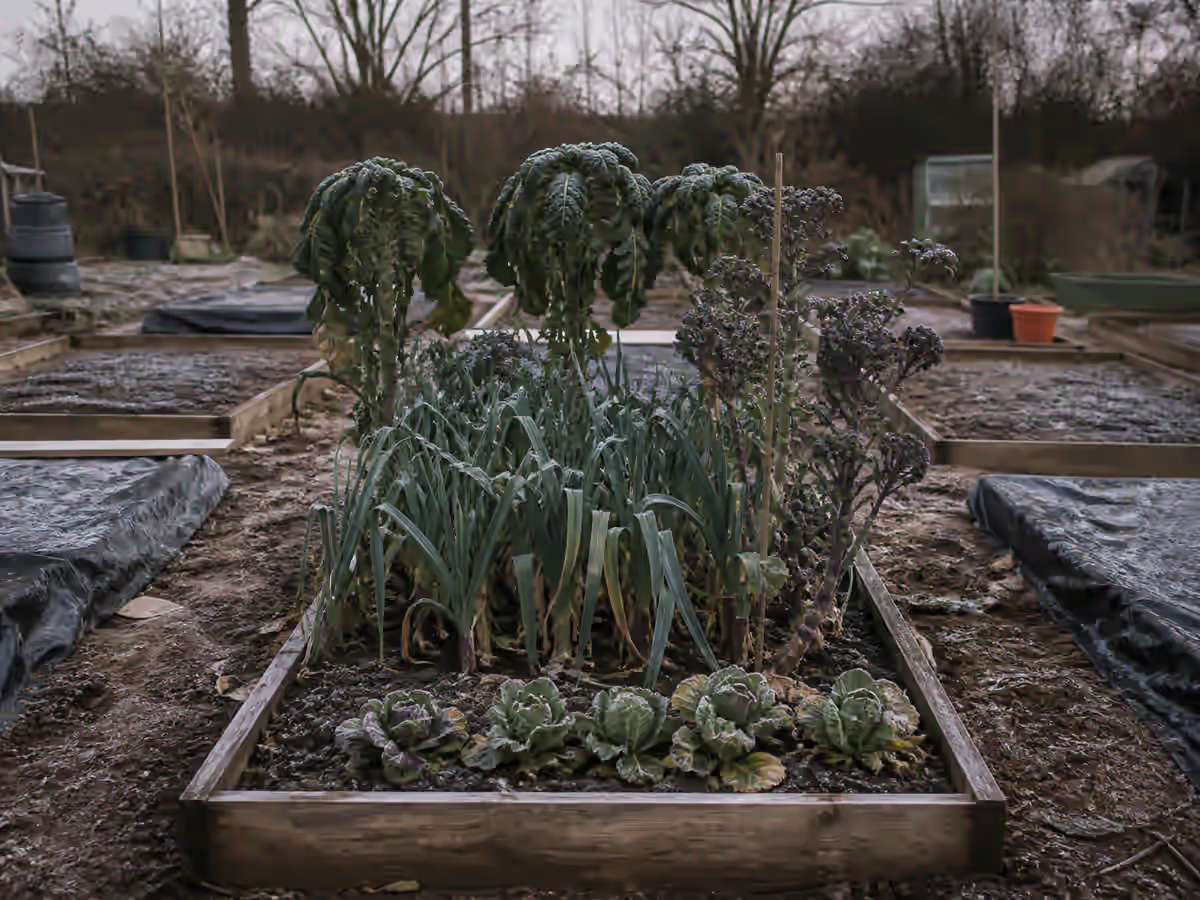
One bed in four, and that is enough
The usual objection is that a half plot has no space to spare for winter. In practice one bed of the four, plus a few short rows tucked into the others, covers it.
Four kale, four purple sprouting, forty leeks and a metre of spring cabbage will feed two people something green through most of the winter and the whole of the hungry gap. That is roughly one 3m by 1.2m bed.
The space is not really extra, because it is the bed the first early potatoes came out of in June. That handover is the trick: potatoes occupy it from March to June, winter brassicas from June to April. One bed, two crops, no gap.
Add a metre of parsnips in the root bed, a metre of chard sown in July wherever something finished, and a metre of land cress in September, and you have a winter plot without giving up any summer growing at all.
The winter sowing calendar, in one place
If you only act on one table on this site, this is a reasonable candidate. Every one of these is sown while the plot is full of summer crops.
| When | Sow | For |
|---|---|---|
| April | Leeks in a seedbed, parsnips direct | November to April |
| May | Purple sprouting and kale | February to May, next year |
| June | Swede, chard, a second batch of kale | October onward |
| July | Chard and perpetual spinach, turnips | October to May |
| 10 to 20 August | Spring cabbage. The narrowest window of the year | March to May |
| Late August | Land cress, corn salad, winter spinach | November to April |
| September | Winter lettuce, overwintering onion sets | March to June |
| October | Garlic | July |
| November | Broad beans | Late May |
Protecting what is out there
Very little of it needs protecting from cold. Almost all of it needs protecting from pigeons.
- Net every brassica properly. November to March is when pigeons do the most damage, because there is nothing else about
- Firm brassicas back in with your heel after autumn gales. A rocked root plate makes a poor crop
- Stake purple sprouting on an exposed plot. It is top heavy by February
- Mulch over parsnips and celeriac so you can still get a fork in during a hard freeze
- Fleece over winter salad keeps the leaves cleaner rather than keeping it alive. It survives without
- Knock heavy snow off netting before the weight tears it or flattens the hoops
Frost is not the enemy. Kale, parsnips, sprouts and swede are all genuinely better after it, because the cold converts stored starch into sugar.
Standing crops or stored crops?
There are two ways to eat from a plot in February and a half plot needs both.
Standing crops are alive in the ground: leeks, kale, purple sprouting, parsnips, chard, land cress. They take bed space all winter, which is their cost. In return they need no storage, they do not deteriorate, and you pick them fresh. Leeks and parsnips in particular keep far better in the ground than in any shed.
Stored crops came out in autumn and are sitting on a shelf: onions, garlic, potatoes, squash, carrots and beetroot in sand. They free the bed up over winter, which matters, but every one of them has an end date and most of them run out in February or March, right at the point the hungry gap starts.
The mistake is relying only on stores. Stores are what get you from November to February. Standing crops are what get you from February to May, which is the harder half. A plot with a full shed and nothing growing has a bare April, every time.
Questions that come up
The five asked most about the winter plot.
Do I need a greenhouse or polytunnel?
No. Everything in the main table above stands outdoors unprotected. A cover helps with winter salad quality and brings a few things forward by a fortnight, but it does not change what is possible, and it is not what makes the difference between a bare February and a full one.
I have missed the sowing dates. What can I do now?
If it is autumn, sow land cress, corn salad and winter lettuce, which are the only useful things left, and plant garlic. Then put the May and August dates in your phone for next year. There is no way to sow in October for February.
Should I leave beds empty over winter to rest them?
No. Ground does not need resting, and bare soil over a British winter loses nutrients, caps and grows weeds. Cover it with cardboard and compost, sow a green manure, or grow something in it.
Will hard frost kill my winter crops?
Not the ones listed here. Kale, leeks, parsnips, sprouts, swede and land cress are all fully hardy in the UK and several improve after frost. What does suffer is anything in a pot, where the roots freeze solid.
What is the single most valuable winter crop?
Purple sprouting broccoli, because it crops in February to April when there is genuinely nothing else, and one plant gives spears every few days for eight weeks. Kale is second, and far more forgiving to grow.
The May and August sowings that decide next winter.
A reminder in the week the job matters, not the month after. One email, on the first.
One email a month. Unsubscribe any time. How we look after your details.
Where to go next
The hardest part
March to June, when the stores run out and nothing is ready.