You have the keys. Here is what to do first.
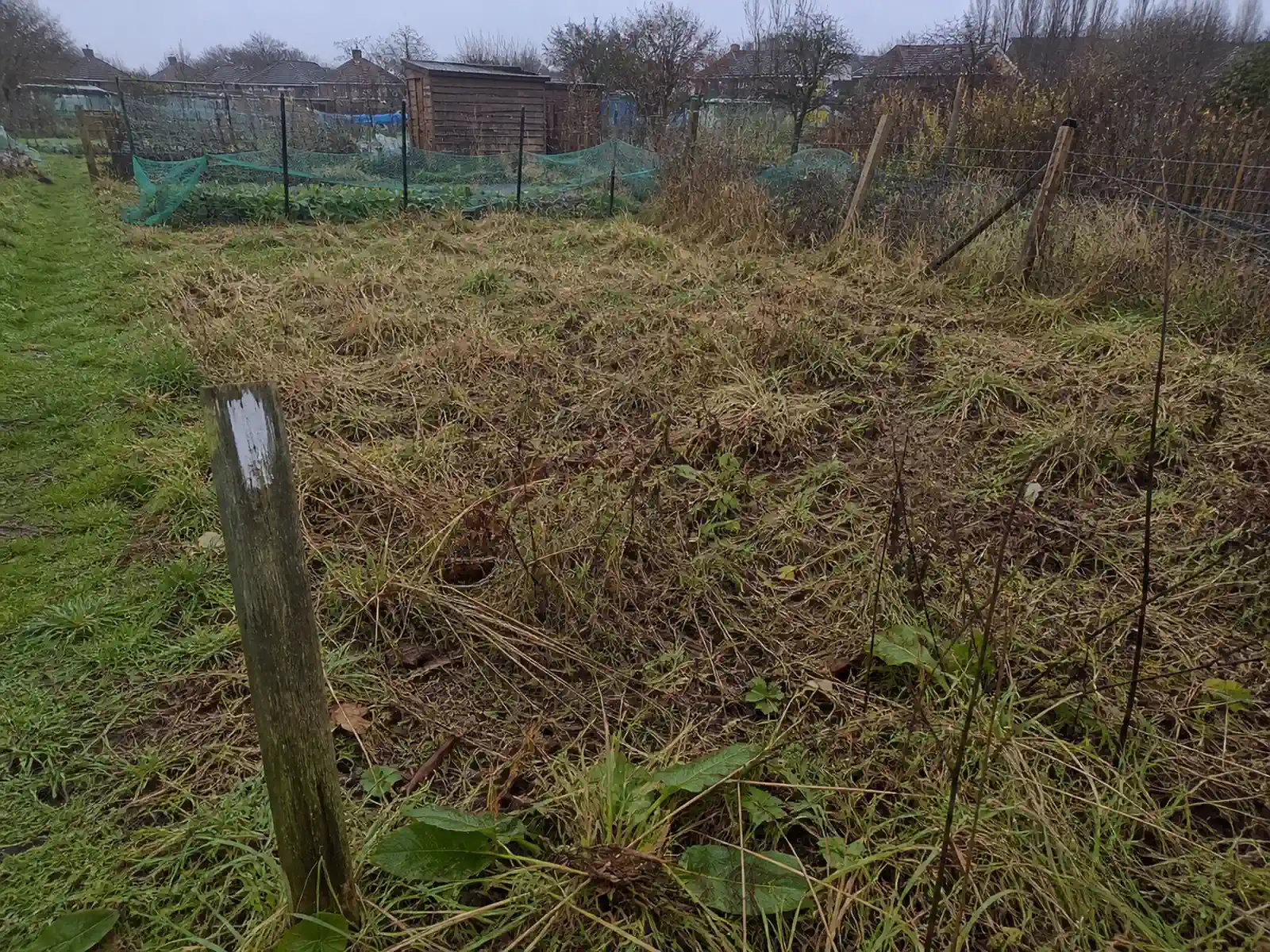
A half plot is around 125 square metres. That is five parking spaces of rough grass, and right now it probably looks like a great deal more than that.
This page is your first year in the order it actually happens, with permission to go slower than you think you should.
What year one is actually like
Nobody says this at the handover, so here it is. In your first year you will lose a crop or two. Something will bolt in a hot week, something will be eaten overnight, and one bed will get away from you completely in July while you are on holiday.
That is not failure. That is the first year, and it happens to everyone on the site including the person with the immaculate plot by the gate.
The growers who give up are almost never the ones who lost a crop. They are the ones who tried to clear and plant all 125 square metres in a single spring, wore themselves out by June, and never came back.
Four things worth knowing on day one
Two to four hours a week is enough
Two shorter visits beat one heroic Sunday. Watering and picking do not wait for the weekend.
You will not use most of the plot this year
And you should not try to. Ground under cardboard is ground that is quietly getting easier, not ground you are neglecting.
Ask what the cultivation rule is
Most sites expect a certain share of the plot to be worked, often around three quarters, with warning letters long before anyone loses a tenancy. Ask on day one so you know your real deadline instead of imagining a worse one.
Talk to the site secretary
They are the most useful person you will meet. Ask what grows badly on your site and what the soil does in a wet winter. Every site has a local problem, and finding it out in year one saves you a season.
Your first month, one week at a time
Four weeks, four jobs. If you do nothing else, you are ahead of where most first year plots are in May.
Walk it and write it down
Leave the tools at home. Bring a notebook. Pace out the plot, sketch the shape, and mark where the shade falls at midday, where water sits after rain, and how far it is to the nearest tap.
Then work out which weeds you have, because that decides everything about how you clear. Annual weeds like chickweed and fat hen die under cardboard in a season. Bindweed, couch grass and horsetail regrow from any scrap of root left behind, and need digging out or a full year covered.
Clear one bed, and only one
Pick the sunniest, flattest corner and mark out a bed about 1.2m wide and 3m long. That width is not arbitrary: it is the widest bed you can reach into the middle of from both sides without standing on the soil.
Clear it properly, roots and all. Then cover the whole of the rest of the plot with flattened cardboard, weighted down with bricks, logs or old compost bags. That is a real job done, not a job postponed.
Find out what your soil is
Squeeze a handful of damp soil. If it holds together in a smooth, sticky ball, you have clay: slow to warm in spring, sets hard in drought, but it holds on to feed. If it crumbles apart and feels gritty, you have sand: warms early, drains fast, needs feeding more often. Most allotments sit somewhere between the two.
Whichever you have, the answer is the same. Compost spread on the surface, every year. You are not going to change your soil type, so stop trying and start feeding it.
Sow one thing
Something fast, so that you get the reward before the doubt arrives. Radish is up in four days and pulled in a month. Salad leaves show in a week.
It sounds too small to matter. It is not. The first thing you actually carry home is what brings you back in year two, and year two is where a plot starts to pay you back.
Three decisions to make before you spend anything
Decide what you actually eat
Write down the vegetables your household ate last week. Grow those. The most common year one mistake is growing what looks good in the catalogue instead of what gets eaten, and the classic version of it is a beautiful row of parsnips that nobody in the house likes.
Decide how much space each thing really needs
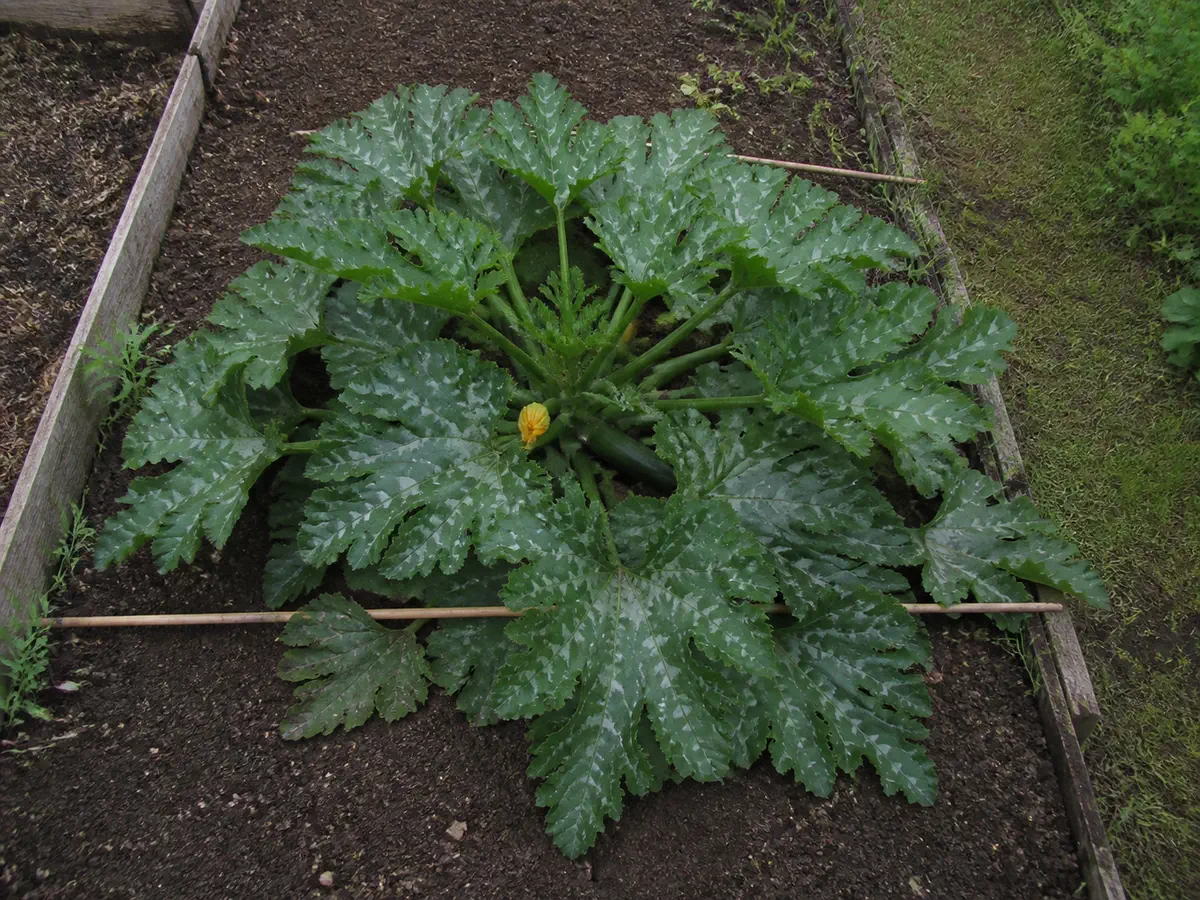
A single courgette plant takes about a square metre and will feed a household of four on its own. Sweetcorn has to be grown in a block of at least twelve plants to pollinate properly, which is a quarter of a small bed for one meal. Potatoes look like the worst deal of all, cheap to buy and bulky to grow, but they break up neglected ground better than anything else, and that is why they still earn a bed in year one.
Decide what you are not growing this year
Skip anything needing a greenhouse, anything that takes eighteen months before you eat it such as asparagus, and anything that wants daily attention through August. You can add all of it in year three. Saying no now is the thing that makes year one finishable.
The five crops that will carry your first year
Reliable, forgiving, and genuinely worth the space on half a plot. Sowing dates below suit most of the UK. If you are in Scotland or the far north, add a fortnight to anything sown outdoors in spring.
Potatoes
First earlies. Chit February, plant mid March to early April.
Stand the seed potatoes in an egg box on a cool light windowsill in February until they grow short green shoots. Plant 12cm deep and 30cm apart, with 60cm between rows, and earth them up as the shoots appear. First earlies are ready 10 to 12 weeks after planting, which means new potatoes in late June.
The honest reason to grow them in year one is not the crop. It is that digging them out leaves you a clean, broken up bed for next season.
Broad beans
Sow direct in November or February.
Sow 5cm deep and 20cm apart. They are hardy, they largely look after themselves, and they are the first real thing you pick, usually in June, right when last year has run out and nothing else is ready.
When the lowest pods have set, pinch out the top 8cm of each plant. Blackfly go for the soft growing tip, and removing it takes most of the problem with it.
Courgettes
Sow indoors late April, plant out after the last frost.
Sow seeds on their edge, one per pot, in late April. Plant out once frost has finished where you are, which is usually mid to late May in the south and into early June further north. Give each plant a square metre.
Two plants. Not three. Two healthy courgette plants will produce more than a household can eat, and by August you will be leaving them on the site noticeboard for anyone who wants them.
Salad leaves
Sow a short row every two to three weeks, March to September.
Sow thinly in a shallow drill about 1cm deep. Cut the leaves with scissors about 3cm above the soil and most will regrow two or three more times before they give up.
Square metre for square metre this is the highest return on the whole plot, and it is the crop that makes the walk to the allotment worth it in weeks when nothing else is ready.
Onions
Plant sets in March. Lift in August.
Push the sets into loose soil 10cm apart with the tip just showing, and firm them back in after the first frost or two lifts them. Beyond weeding, they ask almost nothing of you all summer.
When the tops flop over of their own accord in August, lift the whole row and dry them somewhere airy and under cover for a fortnight before storing. Onions that go into store damp will rot by Christmas, and that is the only real way to lose this crop.
And the one to add if you have room
Leeks. Sow March, plant out June.
Leeks are the reason a plot still feeds you in January. Sow in a seedbed in March, and in June lift the pencil thin seedlings, drop each one into a 15cm deep hole made with a dibber, and fill the hole with water rather than soil.
They then stand in the ground all winter and get pulled as you need them. Nothing else on this list gives you food in February.
The five mistakes almost everyone makes in year one
Every one of these is recoverable. Knowing them in advance just saves you the season it usually costs to learn each one.
Clearing the whole plot in March
By June, the cleared ground you never got round to planting has grown back, and you have done the same work twice. Clear only what you are about to plant. Cardboard the rest.
Sowing everything on the same day
Three rows of lettuce sown in one April afternoon become three rows of lettuce bolting in one July week. Sow a short row every fortnight instead, and you eat for months rather than for ten days.
Planting out too early
A frost in the second week of May will kill courgettes, beans, squash and tomatoes outright, in one night, after eight weeks of care. Wait until frosts are properly done where you live, then wait one more week. You lose nothing by being late here.
Buying tools before you know what you reach for
A fork, a spade, a rake, a draw hoe, a watering can and a pair of secateurs will do everything year one asks of you. Buy the fork and the spade secondhand and heavy, and spend nothing else until something is genuinely getting in your way.
Not netting the brassicas
Pigeons will strip a row of cabbage or kale in a single day in winter, when there is nothing else for them to eat. Net on the day you plant, not the day after you notice. The same net keeps cabbage white butterflies off in August.
The one that is not a mistake
Leaving a corner of the plot uncultivated. A patch of long grass and a small pile of old wood in a shady corner is where the frogs, beetles and hedgehogs live, and they eat slugs all season for nothing. It is the cheapest pest control on the plot.
A note from the plot, once a month.
What to sow, what to pick, and what I got wrong. One email at the start of each month. Nothing else, and you can leave whenever you like.
One email a month. Unsubscribe any time.
The two pages to read after this one
Start Here is the overview. These two go a level deeper, and between them they cover the first four weeks and every word you will hear on site.
Your first month
Four weeks, four jobs, and what to sow depending on the month you got the keys.
Every word explained
Chitting, pricking out, hardening off, the hungry gap. Plain English, with a table for each group.
Then plan the plot
The afternoon that decides the next three years. Measure, halve, and mark four beds.
Where to go next
You do not need all of this at once. Take whichever one matches the week you are in.
It is the middle of the season
Go straight to the job in front of you this month.
You want the planning method
One sheet of paper, four beds, and a decision about what goes where.