What to do with a glut
Courgettes, beans and tomatoes, all in the same fortnight, all faster than you can eat them. It happens to everybody in August and it is genuinely dispiriting rather than the nice problem people call it.
A calm way through the week it happens, an honest ranking of which preserving is worth the afternoon, and the sowing change that means it does not happen again.
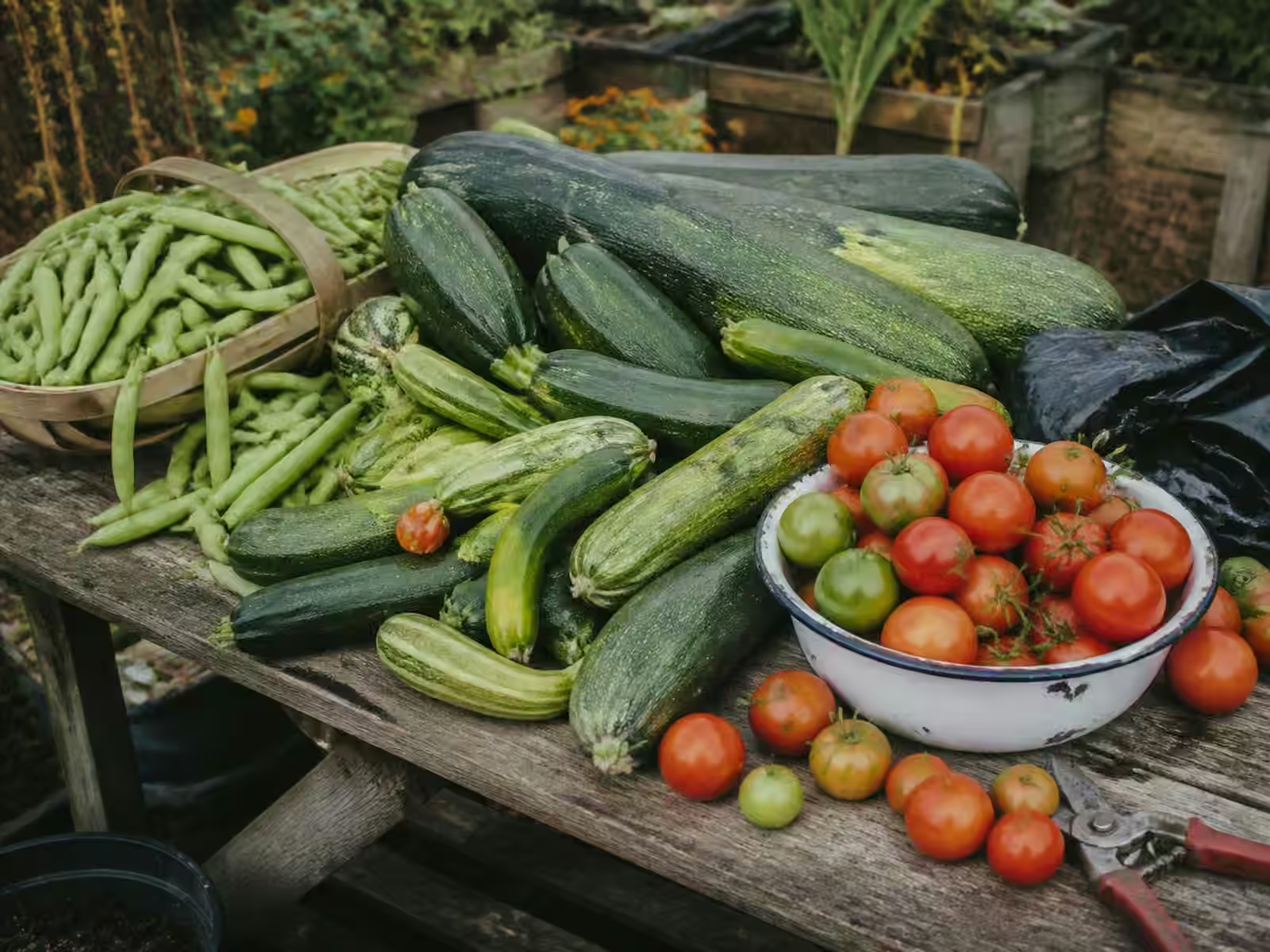
A glut is a sowing pattern arriving ten weeks late. Deal with this one by picking daily, blanching beans the day they come off, and giving away early rather than at the peak. Then stop the next one by sowing three small batches three weeks apart instead of one large batch.
A glut is a sowing pattern, showing up ten weeks late
It is worth being clear about this before anything else, because it changes what you do about it. A glut is not a harvest that went unusually well. It is what happens when everything went into the ground in the same fortnight in May, and it was decided then rather than in August.
Which is why the real answer to a glut is never a recipe. It is an interval.
The interval matters more than the quantity
The same total sown across four goes three weeks apart gives you a supply. Sown in one afternoon it gives you a fortnight of too much followed by nothing. This is the whole of it, and it applies to almost every fast crop on a half plot. Most people know it and still sow the packet in one go, because sowing a metre when you have a whole bed in front of you feels like not really doing it properly.
Three plants is nearly always two too many
One courgette plant feeds a household of four. Eight to ten runner bean canes will out-produce the same household from late July to the first frost. Four tomato plants is plenty. The numbers on seed packets and in books are for people with more ground, more mouths or a stall, and the single most common cause of an August glut is planting the third courgette in May while it is still a small green seedling in a pot.
Some crops cannot be spread out at all
Onions, garlic, winter squash and maincrop potatoes all arrive at once by nature. That is not a glut, that is a harvest, and the answer to it is storage rather than staggering. The crops that genuinely glut are the ones that produce continuously and then perish within days: courgettes, beans, tomatoes, cucumbers and salad. Knowing which list a crop is on tells you whether to fix it with a sowing plan or a shelf.
Picking small is not just about taste
A courgette picked at 12cm rather than 30 is a quarter of the volume in your kitchen and keeps the plant setting more. Runner beans picked at 20cm are tender and are a fraction of the weight of the same pods a week later. Picking small and often turns one overwhelming week into six manageable ones, and it is the only part of glut management that also makes the food better.
A glut is not bad luck. It is a sowing pattern, showing up ten weeks late.
The week it happens, in order
You have come home with three carrier bags and there is more down there. Five steps, in this order, and the order is the useful part.
1
Pick everything, including what you cannot use
Before anything else, and even though it feels wasteful. An unpicked courgette or a swelling bean pod tells the plant its work is finished, and it slows right down. Half an hour picking a plot you are already overwhelmed by is the thing that keeps it producing steadily into September rather than stopping altogether in the third week of August. Some of it will go on the compost heap. That is a perfectly reasonable outcome and not a failure.
2
Sort by how fast it dies, not by how much there is
Salad is measured in hours and there is nothing to be done with a surplus of it. Courgettes hold three or four days in a cool place. Runner beans go tough and stringy in two to three days. Tomatoes buy you the most time because they keep ripening, so a bowl of half ripe ones is a week of breathing space. Squash and onions are measured in months and do not belong in this week’s problem at all. Work down that list and a lot of the panic goes.
3
Do the ten minute jobs before the three hour ones
Blanching and freezing a colander of beans takes about fifteen minutes. A batch of chutney takes an afternoon and a clear kitchen. On the evening you come home with too much, do the fifteen minute job on everything that will take it, and decide about chutney at the weekend with what is left. Most gluts are lost to the gap between intending to make chutney and actually having a free Saturday.
4
Give away inside a day, or not at all
Produce given away on the day it was picked is a gift. The same produce offered four days later, soft and slightly bendy, is a chore you have handed to somebody else, and they will remember. If it has been sitting on your kitchen table since Tuesday it is now compost or chutney, and being honest about that saves a friendship.
5
Only now, think about preserving
Preserving is the last step and the smallest one, which is the reverse of how it is usually presented. Most of what you grew is going to be eaten fresh, given away or composted, and that is the normal and correct outcome. The preserving section further down is deliberately short, and half of it is a list of things not to bother with.
The three that cause it, crop by crop
Courgettes, beans and tomatoes account for very nearly every August glut on a British half plot. Each one wants handling differently, and the differences matter more than the similarities.
| Crop | Why it gluts | What to do instead |
|---|---|---|
| Courgettes | Two plants make far more than a household eats, from late July onward | Grow one plant. Pick at 15cm every other day |
| Runner beans | Sown in one go, so every pod is ready in the same fortnight | Sow half in May and half in the middle of June |
| Tomatoes | In a good August everything ripens inside three weeks | Grow two varieties that ripen at different times |
Courgettes
The honest position first: courgette does not preserve well and no amount of technique changes that. It is roughly 95 per cent water, so frozen raw it thaws to a grey mush, and dried it turns to nothing. Anybody telling you otherwise has not eaten the result in February.
What does work. Grate it, salt it lightly for twenty minutes, then squeeze the water out hard in a clean tea towel and freeze it in flat bags. That freezes genuinely well and goes into cakes, fritters and soups all winter. Cooked ratatouille freezes properly too, because the courgette has already broken down and is meant to be soft. Courgette chutney is decent, and it is one of the few ways to use a marrow.
What to do this week. Pick at 12cm twice a week, give the small ones away the day you pick them, and grate and freeze the rest in half an hour on a Sunday evening. Then next May, plant one.
Runner and French beans
Pick every two or three days at about 20cm, before the beans inside start to swell and show as lumps. Once a pod has gone lumpy it is stringy and no method of cooking rescues it, so pick past that point straight onto the compost heap rather than into the bag.
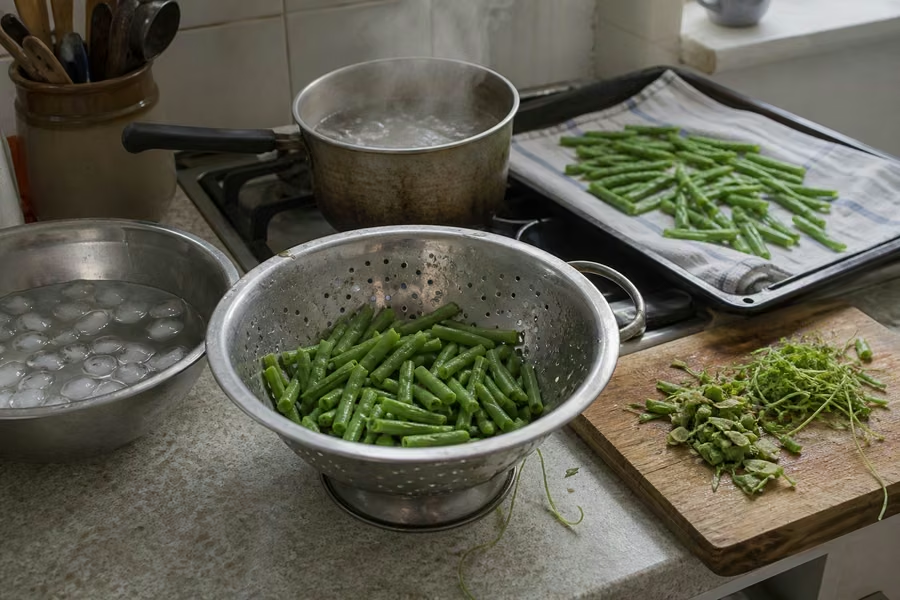
Freezing works properly here. Top, tail, slice, then blanch for two minutes in fast boiling water, drop straight into a bowl of iced water to stop the cooking, drain thoroughly, spread on a tray to freeze loose, then bag. The blanching is not optional: unblanched beans go leathery and taste of hay within a couple of months. The whole job takes about twenty minutes for a large colander.
The old method worth reviving: salting. Slice the beans and layer them in a jar or crock, three parts beans to one part cooking salt by weight, pressing down as you go, and top with salt. Keep somewhere cool and they hold for a year. Rinse thoroughly and soak for an hour before use. The texture comes out noticeably better than frozen and it takes no freezer space at all, which on a half plot in August is worth something.
At the end of the season, leave the last pods on the plant to dry fully and go papery. Shell them for next year’s seed, or cook them as dried beans.
Tomatoes
The tomato glut has a deadline on it, which the others do not. Outdoor tomatoes in most of Britain get blight in a wet August or September, and when it comes it ends the crop in about a week. So do not save tomatoes for a quiet weekend in the way you might with beans.
The single best method is roasting. Halve them, put them cut side up on a tray with a little oil, and roast at about 160C for an hour until they collapse and concentrate. Then freeze in bags. It handles any quantity, needs almost no attention, works with tomatoes that are slightly split or blemished, and the result is far better than anything you get from freezing them raw.
If blight arrives, pick every fruit that shows no brown marks that same day, bring them indoors, and ripen them in a drawer or a paper bag with a banana. Do not compost the infected foliage or fruit on the plot. Blight does not survive on dead material in the way people fear, but there is no reason to leave it lying around your beds either.
Green tomatoes at the end make the best chutney there is, and it is the one preserve on this whole page that people genuinely ask for. A green tomato chutney made in September and left three months is worth the afternoon in a way that most vegetable preserving simply is not.
And the ones that glut more quietly
Cucumbers behave like courgettes and preserve even worse. Pick small, give away fast, and grow one plant. Beetroot is the easiest of all to deal with because it pickles beautifully and keeps in sand until February. Calabrese hearts up across about ten days and then bolts, which is why it wants sowing in modules every three weeks rather than all at once. Salad cannot be preserved by any method at all, so the only answer there is the metre at a time rule.
Which preserving is actually worth the afternoon
Preserving is presented as the answer to a glut and it mostly is not. A great deal of it produces something nobody eats, takes a whole Saturday, and leaves you feeling worse about the surplus rather than better. This is an honest ranking based on what gets eaten by March.
| Crop | Best method | Time for a trug full | Worth doing? |
|---|---|---|---|
| Runner beans | Slice, blanch 2 minutes, cool in iced water, freeze flat | About 20 minutes | Yes. The best return of the lot |
| Tomatoes | Roast whole with oil, then freeze as sauce | 2 hours, mostly unattended | Yes |
| Broad beans | Pod, blanch 2 minutes, freeze | About 25 minutes | Yes, if podded while young |
| Courgettes | Grate, squeeze the water out, freeze in 250g bags | About 30 minutes | Only for cooking. Slices go to mush |
| Cucumbers | Do not freeze. Pickle them or eat them | 40 minutes to pickle | Marginal. Better to grow fewer |
Worth it
Blanched and frozen beans. Twenty minutes, excellent results, and they are genuinely good in January.
Roasted and frozen tomatoes. The best return on effort of anything on this page.
Green tomato chutney. The one preserve people ask you for again.
Salted runner beans. Better texture than frozen and no freezer space.
Pickled beetroot. Straightforward, safe, and keeps for a year.
Frozen ratatouille. Uses courgettes, tomatoes and onions at once, freezes properly, and is an actual meal rather than an ingredient.
Dried herbs and chillies. Almost no effort, and they keep their character.
Double podded broad beans, frozen. Fiddly but the result is far better than anything you can buy.
Not worth it
Freezing raw courgette. Thaws to grey water. Grate and squeeze first or do not bother.
Freezing salad, cucumber or radish. There is no method. Do not spend an evening finding that out.
Marrow anything, mostly. Stuffed marrow is edible rather than good, and marrow jam is a way of turning sugar into a jar nobody opens.
Air drying vegetables in a British August. The humidity is against you and they go mouldy before they dry. A dehydrator changes this; a warm windowsill does not.
Freezing whole raw tomatoes. Not harmful, and they are fine for sauce later, but they take four times the freezer space that roasting them would.
Any preserve you have not eaten by the following August. Look in the cupboard before you make more. Most of us have a shelf that answers this question.
Runner beans blanched the day they come off are worth eating in January. The same beans frozen three days later are not.
One safety point, and it is not optional
Do not water bath, boil or otherwise bottle low acid vegetables in sealed jars at home. That means beans, courgettes, carrots, peas, sweetcorn and mixed vegetables. It is the traditional method a lot of people remember from a grandmother, and it carries a real risk of botulism, which is rare, undetectable by sight, smell or taste, and can kill you.
Low acid vegetables are only safely canned in a proper pressure canner, which is common in the United States and uncommon in Britain. Everything else on this page is safe because it works a different way: freezing, drying, salting, or acidity from vinegar in a chutney or pickle. Tomatoes sit near the borderline, so if you are bottling tomatoes rather than freezing them, add lemon juice or citric acid to the jar and follow a tested modern recipe rather than a remembered one.
Giving it away without becoming the courgette person
Every allotment site has one, and the reputation is earned by handing people marrows rather than by generosity. There is a way to do this that people are genuinely pleased about, and it comes down to what you give and how quickly.
The site itself is the best route. A box on the noticeboard or by the gate with nothing said clears faster than anything you carry to work, because the people who take from it are people who wanted vegetables that day. Some sites run an honesty box and put the coins toward the water bill, which is better again.
Beyond the site, ring before you turn up. A lot of food banks cannot take fresh produce because they have no way to store or move it quickly, and arriving with two carrier bags of beans puts staff in an awkward position. Some can, some have arrangements with allotment sites already, and a two minute phone call tells you which. Community fridges and local pantry schemes are usually the better fit, and a good number of them will take produce that is slightly odd looking.
The best trade on any site is not giving at all though. Somebody four plots down has too many tomatoes and no beans, and you have the reverse. A swap costs neither of you anything and both of you eat better that week.
Four rules that make it welcome
Small, not large. People take a 12cm courgette gladly and refuse a marrow, and they are right to. The same is true of beans, beetroot and cucumbers. Give away what you would be pleased to be given.
Clean and dry. Soil is fine on the plot and unwelcome in somebody’s kitchen bag. A quick rub and an hour spread out to dry doubles how long it keeps for them.
In something they do not have to give back. A paper bag or an old carrier, never your good trug. Nobody wants to owe you a container.
Never the same thing twice to the same person. Once is a gift, twice is a pattern, and three times is how you become the courgette person.
Stopping it happening again
There are two different fixes here and they get muddled constantly, which is why so many people stagger their sowings faithfully and still end up with forty courgettes.
Some crops glut because they were all sown on the same day. Others glut because there are simply too many plants, and no amount of staggering will help. Work out which list a crop is on before deciding what to change.
| Crop | The sowing that causes the glut | Sow it like this instead |
|---|---|---|
| Salad leaves | One full packet in April | A short row every three weeks, April to September |
| Runner beans | Everything in one go in May | Half in May, half in mid June |
| Courgettes | Three plants, all in May | One in May, one in mid June |
| Beetroot | One long row in April | Three short rows, April, May and June |
| Lettuce | A full tray pricked out at once | Ten plants every fortnight |
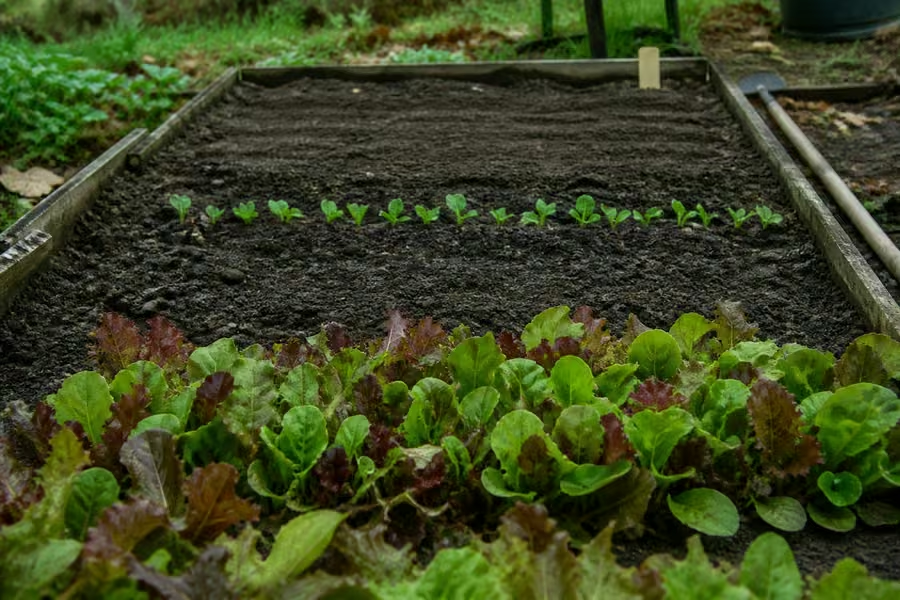
Same seed, same bed, same total crop. It just arrives over ten weeks instead of two.
Crops that need staggered sowing
These produce a crop that arrives and finishes, so the only way to spread them is to sow more than once. Sow the amounts below, then sow the same again after the stated gap, rather than sowing a full row on one afternoon.
Salad leaves: one metre, every two weeks, mid March to early September.
Radish: half a metre, every two weeks.
Beetroot: a 2m row, every three weeks, April to July.
Carrots: a 3m row, twice, in May and again in early July.
French beans: two sowings, mid May and mid June.
Calabrese: four modules, every three weeks, or the whole row hearts up in the same ten days.
Spring onions and turnips: a short row every three weeks.
The rule of thumb that makes this stick: a sowing is one metre of row, not one row. Almost everybody knows the theory and sows the full row anyway, so the useful discipline is deciding the length before you open the packet.
Crops that just need fewer plants
These crop continuously over weeks or months, so staggering the sowing does very little. The volume is set by the number of plants, and the only real lever is planting less in the first place.
Courgettes: one plant. Two if you genuinely love them.
Runner beans: eight to ten canes for a household of four.
Tomatoes: four plants, and pick two varieties that ripen at different times rather than four of the same.
Cucumbers: one plant outdoors.
Chard: a 1m row, which will crop for the best part of a year.
This is the harder of the two lists to act on, because it means putting seedlings on the compost heap in May while they are small and healthy and full of promise. Do it anyway. Nobody has ever regretted growing one courgette plant in August.
Questions that come up
The six asked most often in August, answered plainly.
How many courgette plants should I actually grow?
One, and two at the absolute most. One healthy plant produces 20 to 30 courgettes across August and September if you pick them at 12cm. If you want a longer season rather than more fruit, sow a second plant in mid June rather than putting a second one in alongside the first in May. That gives you fresh plants coming into production as the first tires, which is a genuinely different thing from doubling the crop.
Can I bottle beans the way my grandmother did?
Not safely at home without a pressure canner, no. Water bath bottling of low acid vegetables carries a real risk of botulism, which cannot be seen, smelled or tasted. It was done widely in the past and people mostly got away with it, which is not the same as it being safe. Freeze them after blanching, or salt them in a crock, which is also a traditional method and is safe because the salt does the work.
What can I actually do with a marrow?
Honestly, not much. Stuffed marrow is edible rather than good. Grated into a chutney it disappears usefully, and that is about the best of it. The real answer is to stop producing them, which means picking twice a week rather than once. If you have one on the bench now, put it on the compost heap without guilt. A marrow on the heap is a courgette you did not pick, and the lesson is worth more than the vegetable.
Is a chest freezer worth it for a half plot?
Only if you will use what goes into it. A small chest freezer runs at roughly £25 to £40 a year to keep going, which is more than the value of the beans in it. The case for one is not economic, it is that it lets you eat your own food in February. If you already have a freezer with a shelf spare, use that first for a season and see how much of it you actually eat by March before buying anything.
The beans have gone stringy and tough. Is there anything to do?
Not as beans, no. Stringy pods do not come back with cooking. But if the beans inside have swelled properly, pod them and cook the beans on their own, which is a decent meal in its own right. Or leave the pods on the plant to dry fully and go papery, then shell them and keep them for next year’s seed, which costs nothing and works well for runner and French beans.
Should I feel bad about composting food I grew?
No. Some surplus going on the heap is a normal part of growing food and it is not waste in any meaningful sense, because it comes back as compost for the same beds. The genuine waste is the crop that was never picked, because that stops the plant producing. Pick everything, use what you can, give away what you can that day, and compost the rest without turning it into a moral question.
Written by Sam
Eight years on a half plot in Nottinghamshire. Four beds, two water butts, about two hours a week, and most of what is on this site tried twice before it worked. Dates here suit most of England and Wales, because that is where the plot is. Where a page makes a claim you could check for yourself, it links to the source.
A nudge in May, when the glut is actually decided.
The third courgette goes in during a hopeful week in May, and the consequences turn up in August. One email at the start of each month with what to sow now, and how much of it.
One email a month. Unsubscribe any time.
Where to go next
A glut and a hungry gap are the same planning problem seen from opposite ends of the year.
The other end of it
April and May, when there is nothing at all. Same cause, four months later.
Fix it on paper in January
Where quantities and sowing intervals get decided, before anything is in the ground.
Grow less, on purpose
Year five and beyond, where the question stops being how to grow more.