The allotment in December
The one month with genuinely nothing that has to be done. Go up, cut a few leeks, put a bucket over the rhubarb, and leave it alone.
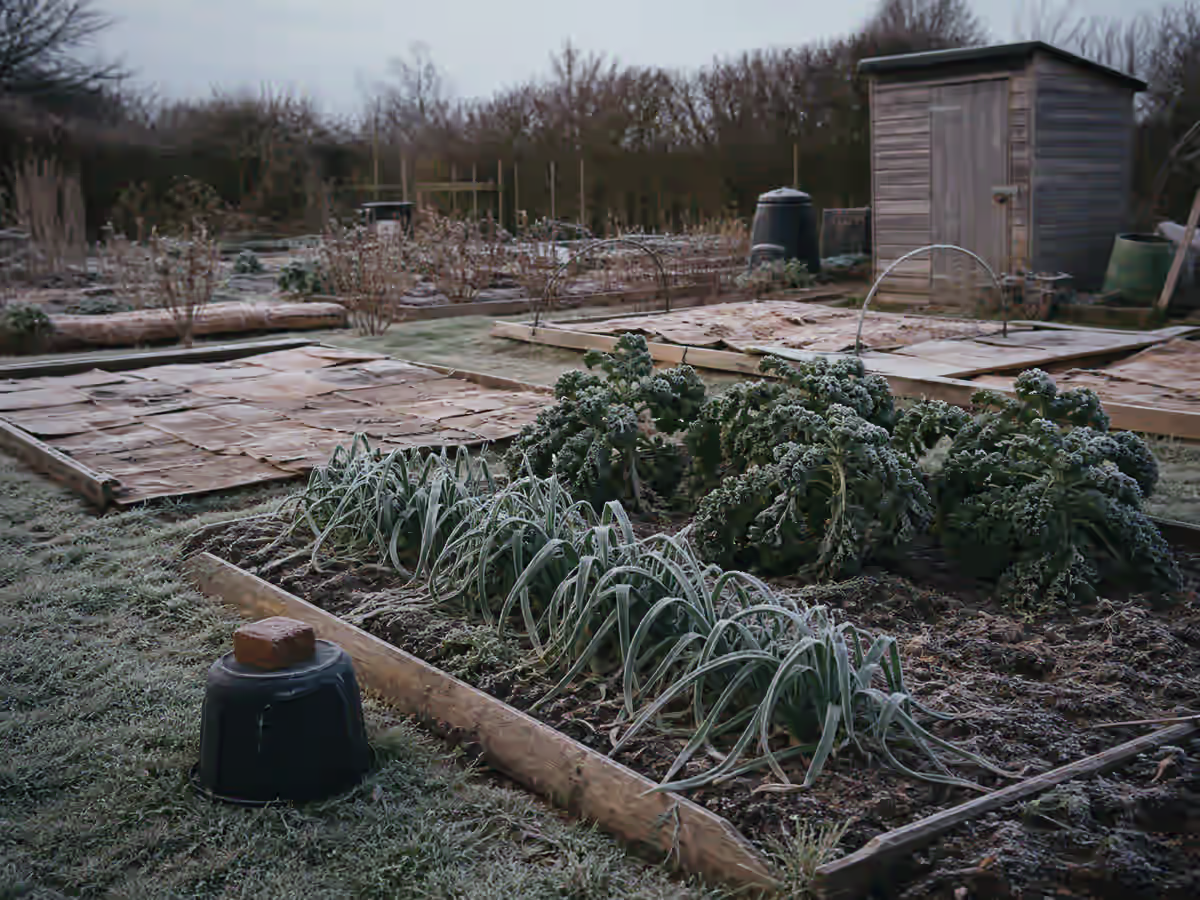
Almost nothing needs doing. Put a bucket over one rhubarb crown around Christmas for forced stems in February. Pick leeks, parsnips, sprouts and kale, which are all at their best after frost. Check your stores. Then stop and let the plot alone until late January.
What should you sow and plant in December?
Very little, and none of it is urgent. If the ground is frozen or waterlogged, everything here waits for January without any loss.
| Crop | Where | Depth | Spacing | Ready |
|---|---|---|---|---|
| Garlic | Direct, if the ground is workable | Tip 5cm down | 15cm apart | July, slightly smaller than an October planting |
| Broad beans | Direct, southern plots only, early December | 5cm | 20cm apart | Late May to June |
| Bare root fruit | Direct, any frost free day | As the plant needs | As the plant needs | Year two onward |
| Rhubarb crowns | Direct, any frost free day | Crown level with the surface | 90cm apart | Light pull in year two |
| Sweet peas | Cold frame | 2cm | One per tube | June |
What can you pick in December?
A surprisingly full table, and every one of these is better now than it was in October.
| Crop | How it is doing | Worth knowing |
|---|---|---|
| Brussels sprouts | At their best | Frost is what makes them worth eating. Work up the stem from the bottom |
| Parsnips | At their best | Do not lift before a hard frost if you can wait |
| Leeks | At their best | Lift as needed all winter |
| Kale | At its best | Frost sweetens it noticeably |
| Savoy and winter cabbage | Ready | The most weather proof cabbage there is |
| Celeriac | Ready | Mulch over the row so you can still get a fork in during a freeze |
| Jerusalem artichokes | Ready | Lift as needed. They store best in the ground |
| Land cress and corn salad | Ready | Still standing, still the only salad outdoors |
Which jobs matter most in December?
Four, and none of them takes more than twenty minutes. December is genuinely allowed to be quiet.
- Put a bucket, bin or forcing pot over one rhubarb crown around Christmas
- Check stored onions, potatoes and squash again and remove anything soft
- Knock heavy snow off netting and cloches before the weight tears them
- Order seed catalogues, and leave the actual ordering until January
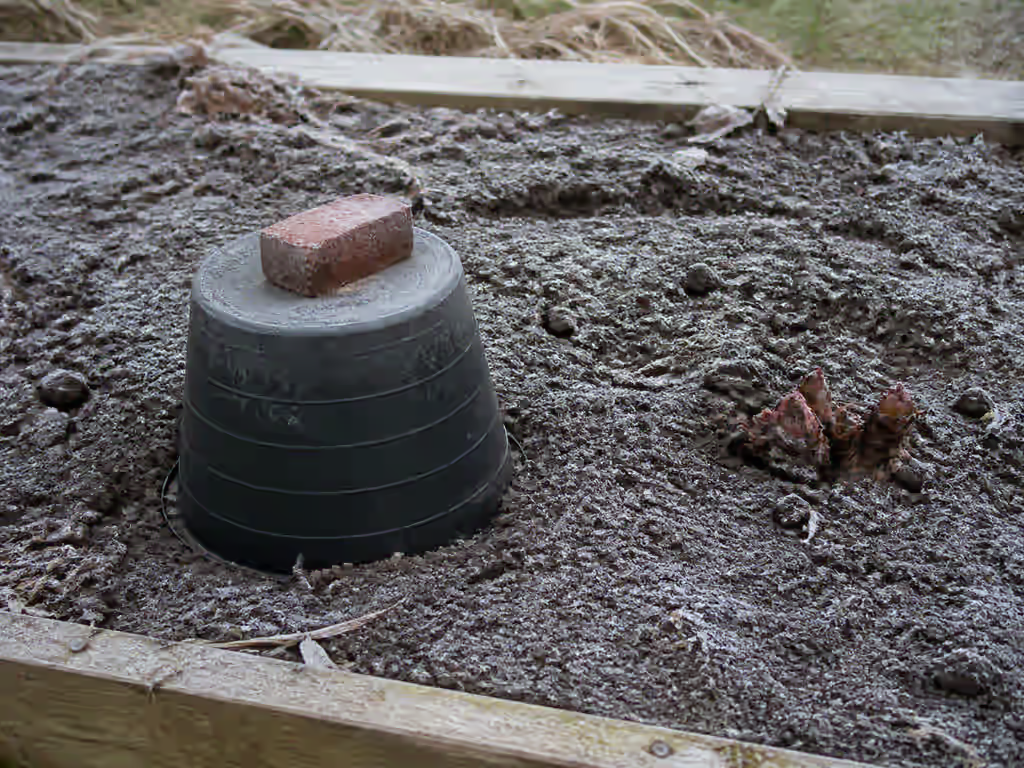
Forcing rhubarb, the one job worth doing
Pick an established crown, three years old or more, and put something lightproof over it around Christmas. A dustbin, a black bucket, an old compost bin, or a proper terracotta forcer if you have one. Weight it down so the wind does not take it.
Excluding light makes the crown push up long, pale pink, tender stems reaching for it, and they come six to eight weeks earlier than the uncovered crowns. Late January or early February for a Christmas covering, which is a month when there is nothing else on the plot at all.
The stems are sweeter and much less stringy than the green ones you get in April, and they cook down in minutes.
The one rule is not to do it to the same crown two years running, and not to force a young plant at all. Forcing takes a lot out of the crown, so give it a full year off afterwards. On a half plot that means keeping two crowns and alternating between them, which is the only reason to have two.
What is not worth doing in December?
Do not walk on the beds. Frozen soil is fine to stand on, but the thawed sodden stuff either side of a freeze is the most damaging ground there is to compact.
Do not dig, do not turn, do not tidy anything else. Whatever is left standing is providing shelter for the predators that deal with next summer greenfly.
Do not order seed yet. Do it in January, after the seed box audit, or you will buy things you already have. The catalogues arriving now are designed for exactly this weakness.
Do not feel behind. There is no crop on a British half plot that is helped by anything you do in December. This is the month the plot looks after itself.
Questions that come up
The four asked most in December.
Will frost ruin my winter crops?
No, and for sprouts, parsnips and kale it actively improves them. Frost converts stored starch to sugar. The crops that suffer are the ones under glass and anything in a pot, where the roots freeze solid.
Can I still plant garlic?
Yes, as long as you can get a trowel into the ground. A December planting makes a smaller bulb than October and is ready a week or two later, which is a fair trade for having done it at all.
Should I clean out the shed and sharpen the tools now?
It is a good use of a cold day, yes. A sharp hoe is genuinely twice as fast as a blunt one, and the difference shows up in April when you are hoeing every week.
What is the single best thing I can do this month?
Cover a rhubarb crown, then go home. If you want a second thing, write down what worked and what failed this year while you still remember. That note is worth more in January than anything you could do outdoors now.
Nothing invented to fill the quiet months.
One email a month. In December it is short, because December is short on jobs.
One email a month. Unsubscribe any time. How we look after your details.
Where to go next
Use the quiet time
Winter is when next season actually gets decided.