The allotment in January
The quietest month on the plot, and that is not a failure. Almost nothing should go in the ground, and the hour that matters most this month is spent indoors with a seed box.
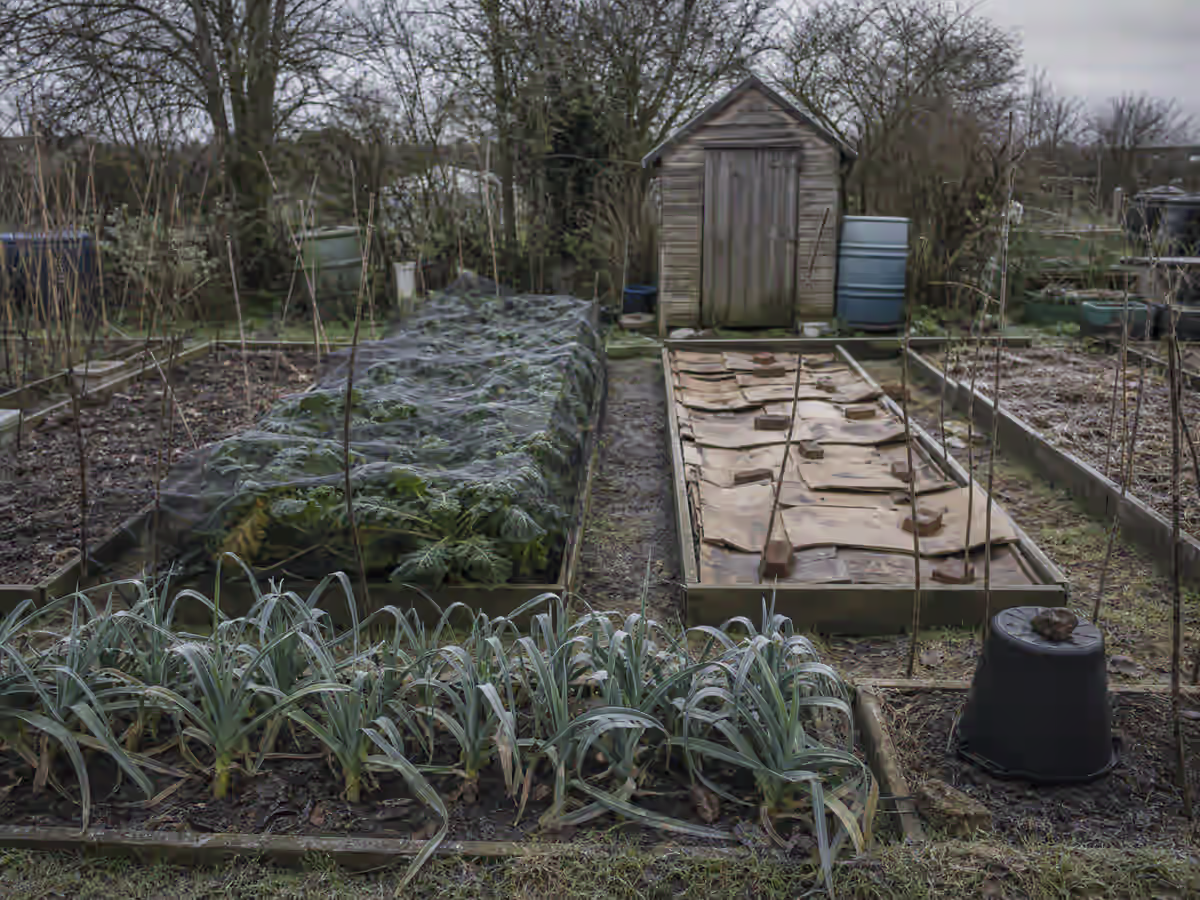
Sow almost nothing outdoors. Order seed, audit what you already have, and force a rhubarb crown under a bucket. Pick leeks, parsnips, kale and sprouts, which are all at their best after frost. Plant bare root fruit on any frost free day. Stay off wet soil.
What should you sow in January?
A short list, and most of it needs heat indoors. There is no advantage at all in sowing outdoors this month.
| Crop | Where | Depth | Spacing | Ready |
|---|---|---|---|---|
| Onions from seed | Indoors, propagator around 15C | 1cm | One per module cell | Plant out April, lift August |
| Chillies and sweet peppers | Indoors, needs a steady 20C to germinate | 1cm | One per module cell | Pick from August |
| Sweet peas | Cold frame or unheated porch, root trainers | 2cm | One per tube | Flowering from June |
| Broad beans | Direct, under a cloche, southern half of the UK only | 5cm | 20cm apart, rows 45cm | Late May |
| Garlic | Direct, if the soil is not sodden | Tip 5cm down | 15cm apart, rows 30cm | July |
If the soil sticks to your boots, everything on this list can wait until February and lose nothing at all.
What should you plant in January?
This is the bare root window, and it is the cheapest month of the year to buy fruit. A bare root bush costs about a third of the same plant in a pot.
| What | When | Spacing | Worth knowing |
|---|---|---|---|
| Rhubarb crowns | Any frost free day | 90cm apart | Set the crown level with the soil surface. Do not pick a stick in year one |
| Autumn fruiting raspberries | Any frost free day | 40cm apart, rows 1.8m | Cut every cane to the ground in February. They fruit on new wood |
| Blackcurrants and gooseberries | Any frost free day | 1.5m apart | Plant blackcurrants 5cm deeper than they grew, to make them stool |
| Garlic cloves | Now, if autumn got away from you | 15cm apart | Garlic needs a cold spell to split into a proper bulb, so late is still fine |
What can you pick in January?
More than people expect. January is the month the winter plot earns back the bed space it has been holding since June.
| Crop | How it is doing | How to pick it |
|---|---|---|
| Leeks | At their best | Lift as you need them. They keep better in the ground than anywhere else |
| Parsnips | At their best | Frost turns the starch to sugar. Do not lift before a hard frost if you can help it |
| Brussels sprouts | Good | Work up the stem from the bottom. The top ones swell as you go |
| Kale | Good | Take the tops and it branches out and gives you more |
| Winter and savoy cabbage | Good | Cut and leave the stump. It often gives a second flush of small greens |
| Chard and perpetual spinach | Ragged but alive | Cut the outside leaves and leave the middle to regrow |
| Jerusalem artichokes | Fine | Lift as needed. They store better in the ground than in a shed |
| Forced rhubarb | From late January | Only if you covered a crown around Christmas |
Which jobs matter most in January?
Six of them, and none needs more than an hour. Two hours on a dry Saturday covers the lot.
- Put a bucket or bin over one rhubarb crown for forced stems in five to six weeks
- Check stored onions and potatoes and pull out anything soft before it spreads
- Firm brassicas back in with your boot where frost has lifted the roots
- Wash pots and modules now, so you are not doing it in the March rush
- Mend the netting and the bean frame while there is nothing under them
- Cover one bed with black plastic or cardboard to warm and dry it for first early potatoes
Everything else on the plot can safely wait. There is no job in January that gets worse for being done in February.
The hour that decides the whole year
Tip the seed box out on the kitchen table and sort it into three piles: still good, out of date, and never going to get sown.
Most seed lasts three to four years in a cool dry place, so the dates on the packets are conservative. Parsnip is the exception and is genuinely useless after a year. Onion and leek go off fast too. Beans, peas, courgette, squash and brassicas keep for years.
Then write your order against the plan rather than against the catalogue. Four beds on a half plot will take about twelve varieties, and every year most people order thirty. The pile you never sow is money and, worse, it is the thing that makes March feel impossible.

What is not worth doing in January?
Do not dig. Wet soil compacts under your weight and you undo a season of structure in one afternoon. If you can see your footprints filling with water, go home and have the tea instead.
Do not sow anything outdoors without a cloche. Soil below about 7C germinates nothing, and seed sitting in cold wet ground rots rather than waits.
Do not chit potatoes yet in most of the country. Late January is early enough in the south, and mid February is right for the north. Chitted too early and you get long pale shoots that snap off when you plant them.
Questions that come up
The four that come up most in January.
Is it too late to plant garlic?
No. Garlic needs a period below about 10C to split into cloves, so January planting still makes a bulb. It will be a little smaller than an October planting, and it will be ready a week or two later, which is all.
Should I dig the plot over before spring?
No. On a half plot worked at this scale, covering beds and letting worms do it gives you better soil and costs you nothing. The only reason to dig is to get perennial roots like bindweed and couch grass out, and that is a job for when the soil is dry.
My leeks have gone rusty. Are they ruined?
Leek rust looks alarming and is mostly cosmetic in winter. Strip the worst outer leaves when you lift them and the white shank underneath is fine. Do not compost the affected leaves, and avoid planting leeks in the same bed next year.
When do I actually start sowing properly?
Early March for most things outdoors, and late February indoors. January and February are for planning, mending and clearing. Nearly everyone sows too early in their first two years and spends April nursing leggy seedlings on a windowsill.
A reminder at the start of each month, not halfway through it.
One email a month with what to sow, plant and pick. Sent on the first, so the timing is still useful.
One email a month. Unsubscribe any time. How we look after your details.
Where to go next
Last month
Cutting the last leeks and covering the ground before the wet sets in.
Next month
Chitting potatoes, the first sowings under cover, and the last of the pruning.
Plan it properly
January is the planning month. This is the method, in an afternoon.