Growing brassicas for winter and the hungry gap
The group that feeds you when nothing else will. Slow, greedy, and the reason a plot has anything on it in February.
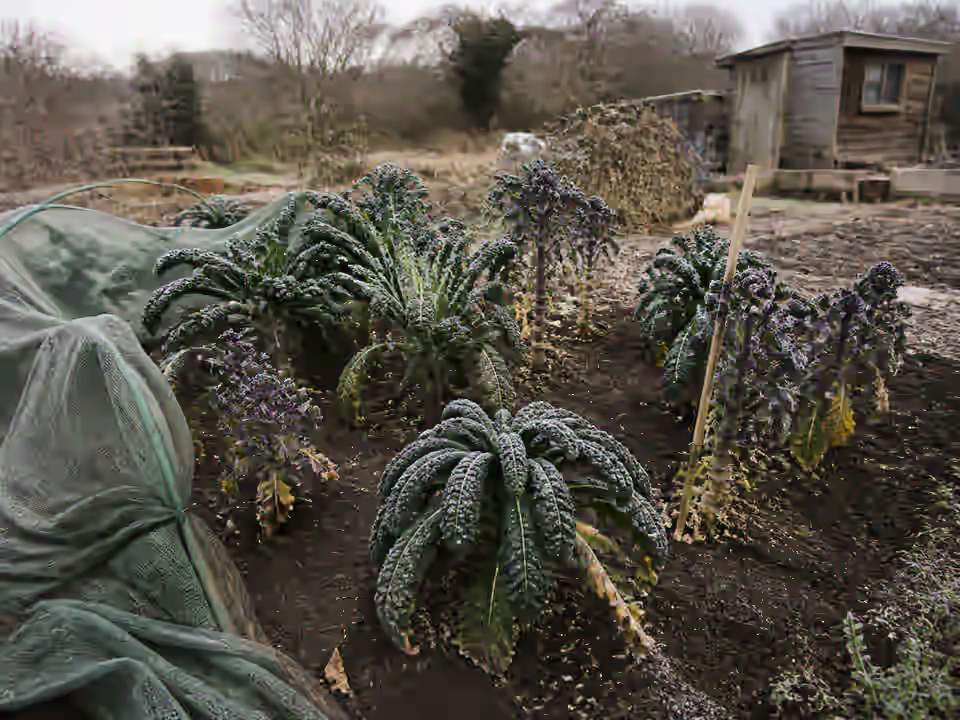
Sow purple sprouting and kale in May, plant out in June at 60cm apart, firm hard and net the same day. Sow spring cabbage between 10 and 20 August and plant it out in September at 15cm. Between them these three cover November to May, which is the whole point of the group.
The winter brassicas at a glance
These four are the ones worth the bed space on a half plot. Everything else in the family is a summer crop you can buy cheaply.
| Crop | Sow | Plant out | Spacing | Picking window |
|---|---|---|---|---|
| Purple sprouting broccoli | May | Mid June | 60cm apart | Late February to late April |
| Kale | May to early June | Mid June to early July | 45cm apart | November to May |
| Spring cabbage | 10 to 20 August | September | 15cm apart | March to May |
| Winter cabbage and savoy | April to May | June to early July | 45cm apart | November to February |
Purple sprouting takes ten to eleven months from seed to spear. Nothing about this group can be hurried, and nothing sown in spring feeds you the same spring.
Why spacing looks wrong, and is not
Purple sprouting at 60cm apart looks absurd in June. Four plants take most of a bed and there is bare soil everywhere. By November each of those plants is a metre across and a metre tall, and by February it is producing spears every three days for eight weeks.
Spring cabbage at 15cm looks equally wrong in the other direction, and that is deliberate. You cut every other plant in March as loose spring greens, which leaves the remainder at 30cm with room to heart up properly for April and May. One row, two crops, at exactly the point in the year when nothing else is available.
The habit worth building is planting for the size the plant will be in November, not the size it is in June. Undersow the gaps with salad or radish if the bare soil bothers you, and they will be gone before the brassicas need the room.
Planting out, in the order that matters
Brassicas are the one group where planting technique genuinely decides the crop. Four steps, and none of them optional.
- Water the module tray an hour before you lift the plants, never after
- Plant to the depth of the lowest leaf, deeper than the plant sat in the module
- Firm in hard with your heel until a tug on a leaf will not lift the plant
- Water in generously, a full can between four plants
- Net the same day, not the following weekend
- Check in November and firm again anything the autumn wind has rocked loose
Loose brassicas make small crops and blow over in the first winter gale. A firm root plate is most of the difference between a spear in February and a plant lying on its side.
Netting is not optional
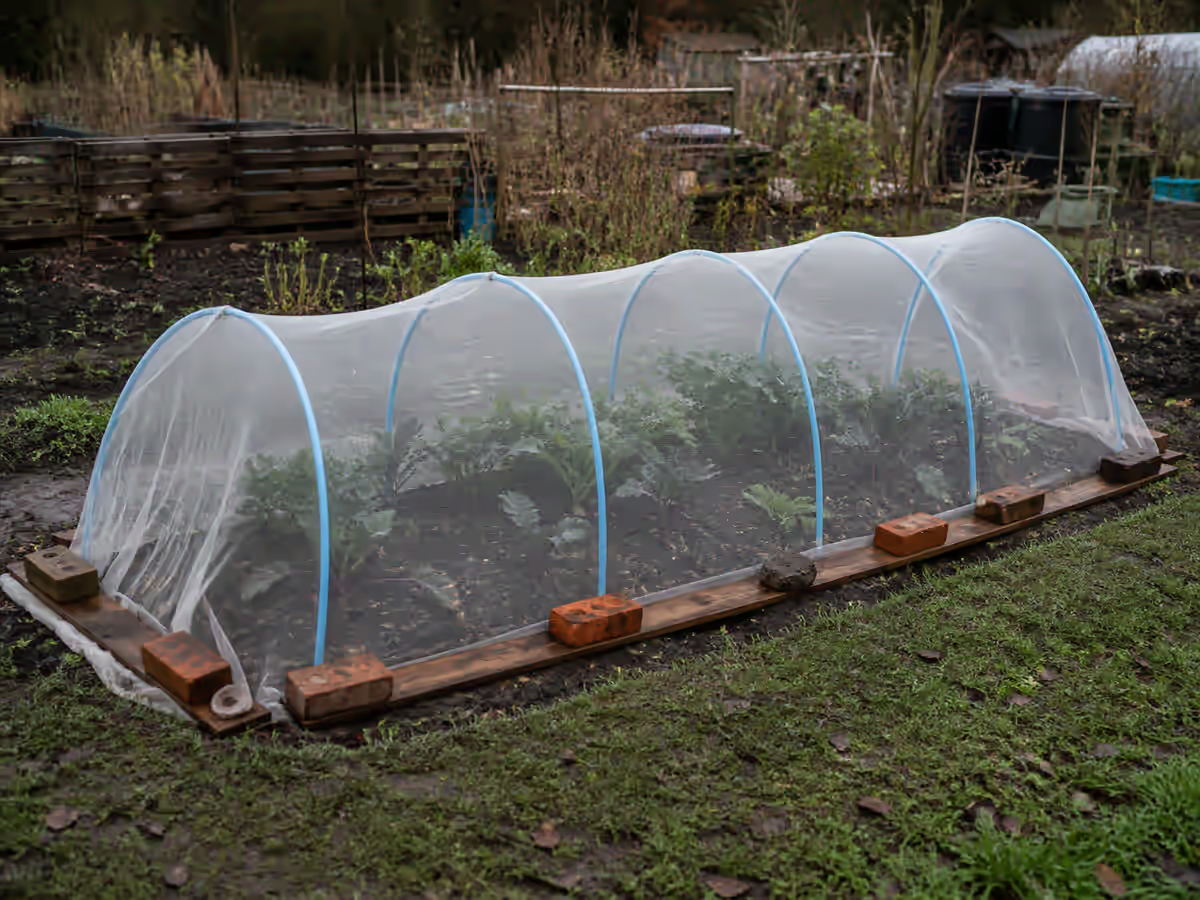
An unnetted brassica bed on a British allotment is a bed grown for something else to eat. There are three attackers and they work in shifts.
Cabbage white butterflies lay from late May to September. Their caterpillars strip a plant to the ribs in under a week and they are very hard to find on a savoy. Pigeons work all year and are worst from November to March, when there is nothing else about and a flock will take a bed of kale to bare stems in a morning. Cabbage root fly lays at soil level in spring and the larvae eat the roots, so the plant simply wilts and dies with nothing visible wrong.
Use a fine mesh, roughly 7mm, held clear of the foliage on hoops. Butterflies lay through netting that is resting on leaves. Weigh the edges down properly all the way round, because a pigeon will walk in under a loose edge and then panic inside.
For root fly, a 12cm collar of cardboard or carpet underlay laid flat around each stem at planting stops the female laying against it, and costs nothing.
What goes wrong?
| Problem | What you see | What to do |
|---|---|---|
| Caterpillars | Ragged holes, green droppings, clusters of yellow eggs under leaves | Net properly on hoops. Squash egg clusters when you see them. Picking off caterpillars works but is endless |
| Pigeons | Leaves stripped to the midrib, usually overnight in winter | Net with the edges pinned down. Nothing else reliably works |
| Cabbage root fly | Plant wilts and dies, roots eaten away | Collars at planting, and net to keep the fly off entirely |
| Clubroot | Swollen distorted roots, stunted yellow plants | No cure. Lime the bed to raise pH, raise plants in large pots first, and lengthen the rotation. It lasts decades in soil |
| Whitefly | Clouds of small white flies when you brush the plants | Mostly cosmetic on winter brassicas. Wash the leaves at the sink and carry on |
| Bolting spring cabbage | Flower stem in April before hearting | Sown too early in August. The window really is that narrow |
The second harvest almost everyone composts
When kale bolts in April it throws up a mass of tender shoots topped with tight flower buds. They are the best thing on the plot at the point in the year when there is least, they taste like a cross between broccoli and kale, and almost everybody pulls the plant and composts them.
Snap them off at about 12cm while the buds are still closed. The plant keeps producing more for several weeks.
The same applies to the leafy crown at the top of a finished Brussels sprout plant, to the shoots a cut cabbage stump throws out if you leave it in the ground, and to swede and turnip tops in spring. None of it is a consolation prize. In April it is the main event.
Questions that come up
The five asked most about brassicas.
Is it too late to sow purple sprouting in July?
Yes, effectively. May is right and early June still works. A July sowing will not make a plant big enough to stand the winter and crop properly the following February. Sow kale instead, which is faster and far more forgiving.
Why do my brassicas fall over in winter?
They were not firmed in hard enough at planting, and they have rocked loose in autumn wind. Firm with your heel at planting and again in November, and stake anything on an exposed plot.
Can I grow brassicas in the same bed each year?
No. Clubroot builds up in soil where brassicas grow repeatedly, and once you have it the bed is compromised for decades. Keep them moving on a four bed rotation, following the legumes.
Why do brassicas follow beans in the rotation?
Because peas and beans leave nitrogen behind in root nodules, and brassicas are hungry for exactly that. Cut the bean tops off at ground level and leave the roots in, then plant the brassicas into the same bed.
Do I need to lime the bed?
Only if your soil is acidic. Brassicas prefer a pH around 6.5 to 7. A cheap soil test kit is worth doing once, because liming a bed that does not need it causes its own problems.
Where this comes from
The spacing, the timing and the netting here are what has worked on one plot. The three things that will actually cost you a brassica bed are not opinion, and all three are worth reading up on properly.
- RHS, Club root, on the soil borne disease that is the real argument for rotation, and why lime and drainage help
- RHS, Cabbage root fly, on the collars and the timing of the egg laying
- RHS, Cabbage caterpillars, on why fine mesh has to be held clear of the leaves
Last reviewed 17 August 2026.
Written by Sam
Eight years on a half plot in Nottinghamshire. Four beds, two water butts, about two hours a week, and most of what is on this site tried twice before it worked. Dates here suit most of England and Wales, because that is where the plot is. Where a page makes a claim you could check for yourself, it links to the source.
The May sowing that decides next April.
Purple sprouting in May, spring cabbage in August. A reminder in the week it matters.
One email a month. Unsubscribe any time. How we look after your details.