Your first month on the plot
Four weeks, four jobs. What to do when you have just been handed a key, a plot number and 125 square metres of somebody else’s weeds.
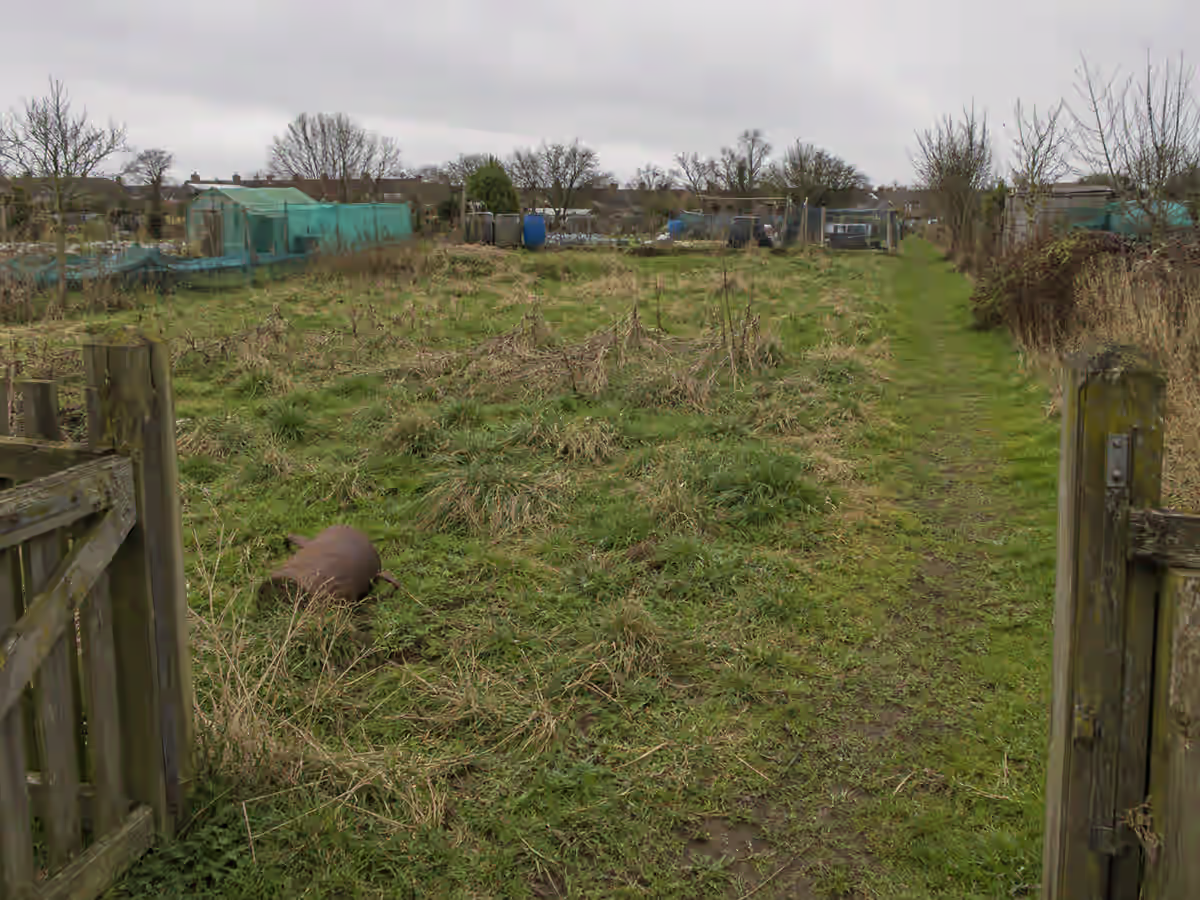
Do not clear the whole plot. In week one measure it and talk to your neighbour. In week two clear one bed, 3m by 1.2m. In week three sow into that bed. In week four cover everything you are not using. You will grow less in year one than you hoped, and that is the right outcome.
What does the first month actually look like?
| Week | The one job | Roughly | What you need |
|---|---|---|---|
| Week 1 | Measure the plot, meet the neighbours | 1 hour | A phone and something to write on |
| Week 2 | Clear one bed, 3m by 1.2m | 6 to 8 hours | Shears, a fork, a rake |
| Week 3 | Sow and plant that one bed | 2 hours | Seed, string line, a dibber |
| Week 4 | Cover the rest, start a compost bay | 3 hours | Cardboard, four pallets, something heavy |
About fourteen hours across a month. If you only have half that, drop the compost bay and keep the cardboard. Covering ground is the job that saves you the most work later.
What should you do in the first week?
Nothing that involves a spade.
Pace the plot out heel to toe. One pace is roughly 75cm, so sixteen paces by thirteen is about 12m by 10m, which is 120 square metres and a fairly typical UK half plot. Write those two numbers in your phone. Every decision after this one comes back to them.
Then find three things. Where the water is and how far you have to carry it. Which end gets the afternoon sun. And where the wind comes from, which you will learn faster by standing at the far corner for ten minutes on a rough day than from any amount of reading.
The last job of week one is the one people skip. Talk to whoever has the plot next to you. They know which end floods in February, when the site turns the water off, where the free manure arrives in autumn, and who to ask about a shed. Fifteen minutes of that is worth more than a shelf of books.
Which bed should you clear first?
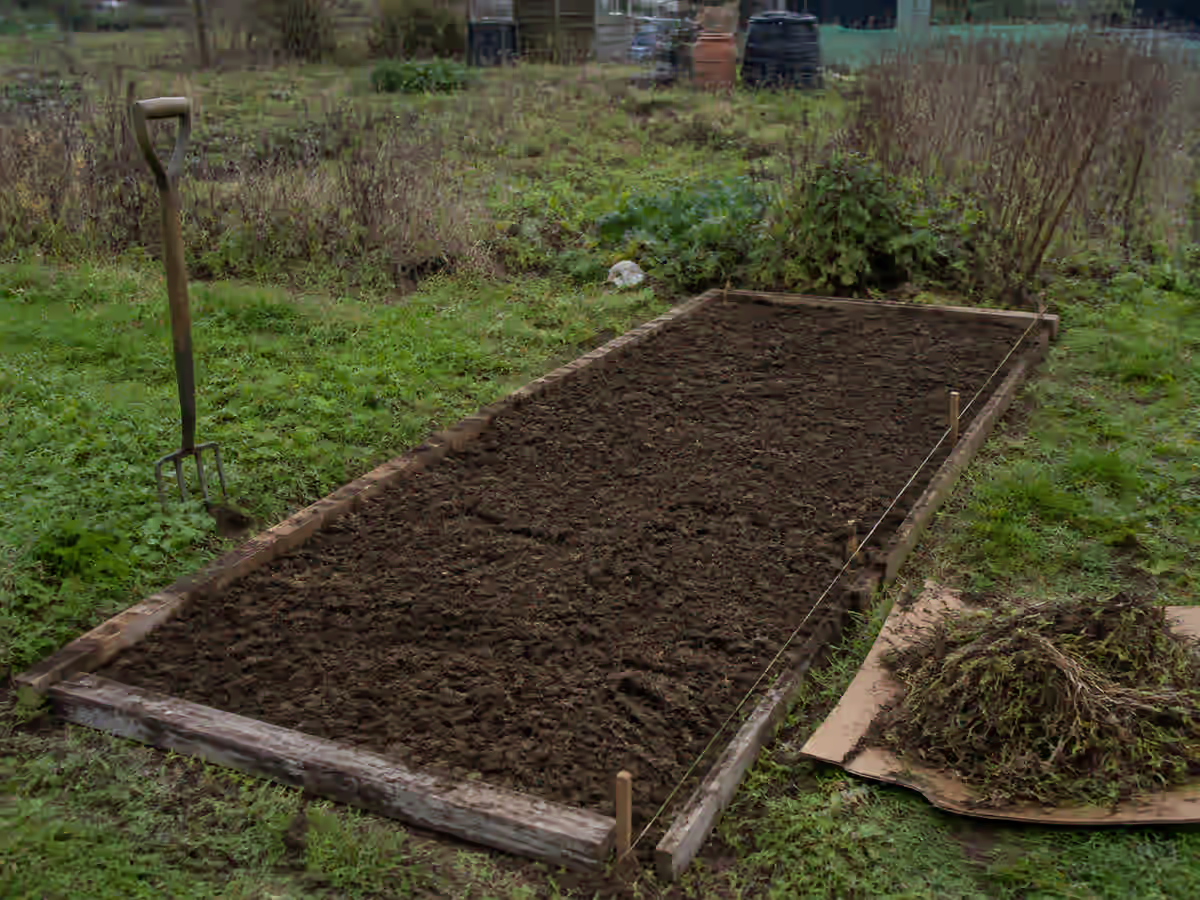
One. Three metres by one metre twenty, at the end nearest the path and the water.
The instinct is to clear the lot, and it is the most common reason plots get handed back in year two. Clearing 125 square metres of couch grass by hand takes most people six weekends. By the time it is done the sowing season has gone, nothing is in the ground, and the part you cleared first has grown back.
So mark out one bed and clear only that. Shear the top growth off, fork out the perennial roots, rake it level. A day, maybe a day and a half. Four roots are worth learning by sight before you start, because each has to come out whole: couch grass, bindweed, dock and creeping buttercup. Anything else you can hoe off later.
One cleared bed you actually plant beats four cleared beds you run out of time for.
What can you sow in your first month?
It depends entirely on the month you were handed the key. Find your row and ignore the rest.
| Keys in | Sow or plant straight away | Leave until next year |
|---|---|---|
| January or February | Broad beans, garlic if the ground is workable | Everything else. Use the time to plan |
| March or April | First early potatoes, broad beans, beetroot, salad, radish | Squash and sweetcorn, unless you buy plants |
| May or June | Courgette plants, French beans, salad, beetroot, chard | Potatoes, garlic, parsnips |
| July or August | Salad, rocket, spring onion, turnip, oriental leaves | Anything needing a full summer |
| September or October | Garlic, autumn onion sets, broad beans, winter salad | Everything tender |
| November or December | Garlic, if the soil is not frozen | The rest. Clear and cover instead |
Whatever month you start, buy plants rather than seed for your first courgette and your first brassicas. Raising your own under cover is a year two job and there is no prize for doing it now.
What do you do with the rest of the plot?
Cover it, and then stop thinking about it.
Plain cardboard laid over the weeds and weighted down will kill almost everything under it in a season, couch grass included, provided you overlap the sheets so no light gets through the joins. Next spring you pull it back one bed at a time, as you are ready to plant, and the ground underneath is soft, dark and very nearly clean.
That is the whole trick, and it costs nothing but the effort of collecting boxes from the back of a supermarket.
- Overlap every sheet by at least 15cm, or couch grass finds the gap and comes straight through
- Pull off plastic tape and staples first. They are still there in three years
- Weight it properly. British wind will have loose cardboard across the whole site by morning
- Uncover one bed at a time, and only when you are ready to plant it
What will go wrong?
Some of it will, and knowing which bits in advance takes most of the sting out.
Slugs will take your first lettuces. Almost everyone loses a whole first sowing and quietly assumes the seed was faulty. It was not.
You will go away for a week in July and come back to a courgette the size of a forearm and a row of bolted salad.
Something will not come up at all and you will never find out why. Parsnips are the usual culprit. Sow again three weeks later and move on.
And at some point in April the plot will look like bare mud with four short rows in it, and you will wonder what on earth you have taken on. April is genuinely bleak in year one. It passes in May, and it passes fast.
Questions that come up
The five asked most often in a first season.
Do I need to dig the whole plot over?
No, and on couch grass digging usually makes it worse, because every chopped piece of root becomes a new plant. Clear one bed properly by hand and cover the rest. Our no dig page sets out what the alternative actually costs in compost.
How much should the first month cost?
Under £60 if you are careful. A secondhand fork and hoe for around £20, seed for £15, a bag of compost £6, and cardboard free. You do not need a shed, a greenhouse or a rotavator in year one.
Should I put up a shed or a greenhouse first?
No. Both are year two or three. A shed you site in month one will sit in the wrong place for the next decade, because you do not yet know where you actually walk.
What if the plot has rubbish on it, or has been sprayed?
Ask the site secretary what was grown there and whether anything was sprayed in the last year. Get glass, metal and plastic off site first. Old carpet is the one to watch: it is not compostable and it breaks down into fibres you will be picking out for years.
I was given a full plot, not a half. Does any of this change?
No, and it matters more. Clear one bed, cover the rest, and consider asking the committee whether the plot can be split. A full plot is roughly 250 square metres and takes four to six hours a week through summer to stay on top of.
Year one is mostly about not falling behind.
A short email at the start of each month: what to sow, what to pick, and the one job worth doing.
One email a month. Unsubscribe any time. How we look after your details.
Where to go next
Plan the other three beds
You have cleared one. Here is the afternoon that decides the rest.
What to grow first
Five crops that are forgiving of a first year and genuinely worth the space.
What the words mean
Chitting, pricking out, hardening off. Plain English for every term on the site.