No dig on a half plot
It works, it saves a great deal of weeding, and almost nobody tells you what it costs in compost before you start. Here are the actual numbers for four beds.
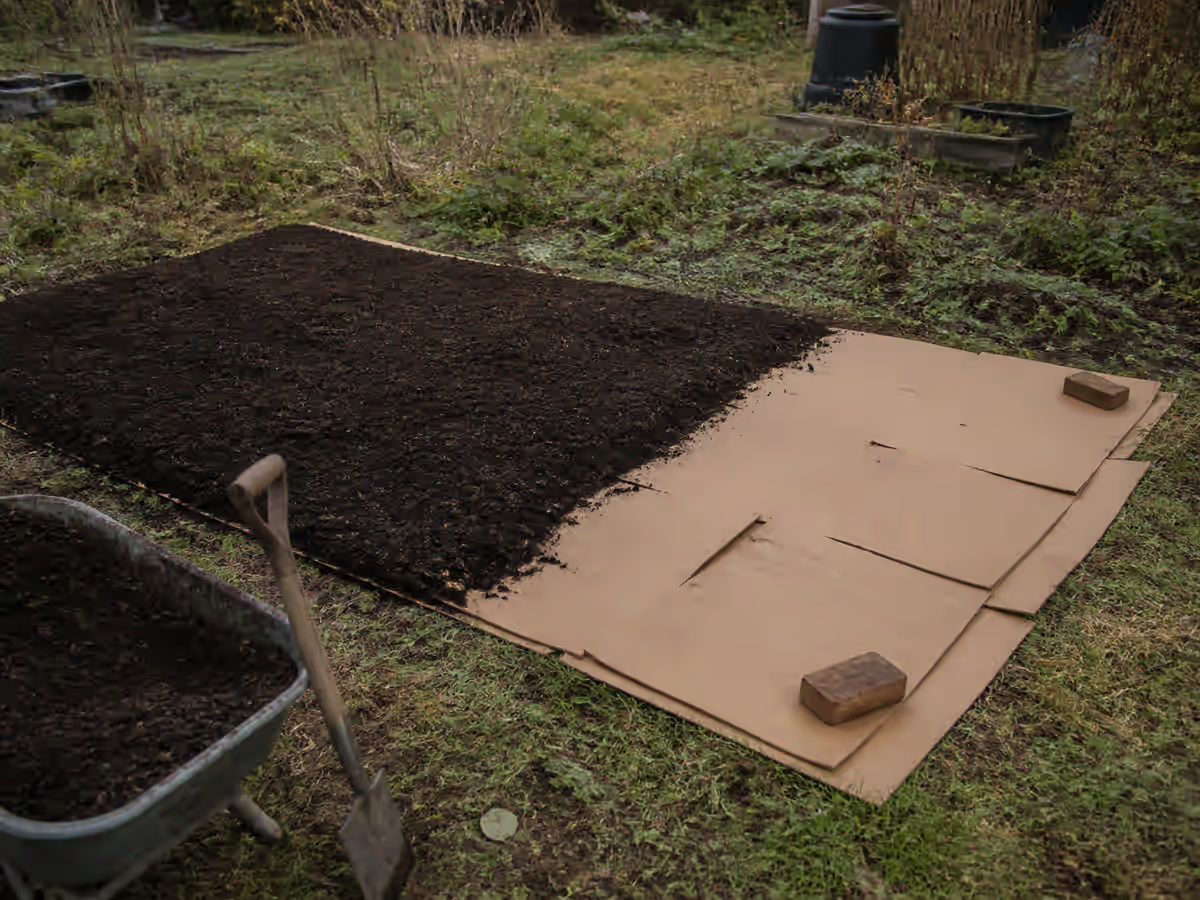
No dig means never turning the soil. You spread compost on the surface once a year and plant straight into it. Four beds of 3m by 1.2m need about 1.4 cubic metres in year one and 0.7 after that, which is one bulk bag a year. Weeding drops by well over half. The compost is the real cost, and nobody makes enough of their own in year one.
What does no dig actually cost?
A standard half plot bed here is 3m by 1.2m, so 3.6 square metres. Four of those is the layout the rest of this site assumes. Everything below follows from that.
| One bed | Four beds | Roughly | |
|---|---|---|---|
| Year one depth | 10cm | 10cm | Enough to plant into over cardboard |
| Year one volume | 0.36 m³ | 1.44 m³ | Two bulk bags |
| Year two onward depth | 5cm | 5cm | A topping up, not a rebuild |
| Year two onward volume | 0.18 m³ | 0.72 m³ | One bulk bag |
| In 50 litre bags | 7 bags | 29 bags year one, 15 after | £3 to £5 a bag |
| Delivered bulk bag | — | £60 to £90 each | Cheapest way to buy it |
| Two pallet bays make | — | 0.2 to 0.3 m³ a year | A third of what you need |
That last row is the one people are not told. Two well fed pallet bays on a half plot produce roughly a third of your annual no dig requirement. The rest gets bought, begged from the site manure heap, or collected as council green waste compost, which is usually the cheapest by a distance.
How do you start it on rough ground?
You do not clear the weeds first. That is the part that feels wrong and is the whole point.
Cut the top growth down as low as shears will take it and leave every root where it is. Lay cardboard straight over the lot. Then put the compost on top of the cardboard, not underneath it. The weeds die in the dark, the worms pull the cardboard down into the soil over a winter, and you have a bed you can plant the same afternoon.
- Cut the top growth low, leave the roots. Digging them out is the job no dig exists to avoid
- Overlap every sheet of cardboard by 15cm, and take the plastic tape off first
- 10cm of compost on top in year one. Less than that and perennial weeds come straight through
- Plant modules and potatoes into it the first season. Direct sown carrots and parsnips can wait a year
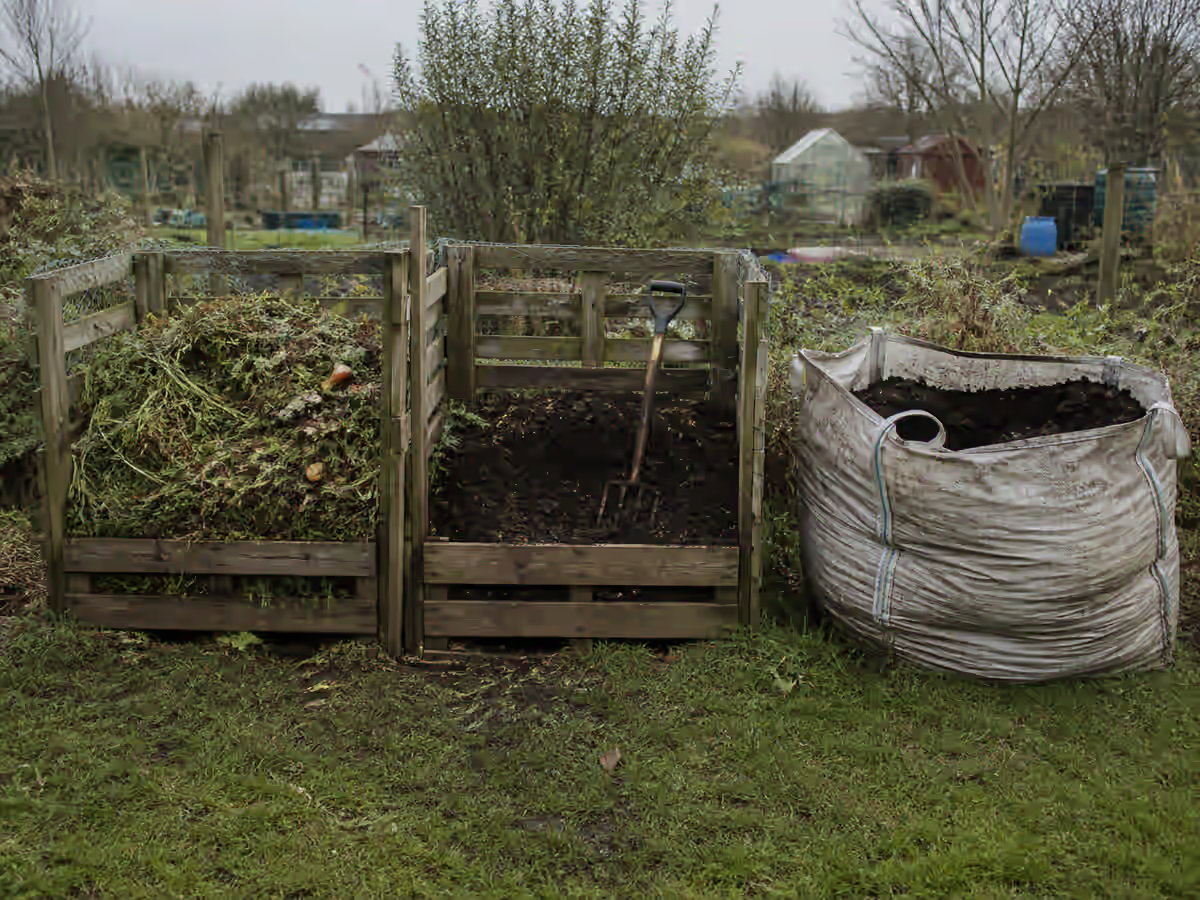
Where does all that compost come from?
Four sources, in order of how much they will actually give you.
Council green waste. Most councils sell it by the bulk bag or trailer load, often around £30 a cubic metre delivered. It is coarse, it is weed free because it has been through a hot process, and it is the backbone of most no dig plots in Britain.
The site manure heap. Free if your site takes a delivery. It needs a year to rot before it goes on a bed, so barrow it to a spare corner one autumn and use it the next. Ask what the horses were bedded on and whether the hay was sprayed, because aminopyralid residue will deform everything you grow for two seasons.
Your own bays. Two pallet bays, one filling while the other rots down. Realistically 0.2 to 0.3 cubic metres a year, because a half plot does not generate enough material for more. Worth doing regardless, since it takes your weeds and kitchen waste out of the equation.
Bagged compost. The most expensive route by a distance. Fine for filling modules, silly for covering four beds.
When is digging still the better answer?
No dig is a method, not a belief, and there are four situations where a fork is simply the right tool.
Bindweed and marestail. Cardboard and compost will hold both back and kill neither. Bindweed comes through 10cm of compost inside a season and marestail comes through almost anything. On a badly infested plot it is worth forking the first bed through once, so you at least start level.
Compaction and buried rubble. If the ground was a car park, a bonfire site or somewhere a builder tipped a load, there is a pan under the surface that compost on top will not fix. Fork it through once, get the bricks out, then go no dig from there.
When you cannot get compost. No dig without compost is not no dig, it is just not weeding. If you genuinely cannot source a cubic metre a year, a shallow spring dig and a sharp hoe will serve you better than a thin dusting of bought bags.
Lifting potatoes. Which is digging, whatever anybody tells you.
If you cannot get the compost, do not start. A thin layer is worse than none, because the weeds come through and you conclude the method failed.
What changes by year three?
The reason to stick with it is not year one. Year one is the expensive one.
| Year one | Year two | Year three on | |
|---|---|---|---|
| Compost needed | 10cm, 1.44 m³ | 5cm, 0.72 m³ | 5cm, 0.72 m³ |
| Summer weeding a week | 45 to 60 minutes | 20 to 30 minutes | 10 to 20 minutes |
| Annual weeds | Heavy, out of the old seed bank | Much reduced | Occasional |
| Perennial weeds | Couch and bindweed still pushing | Couch mostly gone | Bindweed only |
| Sowing carrots direct | Poor, the surface is too coarse | Workable | Good |
| Watering | As normal | Slightly less | Noticeably less |
Year two is when people decide whether it was worth it, because that is when the weeding drops and the compost bill halves in the same season. Budget properly for year one and you will get there.
Questions that come up
The five asked most about no dig on a small plot.
Do I need to buy special no dig compost?
No. Any well rotted organic matter will do the job. Council green waste, rotted manure, spent mushroom compost and your own bays all work. What you are after is something dark, crumbly and free of recognisable lumps, not a particular bag with a label on it.
Can I use manure instead of compost?
Yes, once it is properly rotted, which takes about a year. Fresh manure will scorch roots and stink. The one thing to ask before you take any is what the animals were fed on, because aminopyralid passes straight through a horse and will curl the leaves on your beans and potatoes for two seasons.
Does no dig work on heavy clay?
Better than most methods, in fact. Clay is worst when it is turned over wet, and no dig stops you doing that. The compost layer gives you something workable to sow into while the clay underneath slowly improves. Give it three years before you judge it.
Will I really weed less, or is that the sales pitch?
You will genuinely weed less, but not immediately. Year one is close to normal, because the seed bank already in your soil is unaffected by anything you put on top. The drop comes in year two, when nothing new has been turned up to the surface.
Do I still need to rotate crops?
Yes. No dig improves soil structure and biology, it does not remove club root, white rot or eelworm. Keep the same four bed rotation you would use otherwise, covered on our crop rotation page.
The compost year runs opposite to the growing year.
A short email at the start of each month, including the two months when compost is worth collecting.
One email a month. Unsubscribe any time. How we look after your details.
Where to go next
Feeding the soil
What compost actually does, and how to run two bays properly.
Doing less, on purpose
No dig is one of three systems that buy back time on a half plot.
If the plot is still rough
No dig starts on cleared ground or on cardboard. Here is getting to either.