Saving your own seed
Five crops are genuinely worth saving from on a half plot. Most of the rest will waste a bed for fifteen months or give you something you cannot eat. Here is the line between them.
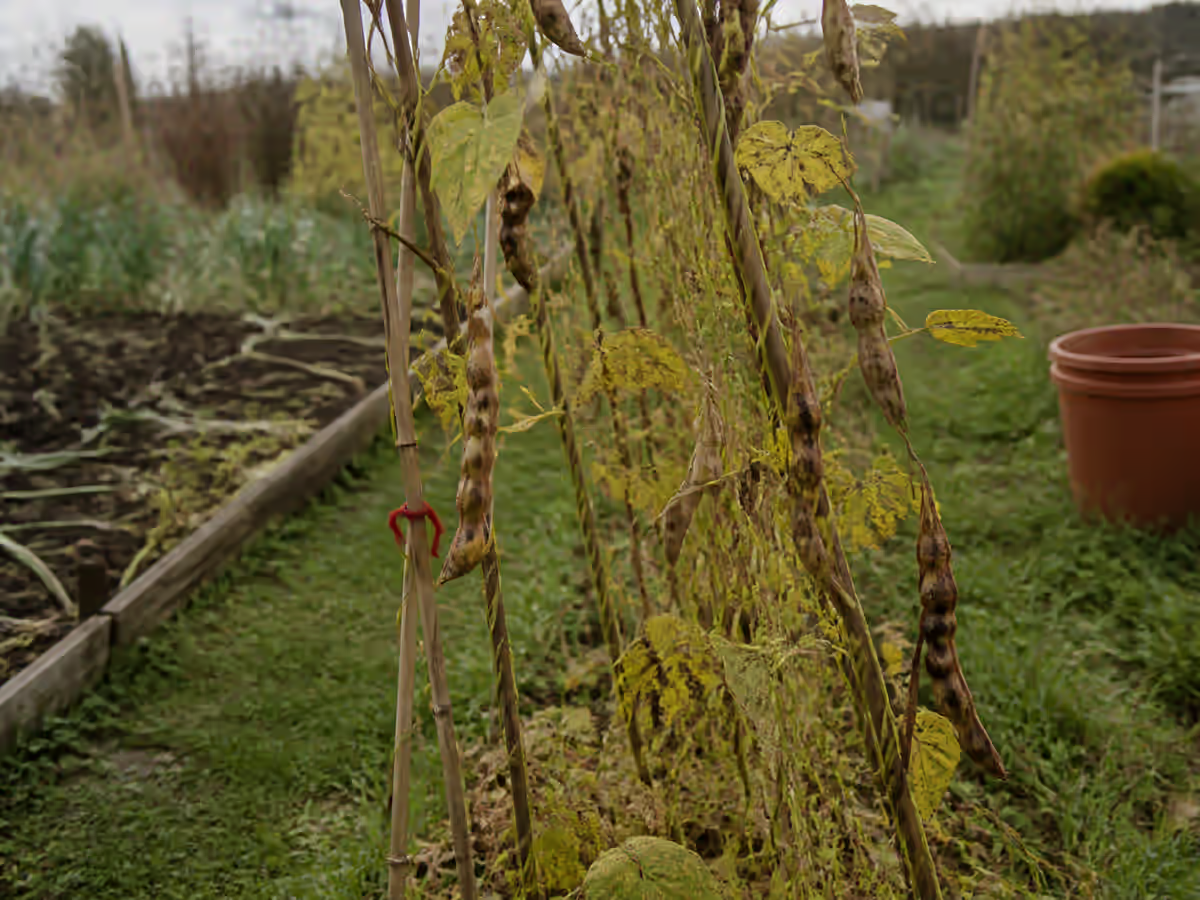
Save from beans, peas, tomatoes, lettuce and squash. All are self pollinating or easy enough to keep separate, and the seed keeps three to five years. Skip carrots, onions and brassicas, which are biennial or cross with everything, and skip anything marked F1, which will not come true. Dry to snap-dry, store cold and dark, label with the year.
Which crops are worth saving from?
These six are self pollinating or near enough, which means the seed comes true without you doing anything clever to keep varieties apart.
| Crop | Why it works | What to do | Keeps |
|---|---|---|---|
| Runner and French beans | Self pollinating, large seed, hard to get wrong | Leave a few pods on the plant until brown and rattling, shell indoors | 3 years |
| Peas | Self pollinating | Same again. Mark the plants in June or you will pick them by mistake | 3 years |
| Broad beans | Mostly self, a little crossing by bees | Leave the lowest pods to go black and papery | 3 years |
| Tomatoes | Self pollinating | Squeeze pulp into a jar of water, leave 3 days, rinse, dry on a plate | 5 years |
| Lettuce | Self pollinating | Let one plant bolt and flower, shake the dry head into a paper bag | 3 years |
| Squash and pumpkin | Crosses, but only within its own species | Scoop, wash the strings off, dry hard. Grow one variety only | 5 years |
Beans are the one to start with. A single runner bean plant left to itself gives you enough seed for next year and some to swap, and the whole job is ten minutes on a kitchen table in October.
Which are not worth the bother?
Not because it cannot be done, but because on 125 square metres the cost is a bed you needed for food.
| Crop | Why not, on a half plot |
|---|---|
| Carrot, parsnip, beetroot, onion, leek | All biennial. They flower in their second year, so saving seed ties up bed space for fifteen months |
| Brassicas | Cabbage, kale, sprouts, broccoli and swede all cross with each other and with wild relatives on the site. You get something nobody wants to eat |
| Sweetcorn | Wind pollinated over long distances, and needs around 200 plants to avoid inbreeding. Not a half plot job |
| Courgette, if anyone near you grows squash | Crosses freely. Crossed fruit can carry high cucurbitacin, which is bitter and will genuinely make you ill |
| Anything marked F1 | Will not come true. The next generation reverts unpredictably to its parents |
The courgette row is the one to take seriously. If a saved-seed squash or courgette tastes bitter, spit it out and throw the whole fruit away. Bitterness is the warning and it does not cook out.
How do you dry and store it?
Drying is where most saved seed is quietly lost, and it happens after the interesting part is over.
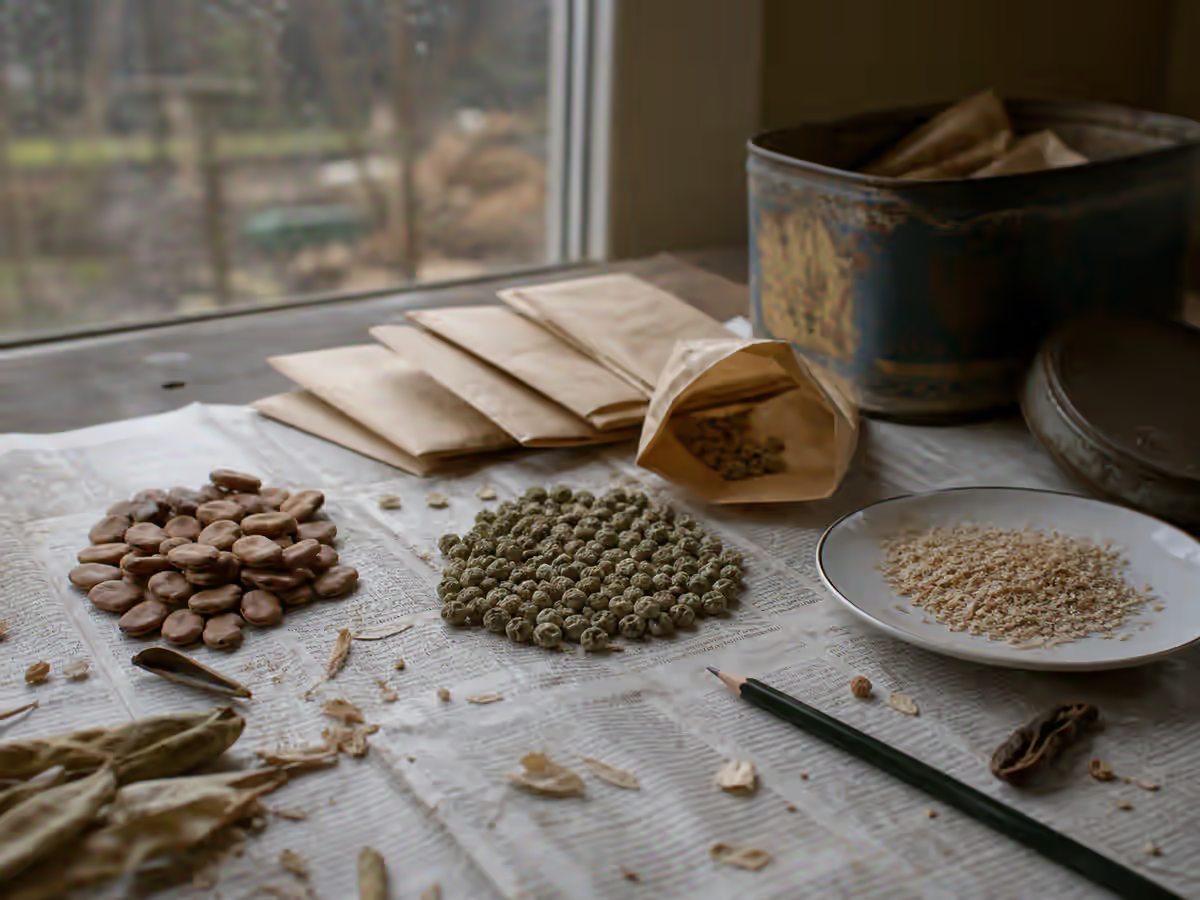
Seed has to be snap-dry before it goes anywhere sealed. A bean should shatter under a rolling pin rather than squash. Anything still faintly bendy is carrying enough moisture to go mouldy in a tin by February.
Dry it slowly. Spread it thin on a plate or a sheet of newspaper somewhere indoors and out of direct sun, and give it a fortnight. Never use an oven, a radiator or the hot pipe in an airing cupboard: much above 35 degrees kills the embryo while the seed still looks perfect.
- Snap dry, not bendy. A bean seed should shatter, not squash
- Dry slowly at room temperature. Heat kills seed that still looks fine
- Paper envelopes inside an airtight tin. A plastic bag on its own traps moisture
- Cold, dark and steady. A tin indoors beats a shed swinging from minus two to thirty
- Write the variety and the year on every envelope. You will not remember in March
How long does saved seed last?
Stored cool, dark and properly dry. Warm and damp halves every figure below.
| Seed | Realistic life | What happens after |
|---|---|---|
| Parsnip | 1 year | Germination falls off a cliff. Buy fresh annually |
| Onion, leek | 1 to 2 years | Patchy rows, worth resowing |
| Sweetcorn | 2 years | Gappy stands, which matters for pollination |
| Peas, beans, carrot, pepper | 3 years | Slow, uneven, still usable if sown thicker |
| Lettuce, brassicas, chard | 3 to 4 years | Gradual decline, no cliff edge |
| Tomato, squash, cucumber, radish | 5 years | Often germinate well beyond it |
The date printed on a bought packet is a legal minimum, not an expiry. Most seed beats it comfortably when it has been kept cold and dry. Parsnip is the honest exception, and the one crop where the packet is telling you the truth.
What does F1 mean for saving?
F1 on a packet means the first generation of a deliberate cross between two inbred parent lines. The plants are uniform and vigorous, which is exactly why they cost more.
What it means for you is simple. Seed saved from an F1 plant is the second generation, and it splits. Some plants take after one parent, some the other, most land somewhere unhelpful in between. You will get a crop. You will not get the crop on the packet, and you will not get the same crop twice.
The words to look for instead are open pollinated, often shortened to OP, and heritage. Both come true from saved seed. Nearly every runner bean, broad bean and pea sold in Britain is open pollinated, which is one more reason those are the crops to start with.
If the packet says F1, enjoy the crop and buy it again next year. Save from the open pollinated ones instead.
Questions that come up
The five asked most about saving seed on a small plot.
Can I save seed from supermarket vegetables?
Sometimes. Tomatoes and squash often grow, because you are taking seed from a ripe fruit. Almost everything else in a supermarket is picked immature or is an F1, so the seed is either not viable or will not come true. It is a fun experiment and a poor plan.
How many plants do I need to save from?
For self pollinating crops such as beans, peas, tomatoes and lettuce, one healthy plant is genuinely enough for a half plot. For anything that crosses, you need enough plants to keep the population healthy, which is the practical reason sweetcorn and brassicas are off the list.
Do I really have to ferment tomato seed?
Yes, if you want it to store. The gel around each seed contains a germination inhibitor, and three days in a jar of water removes it along with some seed-borne disease. Rinse until the water runs clear, dry on a plate rather than kitchen paper, or you will spend an evening picking seeds off tissue.
How do I check old seed before I waste a bed on it?
Ten seeds on damp kitchen paper in a sealed sandwich box, somewhere warm, for a fortnight. Count how many sprout. Seven or more, sow as normal. Four to six, sow twice as thick. Under four, throw it out. It costs you nothing but ten seeds and it saves a whole row.
Can I give saved seed away or swap it?
Yes. Giving and swapping seed between growers is entirely fine, and most sites run a swap in January or February. Selling seed commercially is a different matter with its own rules, but that is not what anyone on a half plot is doing.
Seed saving is an October job you decide on in June.
A short email at the start of each month, including which plants to mark and leave alone.
One email a month. Unsubscribe any time. How we look after your details.
Where to go next
The crops to start with
Beans first, squash second. Both pages cover the growing that comes before the saving.
When it actually happens
Marking plants in summer, collecting in autumn, sorting the tin in winter.
Other ways to do less
Seed saving is one of three systems that take work out of a half plot year.