The guides
Five long pieces that between them cover the first three years on a half plot. Each one answers a single question properly rather than skimming twenty.
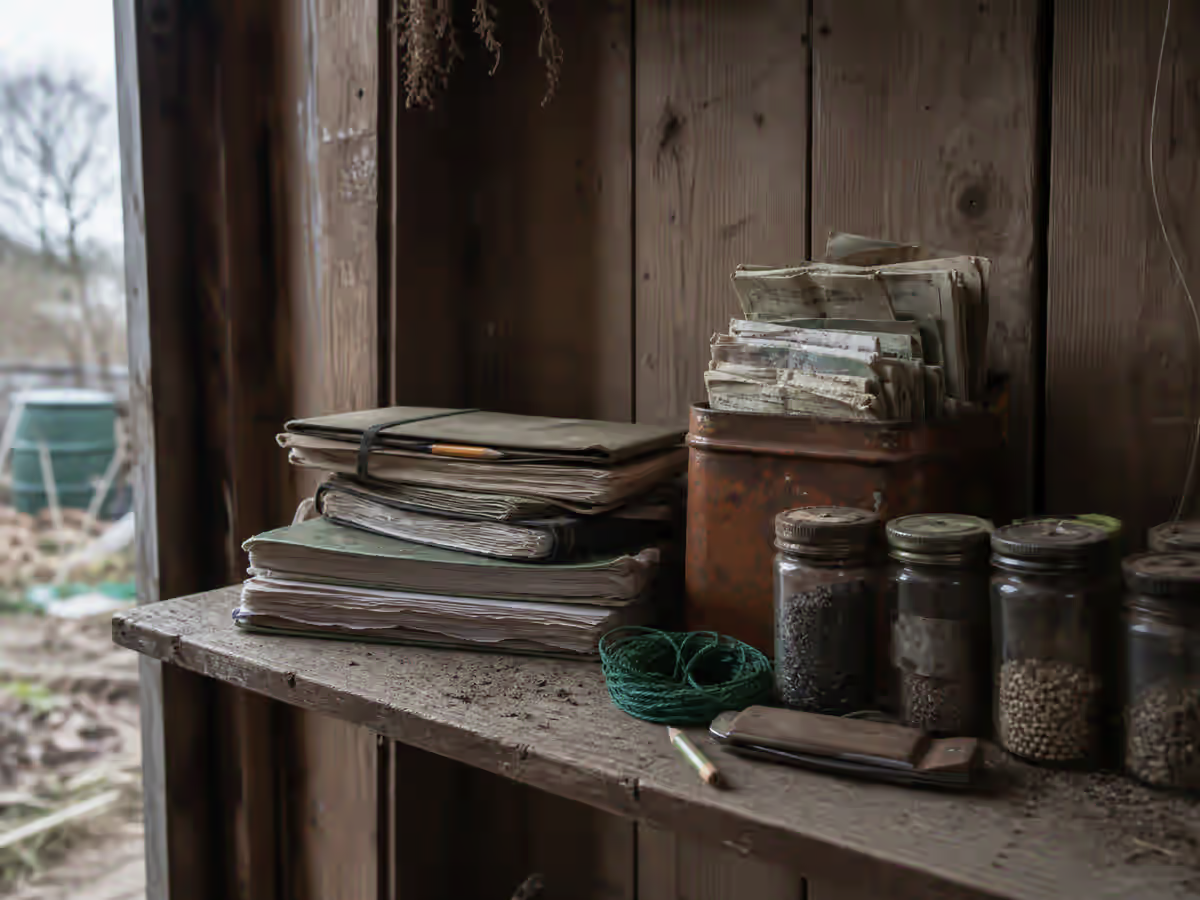
Five guides. Start with planning your plot on paper, then pick the five crops that actually work in year one. The other three deal with the two hard parts of the year, the April hungry gap and the August glut, and with taking on a plot that has been let go.
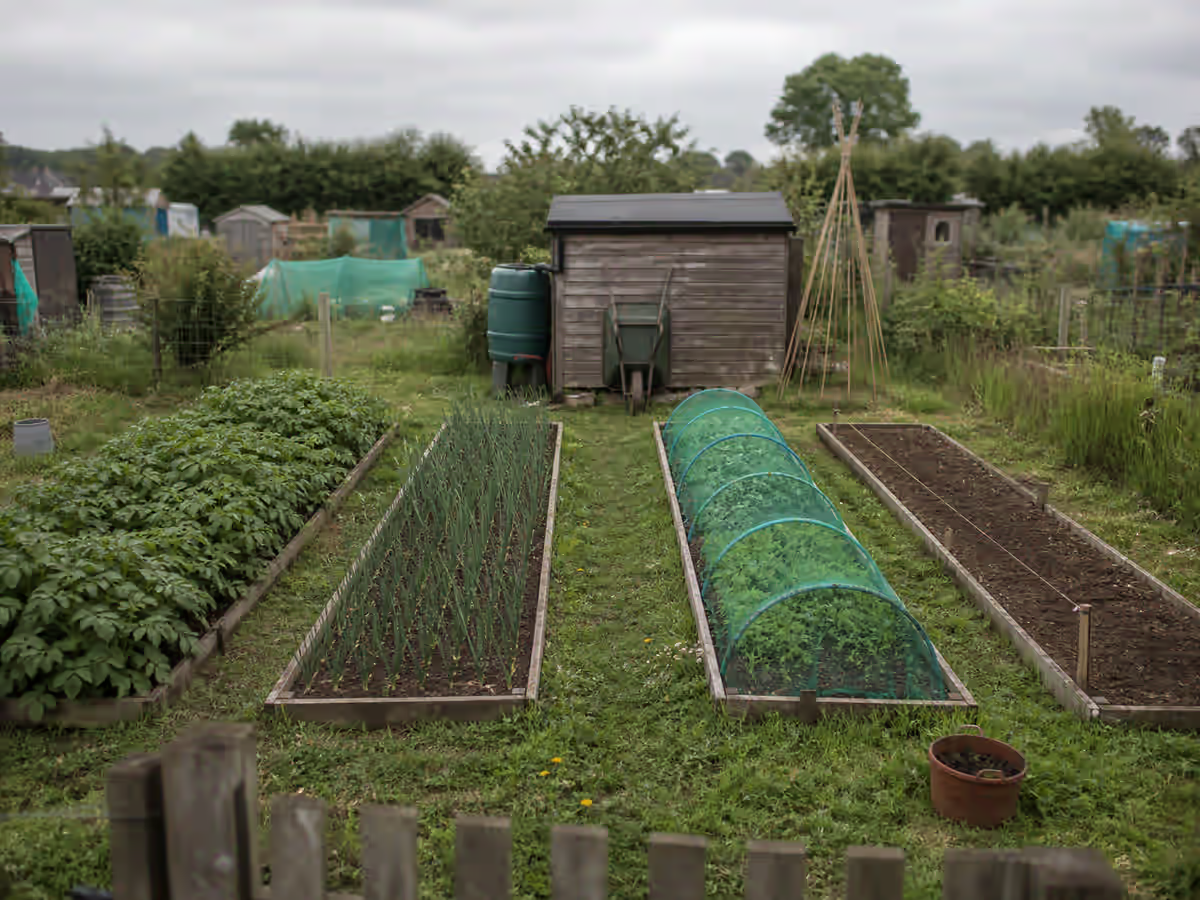
If you only read one, read this
Plan a half plot in an afternoon is the one that changes the most. It takes a blank 125 square metres and turns it into four beds with names, sizes and a crop in each, using a pencil and one sheet of paper.
Almost every mistake on a new plot traces back to not having done this. Too many crops, beds too wide to reach across, paths too narrow for a barrow, and nothing at all standing in February. An afternoon at the kitchen table fixes all four.
Which guide, and when to read it
They are written to be read in this order, but nothing stops you jumping to whichever problem you actually have.
| Guide | The question it answers | Best read |
|---|---|---|
| Plan a half plot in an afternoon | Where does everything go, and how big should the beds be? | Winter, before the first seed order |
| The five crops for year one | What should I actually grow first, and how much of it? | January to March |
| Clearing an overgrown plot | I have been handed a jungle. Where do I start? | Whenever you get the keys |
| Getting through the hungry gap | Why is there nothing to pick in April, and how do I fix it? | May and June, when the fix gets sown |
| What to do with a glut | Why has everything arrived at once, and what do I do with it? | July, just before it happens |
Each one runs to about 3,500 words, so they are a cup of tea rather than a quick skim.
The other four, in a sentence each
What each one actually teaches, so you can tell whether it is the one you need today.
The five crops for year one
Potatoes, onions, broad beans, courgettes and salad. Not because they are the tastiest, but because they forgive a beginner, they crop at different points in the year, and between them they teach you sowing, planting out, earthing up, staking and cutting. The guide gives spacings, quantities for a half plot, and the honest yield to expect from one bed of each.
Clearing an overgrown plot
The one written for the moment you open the gate and find waist high couch grass and bramble. It argues for clearing a strip rather than the whole thing, covers cardboard and mulch against digging, and is honest that a badly neglected plot takes two seasons rather than two weekends.
Getting through the hungry gap
Mid March to mid June, when last year has finished and this year is eight weeks off. It covers what is genuinely still standing in April, the second harvest most people compost without noticing, and the fact that every fix for April is sown the previous May.
What to do with a glut
The opposite problem. Forty courgettes in a fortnight and beans going stringy on the plant. Sowing in three small batches rather than one large one, the twenty minutes at the sink that saves a bean harvest, and which crops are genuinely worth freezing.
What else is on the site
The guides are the long form. Three other parts of the site work differently and are worth knowing about.
This month is the short seasonal answer: what to sow, plant and pick in the month you are actually standing in. Grow guides take one crop or one job at a time, with the sowing depths and spacings on a table. Planning is where succession sowing and the winter plot get worked out properly.
If you are brand new and none of that helps yet, start here instead. It is the shortest route from an empty plot to something growing.
One email a month, at the point it is useful.
What to sow, what to plant out and what to pick, sent at the start of the month rather than halfway through it.
One email a month. Unsubscribe any time. How we look after your details.
Where to go next
One crop at a time
Potatoes, onions, brassicas, beans and the rest, each on its own page.