Every crop and every job, in one place
Eight crops that earn their space on half a plot, and seven jobs that decide how well they do.
Each guide is written for 125 square metres, a couple of hours a week, and British weather. Not for a walled garden and not for a smallholding.
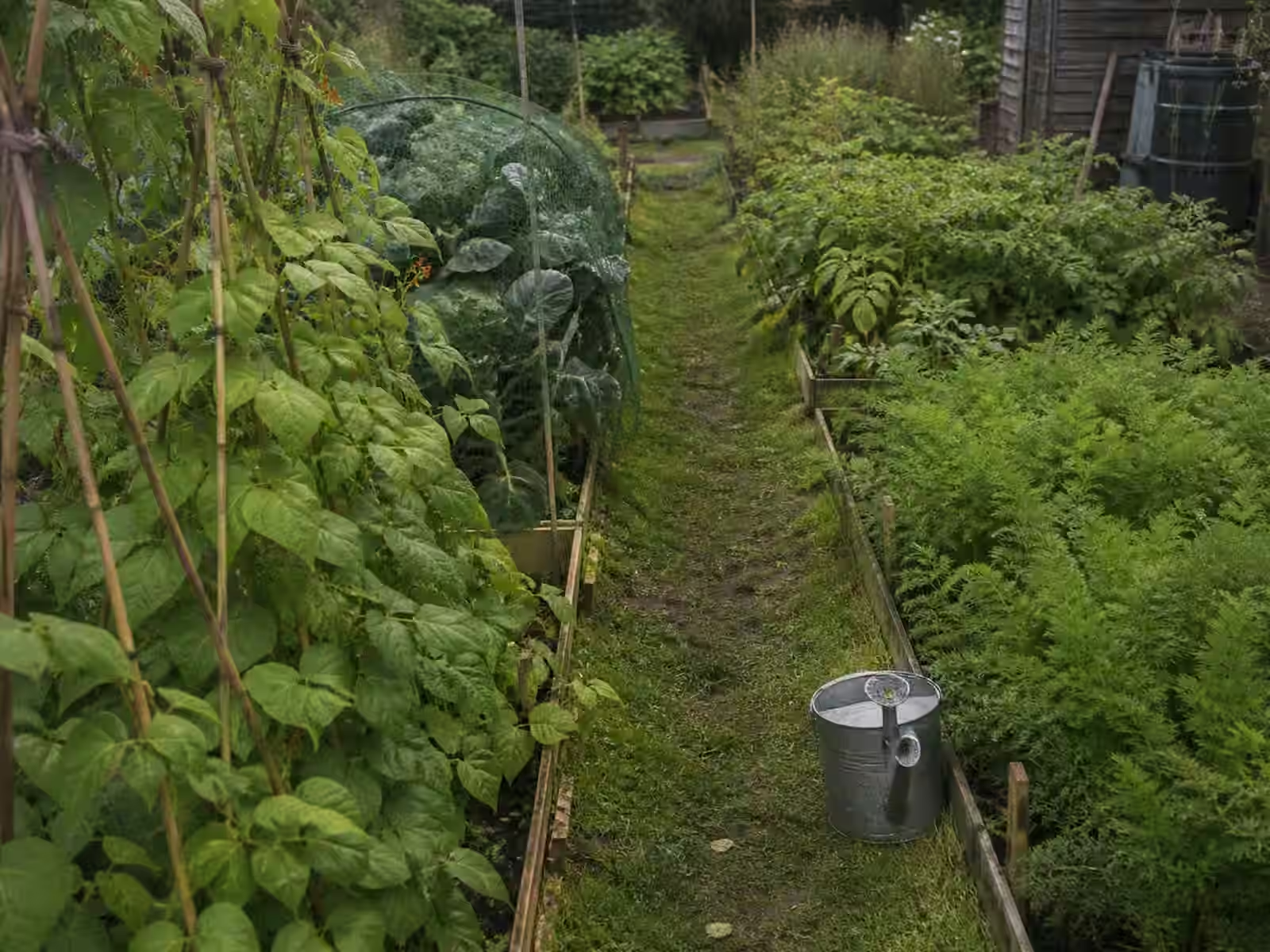
The crops
The green line under each name is the short version: when to sow, how much room to give it, and when you actually eat it. Dates suit most of the UK. Add a fortnight either end if you are in Scotland or the far north.
Chit February. Plant first earlies mid March, maincrop April. 12cm deep, 30cm apart for earlies, 38cm for maincrop, rows 60cm. Lift earlies late June, maincrop September.
Cheap to buy, bulky to grow, and still worth a bed in year one for a reason that has nothing to do with the crop: lifting them leaves you broken up, weed free ground that is far easier to plant into next spring. First earlies are the ones to grow if space is tight, because they are out of the ground before blight arrives.
Onion sets March, 10cm apart. Garlic October to November, 15cm apart and 5cm deep. Lift both when the tops fall over, then dry for a fortnight.
The lowest effort per kilo on the whole plot. Plant them, keep the weeds off, and otherwise leave them alone all summer. Garlic genuinely needs a cold spell to split into cloves, which is why an autumn planting beats a spring one. The only real way to lose either crop is to put it into store damp.
Sow April to May in a seedbed, plant out June to July, 45 to 60cm apart. Net on the day you plant. Pick from October right through to April.
Kale, cabbage, sprouts and purple sprouting broccoli are what stand between you and an empty plot in January. They take up a bed for a very long time, which feels wasteful in July and feels like the best decision you made all year in February. Firm them in hard, and never take the net off.
Broad beans November or February, 20cm apart. Peas March to June, 5cm apart. Runner and French beans sown May indoors, planted out after the last frost, 20cm apart up canes.
The backbone of a half plot summer, and the crop that gives something back: the roots fix nitrogen, so the bed they leave behind is a good one for hungry brassicas the following year. Broad beans are the first thing you pick all season, usually in June, right when nothing else is ready.
Sow a short row every two to three weeks, March to September. 1cm deep. Cut 3cm above the soil and it regrows two or three times.
The highest return per square metre on the plot and the only crop that pays you back inside a month. It is also the crop that makes a wasted trip feel worthwhile, because there is always something to cut. Sow little and often or you will have three weeks of glut and then nothing.
Carrots March to July, thin to 5cm. Beetroot April to July, 10cm. Parsnips March to April, 15cm, fresh seed every year. Swede May to June, 30cm.
Soil condition matters far more here than feeding does. Never put fresh manure on a root bed: it makes carrots and parsnips fork into useless legs. Stones do the same. Beetroot is the forgiving one to start with, and parsnips left in the ground until after a hard frost are genuinely sweeter.
Sow indoors late April. Plant out after the last frost. Courgettes 1m apart, winter squash 1.5m. Cure squash in the sun for ten days before storing.
Two courgette plants. Not three. Winter squash is the better use of the same square metre if you can spare it until October, because a cured squash keeps on a shelf until February while a courgette lasts a week. Both need more room than the packet suggests and more water than you think when the fruit is setting.
Plant once and leave them. Rosemary, thyme and sage in the sunniest, driest corner. Mint in a pot, always. Cut back each spring.
A perennial corner that asks almost nothing of you and gets used more often than anything else you grow. Give them the poorest, driest spot on the plot: rich soil and regular water make soft growth and weak flavour. Mint in the ground will take over a bed within two seasons, so keep it contained.
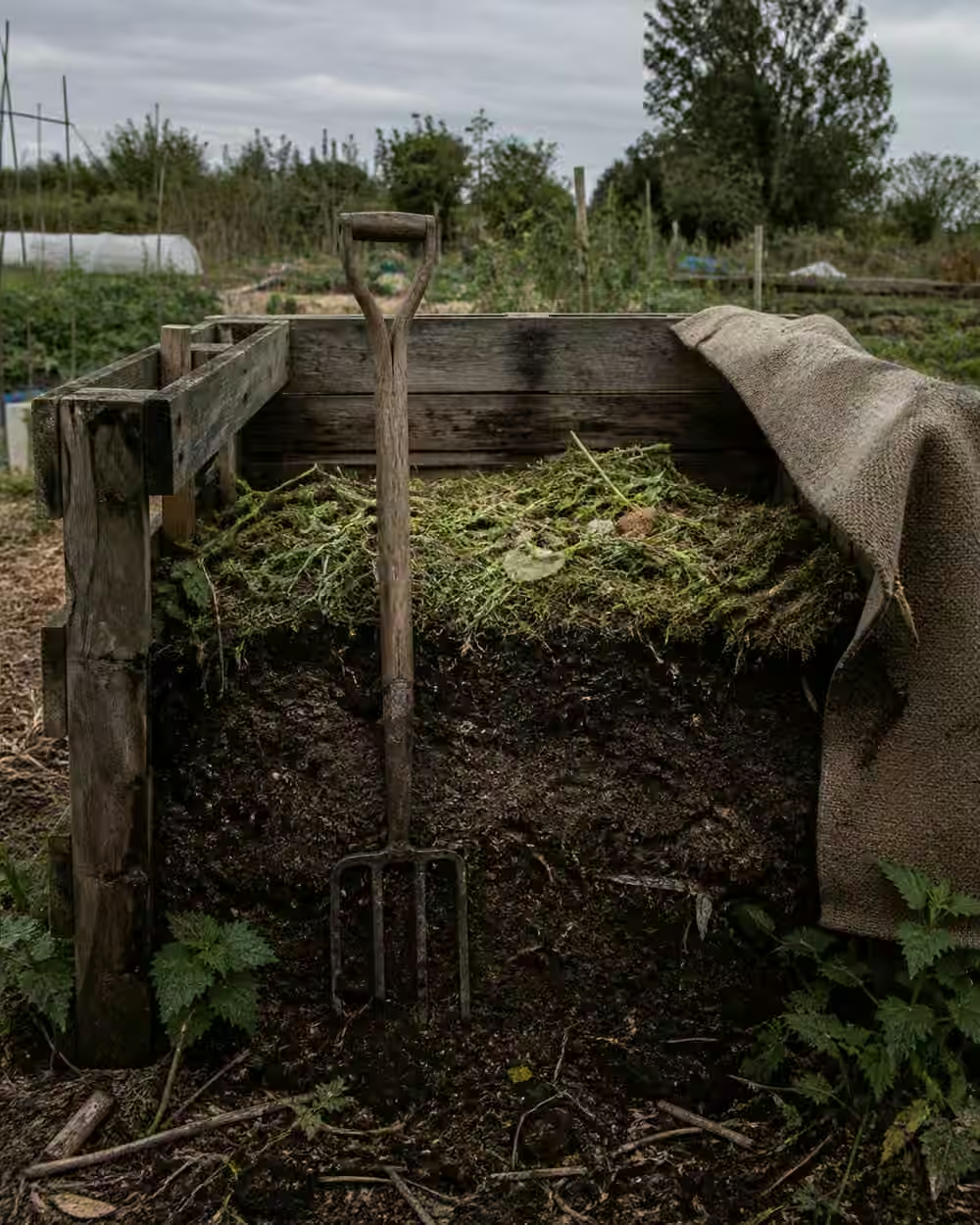
The jobs that decide how well any of it grows
Seven guides that are not about a single crop. Most of the difference between a plot that works and a plot that fights you is in this list rather than in the one above.
The only job with compounding returns. A 5cm layer of compost spread on the surface each autumn does more than anything in a bottle, and you do not need to dig it in. The worms take it down for you over winter.
Which weeds you have decides how you clear. Annuals like chickweed and fat hen die under cardboard in a season. Bindweed, couch grass, horsetail and dock regrow from any fragment of root and need digging out or a full year covered. Hoe annuals on a dry day and leave them lying on the surface to shrivel.
Most damage on a half plot is a timing problem rather than an infestation. Net brassicas the day you plant them. Slugs do nearly all their damage in a seedling first fortnight, so start plants in modules and put them out at a size that can take a hit.
Most crops only truly need water at two moments: settling in, and when the part you eat is swelling. Potatoes as the tubers form, beans in flower, courgettes and tomatoes as fruit sets. A deep soak twice a week beats a splash every evening, which only wets the top 2cm and trains roots to stay shallow.
A fork, a spade, a rake, a draw hoe, a watering can with a fine rose and a pair of secateurs. Buy the fork and spade secondhand and heavy, because old forged steel outlasts new pressed steel by decades. Everything else can wait until something is genuinely in your way.
Four beds and four groups: potatoes, then legumes, then brassicas, then roots and onions. Move each group one bed along each year and you are done. The textbook seven year version does not fit a half plot and does not need to.
Blanch beans for two minutes before freezing or they turn to mush. Onions and garlic need a fortnight of drying. Squash need ten days curing in the sun. Potatoes keep in paper or hessian, never plastic, and never in the light.
What the seed packet does not tell you
Packets are written for the whole country and mostly for gardens. Five things worth knowing before you follow one to the letter.
The sowing window is for all of Britain
A packet saying sow March to July means somebody somewhere in the UK can sow in March. If you are north of the Midlands, lose a fortnight off the front and a fortnight off the back. Your own site is the better guide, and the plot next door is the best one.
Days to maturity are optimistic
Those numbers come from trial ground with ideal soil, ideal water and no competition. On a real allotment add two to three weeks, more in a cold spring. This matters most for late sowings, where a fortnight late is the difference between a crop and a row of seedlings that never bulk up.
Sow to twice the seed depth
The rule almost no packet explains: cover a seed to about twice its own thickness. A bean is fat, so 5cm is right. Lettuce and carrot seed is tiny and has almost no energy in reserve, so barely cover it at all. Nearly all failed germination on an allotment is seed sown too deep, not seed that was no good.
Most seed lasts years, with one exception
Kept somewhere cool and dry, tomato, brassica, squash and bean seed is fine for four or five years, so there is no need to rebuy every January. Parsnip is the exception and it is a hard one: it loses viability within a year, so buy fresh every season. Onion and leek seed is not far behind.
There is far more in there than you need
A packet of courgette seed holds a dozen or more, and you want two plants. A packet of brassica seed will run to hundreds. Split packets with the plot next door, or accept that you are buying one season of use and sowing the rest thinly as a cut and come again crop.
And the one on the packet worth trusting
The spacing. It looks absurdly generous when you are holding a seedling the size of a fingernail, and it is almost always right. Crowded plants on a half plot compete for the same water and the same feed, and you get a larger number of much smaller vegetables. Thin ruthlessly. It is the hardest habit to learn and the one that changes most.
One guide a month, in plain English.
What to sow, what to pick, and what I got wrong. One email at the start of each month, and nothing else.
One email a month. Unsubscribe any time.
Not sure where to start
The library is a reference, not a reading list. Take the one that matches where you are.
It is your first season
Read the beginner path first and come back here for the crop in front of you.